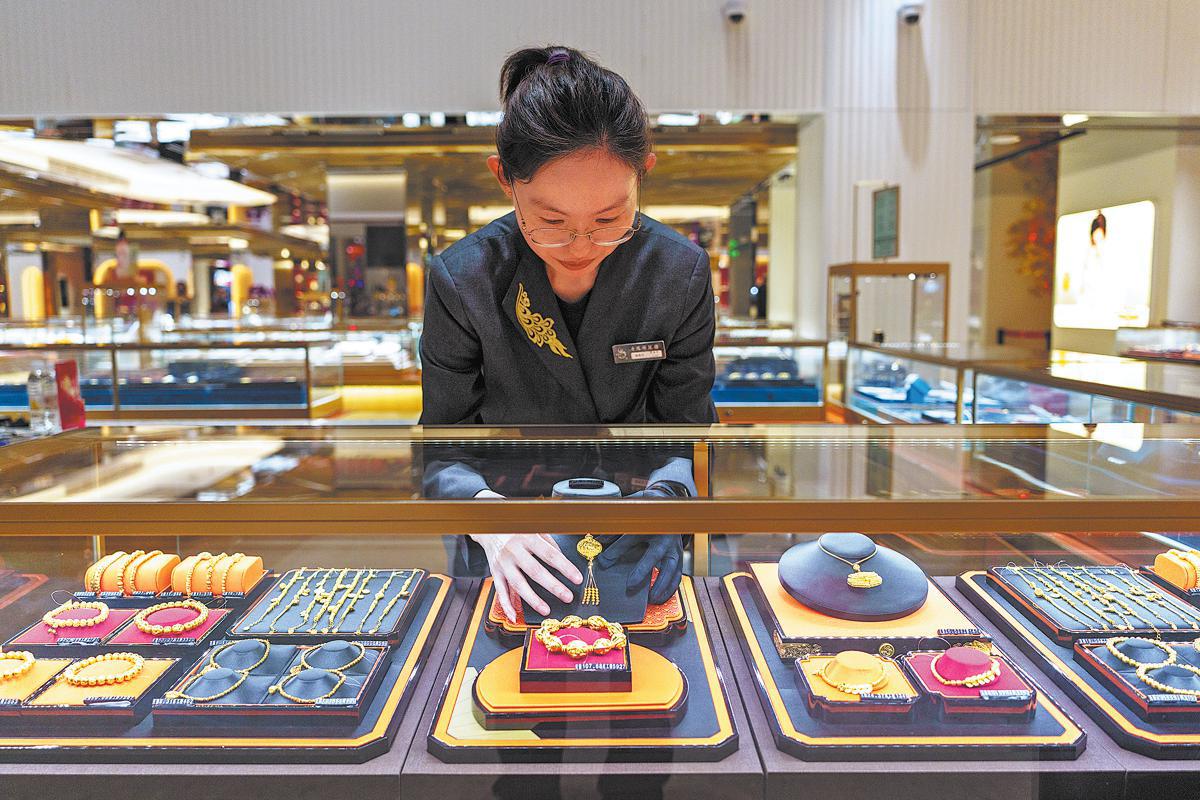
A surge in overseas tourist purchases of Chinese-style gold jewelry in Shanghai signals a shift in global demand toward culturally rich, handcrafted pieces. For B2B jewelry buyers, this trend highlights growing opportunities in traditional craftsmanship, design differentiation, and gold jewelry sourcing from China, moving beyond weight-based pricing to value-added artistry.
Market shift: From diamonds to traditional gold
Overseas tourists are increasingly choosing Chinese-style gold jewelry over diamonds, according to Zhou Mingyuan, deputy manager of Lao Feng Xiang's flagship store in Shanghai's Yuyuan area. A Middle Eastern traveler recently spent 56,000 yuan ($8,211) on a pair of gold earrings. Zhou noted that foreign buyers now seek pieces featuring dragons, phoenixes, zodiac signs, and bamboo patterns, and are fascinated by live craftsmanship demonstrations such as chisel carving and filigree work.
Consumer behavior: Self-purchase and design appreciation
CHJ Jewellery data shows that 80 percent of its consumers buy gold jewelry for themselves, challenging the traditional wedding-only stereotype. Tourists from the Philippines and Germany praised Chinese gold for its delicate details and fine craftsmanship compared to Western styles. Liska Weidmann from Germany noted that while German consumers prefer large pieces, Chinese gold emphasizes intricate, small-scale detailing.
Supply-chain impact: Ancient techniques drive value
Traditional gold jewelry using intangible cultural heritage techniques has grown at an annual compound rate of 64.6 percent from 2018 to 2023, versus 3.6 percent for ordinary gold, per China Gold Association data. Master craftsman Shen Guoxing explained that techniques like manual sheet metal, lifting-pressing, and chisel carving create relief, three-dimensional, and hollowed forms. These methods allow each artisan to produce unique, warm pieces that blend multiple traditional skills.
What buyers should watch
For overseas importers and private-label brands, the rise of Chinese-style gold jewelry offers sourcing opportunities in high-craftsmanship, design-led products. Li Minghao, marketing manager at Shanghai Lao Feng Xiang, emphasized the need to accelerate international outreach using gold as a medium to export Chinese craftsmanship. Buyers should monitor demand for culturally themed designs and consider partnerships with artisans skilled in ancient techniques to differentiate their collections.
Compliance and logistics signals
As gold jewelry exports from China grow, buyers should ensure compliance with local hallmarking and import regulations. The trend toward self-purchase and souvenir buying may affect packaging and retail presentation requirements. Additionally, the investment appeal of gold amid global uncertainty could sustain demand, making it important to track gold price volatility and supply chain lead times for handcrafted pieces.
Source: Read the original report | Published: April 16, 2026