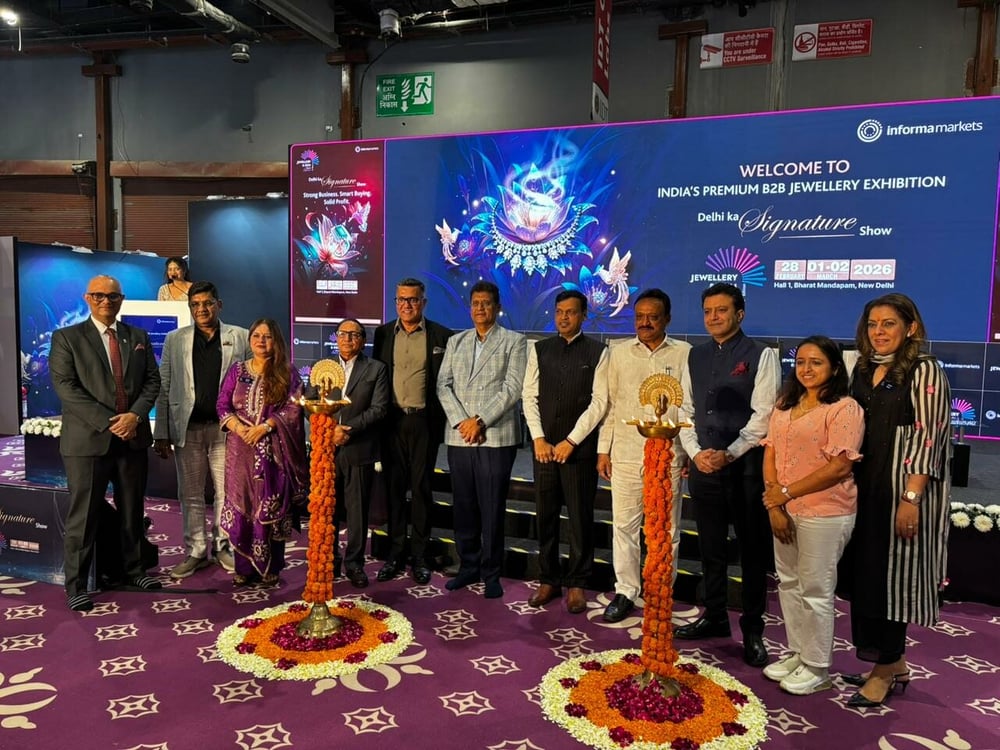
The Delhi Jewellery and Gem Fair Signature 2026 concluded on March 2, 2026, welcoming over 120 exhibitors representing more than 400 brands and attracting over 7,000 trade visitors on its first day. For overseas jewelry buyers, this signals strong early-season sourcing momentum in North India, with lightweight jewelry dominating due to high precious metal prices and a shift toward personal-use purchases. The event highlights key supply-chain trends, including regulatory shifts like BIS-led HUID traceability and mandatory silver hallmarking, which importers and distributors should monitor for compliance and sourcing strategy adjustments.
Supply-chain impact
Lightweight jewelry was a major focus at DJGF Signature 2026, reflecting current market demand as gold and silver premiums remain elevated—gold at around 3% and silver near 5%. This trend is driven by high precious metal prices and a consumer shift toward personal-use jewelry rather than investment or gifting. For overseas buyers, this indicates a growing preference for affordable, lightweight designs in North India, which could influence product development and sourcing decisions for bridal, festive, and everyday collections.
Regulatory and compliance signals
Avinash Gupta, vice chairman of the All India Gem and Jewellery Domestic Council, highlighted critical regulatory shifts: BIS-led HUID transfers to streamline traceability, mandatory silver hallmarking currently limited to 90 and 80 standards despite nearly 50 tonnes of silver trade, and PMLA compliance supported by AI-driven monitoring. These changes will impact supply-chain transparency and due diligence for importers and distributors sourcing from India, requiring updated compliance protocols.
Market growth and sourcing opportunities
Yogesh Mudras, managing director of Informa Markets in India, noted that the domestic jewelry market is projected to expand to $130 billion by 2030, driven by festive demand, bridal purchasing, and increasing formalization. DJGF Signature 2026, covering 70,000 square feet of exhibition space, offered early-season sourcing aligned with Akshaya Tritiya, wedding, and festive cycles. For overseas buyers, this presents opportunities to tap into structured growth and curated business matchmaking for lightweight jewelry and bridal collections.
What buyers should watch
Overseas jewelry buyers should monitor India's regulatory developments, particularly HUID traceability and silver hallmarking expansions, as these will affect import compliance and product authenticity. The dominance of lightweight jewelry at the fair suggests a sustained trend toward cost-effective designs, which could shape OEM/ODM orders for sterling silver, gold-plated brass, and gemstone pieces. Additionally, the frequent B2B exhibition cycle in India (every 8-15 days) enables efficient procurement with lower risk, a model worth considering for supply-chain planning.
Source: Read the original report | Published: March 02, 2026