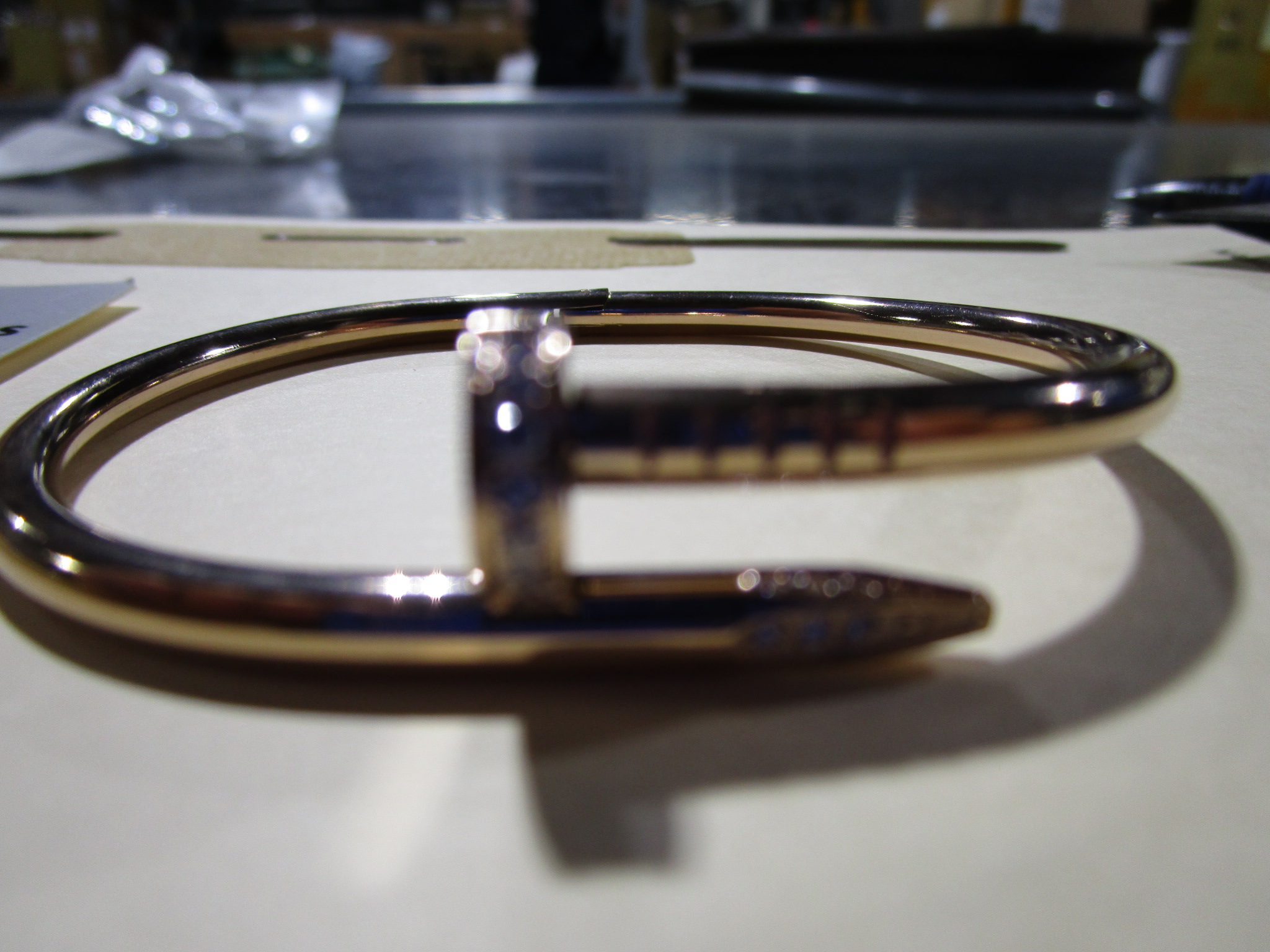
U.S. Customs and Border Protection officers in Louisville seized nearly 2,200 pieces of counterfeit jewelry from five shipments arriving from China and Hong Kong over two nights in June, with a combined MSRP exceeding $25 million. The seizures highlight ongoing intellectual property risks for overseas jewelry buyers sourcing from these regions, particularly for high-end branded items like Cartier and Van Cleef & Arpels.
Seizure details
On June 19, CBP officers intercepted two shipments. The first, from China destined for a Pennsylvania residence, contained 318 bracelets bearing unauthorized Cartier trademarks. The second, from Hong Kong heading to a Tampa residence, included 490 necklaces, 205 pairs of earrings, and 80 rings with unauthorized Van Cleef & Arpels trademarks. The following night, June 20, officers seized three more shipments from China—two bound for Fayetteville, North Carolina, and one for Michigan—containing 800 inauthentic Cartier bracelets.
Supply-chain impact
Jewelry remains the top commodity seized for intellectual property rights infringement by total MSRP for three consecutive years, followed by watches and handbags. China and Hong Kong consistently account for approximately 90% of all IPR seizures by quantity. For overseas importers and distributors, this underscores the critical need for rigorous supplier vetting and trademark compliance when sourcing jewelry from these markets.
What buyers should watch
Counterfeit jewelry often enters the U.S. through e-commerce platforms and underground outlets, targeting consumers who believe they are purchasing genuine products. Buyers should verify that suppliers provide clear documentation of trademark licensing or original design rights. CBP’s aggressive enforcement program means shipments bearing unauthorized marks face seizure, leading to financial losses and supply chain disruptions for unsuspecting importers.
Compliance and logistics signals
CBP’s Centers of Excellence and Expertise determined all 2,193 items bore counterfeit marks. The agency warns that proceeds from counterfeit sales fund organized crime and illegal activities. Importers should implement robust quality testing and trademark verification protocols, especially for high-value branded jewelry. Partnering with compliant OEM/ODM manufacturers in China or Hong Kong that respect intellectual property can mitigate these risks.
China sourcing context
Given that China and Hong Kong are the primary sources for counterfeit jewelry seizures, buyers should prioritize suppliers with transparent manufacturing processes and a history of IPR compliance. Engaging third-party inspection services and requesting certificates of authenticity for branded components can help avoid costly seizures. CBP encourages reporting suspected violations through its e-Allegations system or the National IPR Coordination Center.
Source: Read the original report | Published: June 23, 2025