Editor’s Note
This article provides a clear, foundational overview of ecommerce marketplaces, defining their core structure and introducing the different types that exist.
A marketplace is an online platform that hosts products from different sellers. Companies that operate as a marketplace, like Amazon or eBay, do not own any inventory.
There are four main types of marketplaces:
Product-based marketplaces: Shoppers can buy physical products from various sellers. Examples include Amazon and AliExpress.
Service-based marketplaces: Clients can find and hire service providers like freelancers or independent contractors. Examples include Upwork and TaskRabbit.
Peer-to-peer marketplaces: Individuals can buy and sell products and services with each other. Examples include Etsy, Facebook Marketplace, and eBay.
B2B marketplaces: Businesses can buy and sell products and services with other businesses. Examples include Alibaba and Thomasnet.
Marketplaces give customers access to multiple retailers in one place. In a marketplace, products are categorized and presented in a way that encourages views and sales. Ecommerce shoppers can compare options from many different brands in an instant. To make the payment process as easy as possible, these platforms usually offer express checkout.
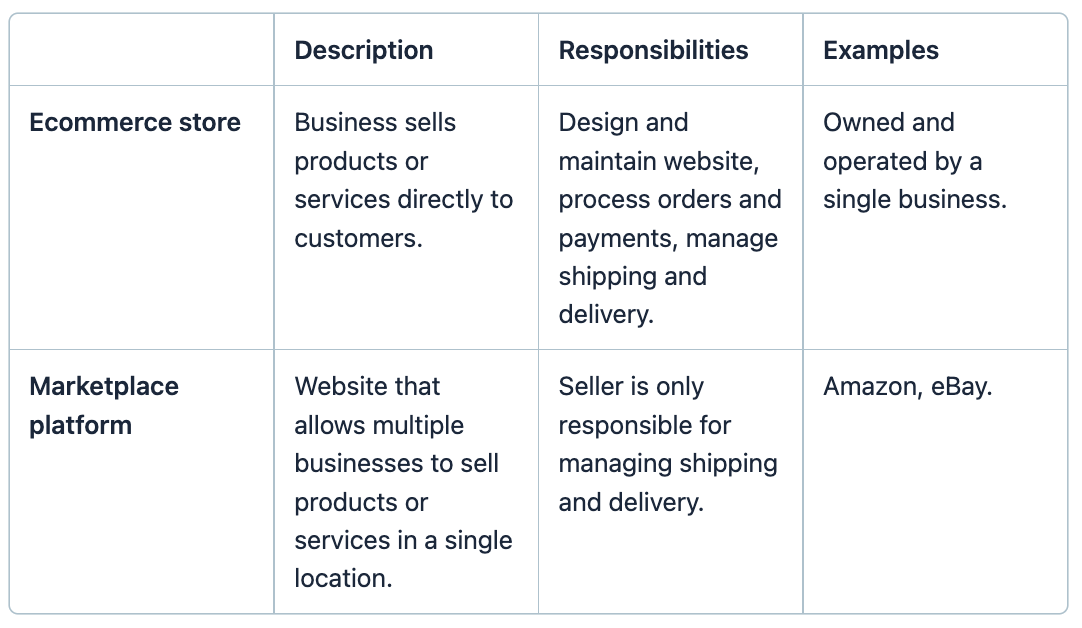
Ecommerce stores allow businesses to sell their products or services online directly to customers. A business is responsible for maintaining and designing its ecommerce website, processing orders and payments, and managing product shipping and delivery.
In general, an ecommerce store is owned and operated by a single business, while a marketplace platform enables multiple businesses to sell to customers in one place.
1. Amazon
2. eBay
3. Walmart
4. Alibaba
5. AliExpress
6. Taobao
7. Flipkart
8. Rakuten
9. Etsy
10. Mercado Libre
11. Shopee
12. Wayfair
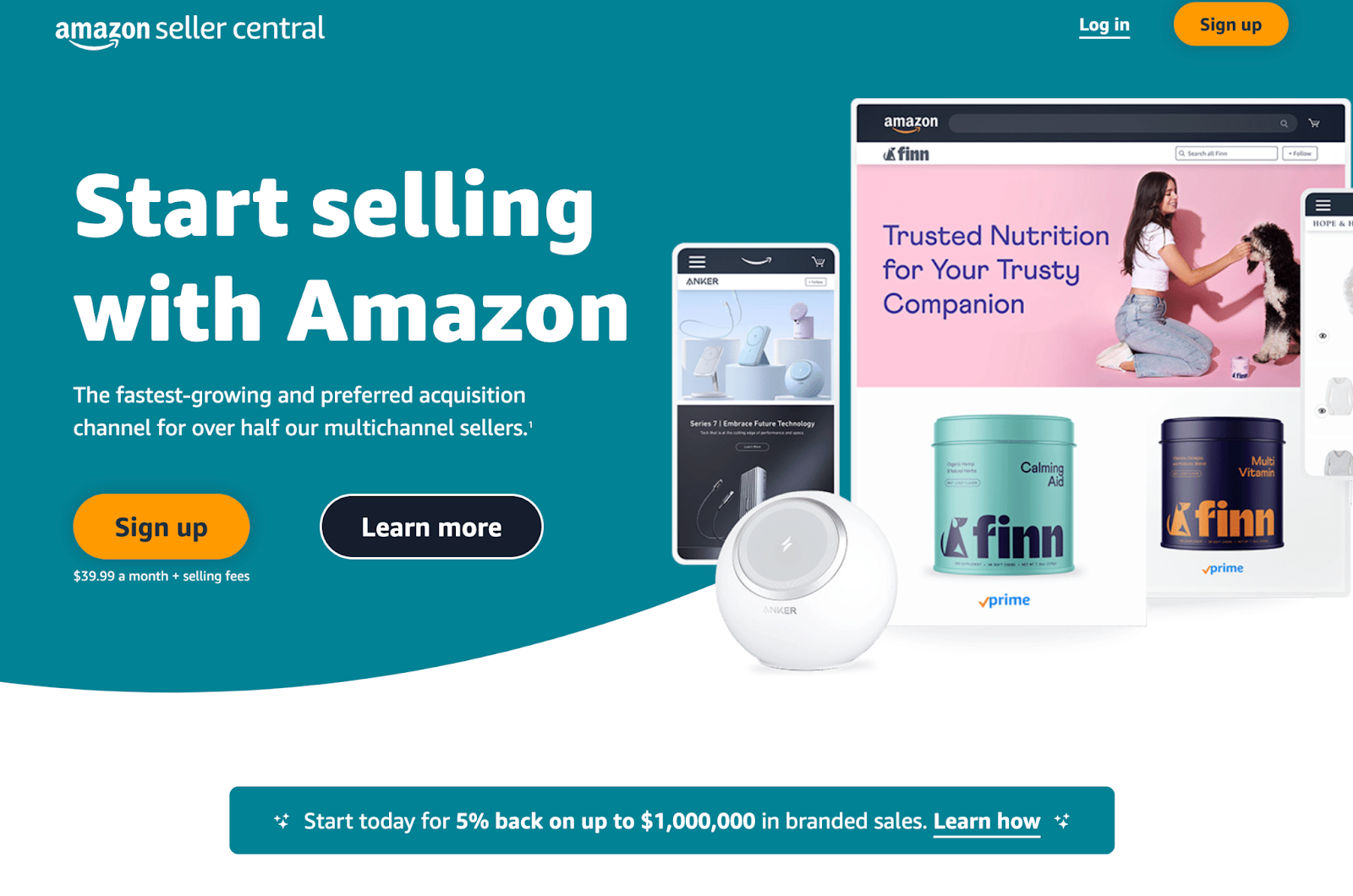
Amazon is the world’s most popular marketplace, thanks to its powerful shipping and fulfillment functions and consistent shopping experience. It is also the world’s second-largest search engine.
Monthly visits: 2.7 billion
Fees: Varies by category, but averages 15% per sale.
Top regions: United States, Germany, United Kingdom, Japan
Top categories: Home and kitchen; beauty and personal care; toys and games; clothing, shoes, and jewelry; health, household, and baby
eBay isn’t just an online auction house for used items: Many of the products listed on eBay are actually new. The flexibility for retailers to sell new and used has allowed eBay to earn $10.1 billion in 2022.
To sell on eBay, there are three basic steps:
1. Sign up for an eBay business selling account.
2. Set up your account policies, including shipping, return, and policy preferences.
3. Upload your inventory using eBay’s tools.
Monthly visits: 594.8 million
Fees: Final value fee calculated as a percentage of the final sale price, up to 14.35%, plus a $0.30 processing fee
Top regions: United States, United Kingdom, Germany, China, Australia
Top categories: Electronics and accessories; automotive; jewelry and watches; collectibles
Walmart is now the third-most-visited online retailer in the US, with over half a million visitors each month.
Walmart currently allows third-party sellers to sell their products in more than 35 product categories on its marketplace. Around 5% of Walmart’s current marketplace sellers are based outside the US.
To sell on Walmart as a partner you need to follow these five steps:
1. Tell Walmart about your businesses and the products you’re planning to sell.
2. Once you’ve been approved, set up your seller account.
3. Sign the Walmart Retailer Agreement and complete your seller profile.
4. Onboard with a choice of integration methods, add your items, and test orders.
5. Click the Ready to Launch button, after which Walmart will complete a final review before you can start selling.