【Mainz, Germa】Gemstones as an Indispensable Material – Improved Material Knowledge Promotes the Development of New Technologies

Editor’s Note

This article explores the industrial applications of gemstones, highlighting how materials like diamonds have evolved beyond decorative uses to become critical components in technology and manufacturing.
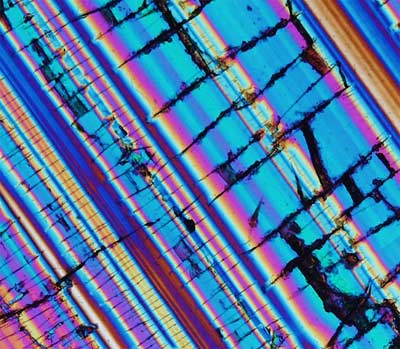
Diamond Synthesis

Whether rubies in lasers, diamonds in grinding machines, or sapphires in semiconductors – gemstones are no longer used solely as pure decorative stones. Rather, they have become an indispensable material in industry and materials research.
For a long time, diamonds were considered the quintessential gemstone – glittering, sparkling, and extremely durable.

“However, it is little known that not every one of these noble stones is naturally flawless; they often exhibit color shades corresponding to the included foreign substances, foreign elements, or structural defects,” explains Professor Wolfgang Hofmeister from the Department of Geomaterials and Gemstone Research at Johannes Gutenberg University Mainz.
“Yet, through today’s material knowledge, for example, brown diamonds can be relatively easily decolorized and thus optimized through structural changes,” adds Hofmeister.

The fascinating light refraction of a diamond only truly comes into its own through the subsequent brilliant cut.

“Today, only a small proportion of natural diamonds are still used for jewelry purposes,” Hofmeister reports.

The far greater part is needed in technical processes of cutting, pressing, observing, and cooling. A considerable quantity of these noble stones is even now artificially produced in the laboratory.

“Thus, diamonds have somewhat lost their former high status as an inimitable jewelry crystal,” says Hofmeister. “But of course, they have lost none of their great fascination,” the gemstone expert quickly adds.
Improving Crystal Properties

However, not only diamonds are of interest to gemstone research; other crystals can also be further optimized through technical or chemical interventions.

None
“With suitable iron and titanium content, the blue coloration of a sapphire can be deepened or its transparency improved. If a little antimony is present in gray zoisite, it can be improved to a blue tanzanite by heating under certain conditions,” Hofmeister reports.

But these are by no means merely cosmetic corrections. Rather, improved material knowledge can sometimes lead to the development of an entirely new industry. For example, the success story of today’s laser technology can be traced back to research on the gemstone mineral ruby.
Gemstones have therefore become indispensable in modern materials research, for example, to investigate phase relationships in composites. Hofmeister gives two examples:

“This can be a transparent, single-crystalline area of a gemstone mineral like corundum or sapphire that encloses a small zircon crystal. Or a red garnet enclosed within a clear diamond crystal.”

Using state-of-the-art equipment, questions about the crystallization time of the respective phases or their physicochemical interactions can be answered. These results play an important role, for example, in the production of transparent ceramics.

Jewelry Stones in Focus
“However, at the Institute for Gemstone Research in Idar-Oberstein, we also pursue cultural-historical aspects aside from industrial applicability,” adds Hofmeister.

Since natural gemstones still represent objects of value today, the question of their origin frequently arises.

“This is particularly interesting, for example, for archaeologists who examine gemstones on artifacts. Questions also arise about historical processing possibilities, material knowledge, trade routes, as well as prospecting and mining in earlier periods of human history.”

In addition to such historical detective work, determining the authenticity of current trade goods is also among the tasks of gemstone experts. Questions about the provenance of synthetics and imitations repeatedly arise. Under what conditions, with what methods are forgeries and imitations produced, how can this be proven, and how can potential expected improvements in methods be tracked?

“Due to the extraordinary breadth of our orientation, there are many interfaces with neighboring sciences. And above all, materials research will likely engage even more in the future with the existing or ‘tunable’ properties of noble stones,” Hofmeister assesses the perspectives of his field.
None
Full article: View original |
⏰ Published on: December 08, 2006