Editor’s Note
This article examines Israel’s significant role in the global diamond trade and how the industry is adapting to economic pressures by seeking new markets.
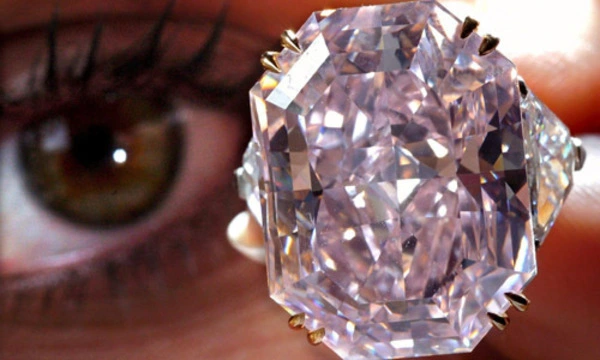
In the diamond trade, the Jewish state is a major player on the world market. The economic crisis has dimmed its shine – now, new customers are being sought.
The heart of the business with these hard, precious carbon products is the diamond exchange in Ramat Gan near Tel Aviv: Here and in around 2,500 companies across the country, thousands of people are employed in purchasing, evaluating, cutting, and marketing the stones.
In terms of value, brilliants, i.e., diamonds cut for jewelry purposes, accounted for about 20 percent of Israeli goods exports in 2007. Adding rough diamonds, which are mostly supplied to Israeli processing companies, particularly in Asia, the figure approaches the 30 percent mark. Market experts estimated total exports for 2007 at about 10.5 billion euros. And: on average in recent years, half of the world’s production of brilliants by value left polishing workshops in the Holy Land.
Of course, the diamonds do not originate here: they come from Africa and Australia, Russia and Asia. But over decades, Israel has developed exceptional expertise in handling this product and thus achieved its leading international role in this field.
Accordingly, the industry, which lives almost exclusively on exports, was hit hard by the global crisis. Israel’s most important market, North America, has collapsed. The decline in Christmas business in 2008 at the upscale jeweler Tiffany & Co. was just one of many indicators: a minus 35 percent was recorded there. Since then, prices, especially for common smaller and medium-sized diamonds, have also fallen; full inventories and weak demand continue to put pressure on them.
Jewelers are missing the usual annual bonus payments from US financial corporations. But it’s not just the super-rich securities traders who are no longer giving their wives multi-carat stones: the crisis has dug deep into the middle class. From the US, it is known that many couples are postponing their weddings due to financial problems.
Practitioners tell similar stories. Alan Omsky, a South African diamond trader with companies in Antwerp and Miami, reports:
Companies affected by weak demand are reacting like those in other industries: they implement cost-cutting programs, reduce staff, automate processes, and outsource manual labor to low-wage countries. With this, Israel’s diamond dealers want to beat their competitors – especially Indians and Russians – with their own weapons: they are now having work done in India or Thailand themselves.
Primarily, however, they are looking for new customers. After the US market had already weakened before the actual crisis, Asia, Russia, and the Arab world have moved into focus. And in market cultivation, the Israel Diamond Institute (IDI) is particularly helpful. Unlike many companies that cut their advertising and marketing budgets during the crisis, the IDI in Ramat Gan has just launched a comprehensive campaign.
IDI Managing Director Eli Avidar says:
Above all, the Israelis are relying on modern internet forms like Facebook, Twitter, or YouTube. They also want to focus more on Latin America: recently, a delegation from IDI and various diamond dealers, led by Avidar, visited Panama. There, they explained to President Ricardo Martinelli that they wanted to use his country as a base for diamond distribution in South America. However, the legal framework conditions would have to be right. Martinelli promised that they would work towards making “bureaucracy-free diamond trade” possible in Panama.
In practice, however, financial assistance may also be necessary for one or another Israeli diamond buyer. Trader Omsky in Florida says:
Opinions in the industry differ on how long the diamond depression will last. The global diamond giant “De Beers,” which dramatically restricted its production at the end of the year, is already ramping up some African mines again. IDI Director Avidar hopes, despite all uncertainty, that the situation will improve this year:
Others, especially European industry experts, however, assume further decline and a strongly negative result for this year. After all, Austrian jewelry retailers have not been able to report a rush to their stores for a long time either.
Diamond trader Omsky also remains cautious:
It will probably take some time before the sky of diamond traders sparkles again.