Editor’s Note
In a globalized luxury market, the flow of prestige often follows a predictable path. This piece highlights a fascinating counter-current: a Viennese jeweler, Henri J. Sillam, whose international success—from Paris to Qatar—challenges the notion of where high jewelry must originate.
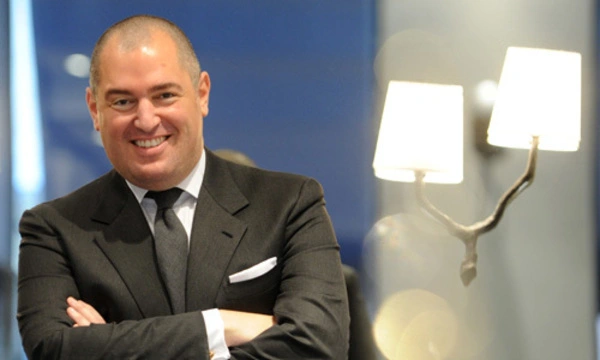
While international jewelers are pushing into Vienna, Henri J. Sillam is taking the opposite route – and supplying the Sheikh of Qatar. Sillam has branches in Paris, Salzburg, Beverly Hills, and Hong Kong.
What haute couture is to fashion, haute joaillerie is to jewelry. And when the wealthy clientele flies to Paris in a private jet, stays at the George V, and splurges at the fashion shows, they also like to take a new piece of jewelry home with them – for example, one from Vienna.
While international jewelers are pushing into the Austrian capital, Viennese jeweler Henri J. Sillam has taken the opposite path. He opened his store in the Tuchlauben in 2005, and expansion continued almost annually: a boutique in Paris in 2006, Salzburg in 2007, Beverly Hills in 2008, and this year in Hong Kong.
Paris was the most obvious branch location; Sillam’s ancestors were French silversmiths and tableware craftsmen. According to family history, one of the ancestors could finish six knife blades in a day – hence the name, “six lames.” It was his father who first moved to Vienna, for love. He had his workshop in Naglergasse, where ladies came to order a piece for the Opera Ball. That his son would later be drawn out into the world could have been guessed even then. Henri Sillam never wanted to accept that “a goldsmith’s world is limited to his table.”
Despite this, the gaze of the then 15-year-old kept wandering out the window.
Nearly 25 years later, his gaze wanders through the café of the Parisian Four Seasons luxury hotel George V, off the Champs-Élysées. The hotel is his base; he has his tiny boutique here – even though the luxury hotel otherwise forgoes shops.
The 39-year-old says people still like to shop here. Once, his phone rang at three in the morning. The concierge was on the line, asking Sillam to come – “but put on a tie!” When he arrived, the hotel was brightly lit – and the King of Saudi Arabia was in a shopping mood, ordering furs, Nike shoes for his son, and Sillam’s jewelry.
Henri Sillam recounts this with amusement, but also a little distantly. He knows the beautiful facade, and its opposite: the goldsmith is also a psychotherapist, having worked in nursing homes and with drug addicts. He also finds that the mandatory self-analysis during his training did him good.
In the Parisian luxury world, he now moves skillfully but unpretentiously. He contentedly eats his omelet for breakfast, blows a kiss to star florist Jeff Leatham (clients: Madonna, Bill Clinton). The previous evening had been a success. He had invited people for cocktails, together with the founder of “The Sphere,” a kind of Facebook for the rich (like Eva Longoria) with concierge service.
The lady from “Vogue” was there, and the wife of the owner of Galeries Lafayette. They drank champagne, chatted, and admired brightly sparkling seahorses, rare green turquoise, jeweled bracelets for 150,000 euros, and Sillam’s “signature pieces” like the “Strawberry Ring.”
The philosophy is to tailor the offering to each setting; in Vienna, there is also prêt-à-porter: the affordable line starts at around one hundred euros. Sillam says it’s not just about uniqueness for him, but about the feeling. He prefers it when a nervous young man proposes to his girlfriend in the store over having his jewelry go to the Golden Globes gala (though nominees did shop at his Beverly Hills Peninsula location). Upon inquiry, one also learns that Céline Dion is a good customer, he is friends with Roberta Armani, and also with designer Elie Saab. Nevertheless, Sillam insists he does not want to be “a celebrity jeweler.”
Perhaps the shock of his store opening is still in his bones. Back then, he stirred up Viennese society with a fake Madonna. “Completely misadvised,” he comments on the faux pas.
He no longer allows himself jokes today and also tries to avoid ingratiation. This led to him having an angry, anonymous Arab customer on the phone this year, complaining why he never called, while every other jeweler would come to him. In the end, the man made the effort to come to Sillam’s three-square-meter Paris boutique, had his bodyguard pay most of the amount in cash, and only pulled out a credit card for the remainder: on it was the name of one of the Sheikhs of Qatar.