Editor’s Note
This article profiles an investor whose work in the Democratic Republic of Congo highlights the complex interplay of ambition, capital, and development in the global mining industry. His stated commitment to the country’s growth invites reflection on the responsibilities and impacts of foreign investment in resource-rich nations.
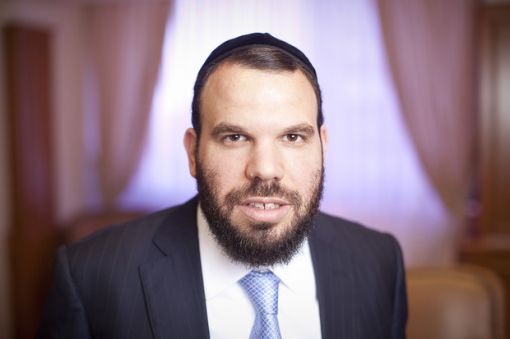
This is what Dan Gertler, a 38-year-old Israeli billionaire who made his fortune investing in African mines, including those in Congo, said in a recent Bloomberg interview. Gertler, who first set foot in the Democratic Republic of Congo at age 23 to search for rough diamonds, reportedly amassed a net worth of $2.5 billion, thanks in part to his friendship with Joseph Kabila, who was then the army chief of staff.
Gertler’s company, ‘Fleurette Properties,’ registered in Gibraltar, is known to hold dozens of mines in Congo, including gold and diamond mines, through at least 60 holding companies in the tax haven of the British Virgin Islands.
Gertler also acted as a broker for SMKK, half-owned by the Congolese state mining company GECAMINES, earning a 500% profit in just six months without investing any of his own money.
Consequently, Gertler has faced criticism as a businessman who plunders Congo’s resources through political connections to enrich himself, while also receiving praise from Ivan Glasenberg, CEO of Swiss commodity trader Glencore, for helping Congo attract foreign investment.
Gertler was born into a wealthy family in Tel Aviv. His mother ran a pop music radio station, and his father was a professional soccer goalkeeper who later became a diamond merchant. However, he learned the diamond business from his grandfather, Moshe Schnitzer, a Romanian immigrant.
Schnitzer, a co-founder of the Israel Diamond Exchange in 1947, would take Gertler to business meetings to show him how diamond trading worked. Gertler woke up at 5 a.m. every day to learn diamond polishing techniques before school.
He also learned a valuable lesson: don’t go to the bank when you need money; build credit by borrowing when you don’t need it. He later applied this when providing political funds to Congolese power brokers.
Gertler recalled, “I started trading rough diamonds at age 22 and flew between diamond hubs in the U.S., India, and Israel to buy and sell diamonds with war-torn countries like Liberia and Angola to get larger quantities.” This earned him a reputation for boldness.
Gertler first set foot in Congo to buy rough diamonds in 1997. That May, rebels led by Laurent Kabila overthrew the 32-year regime of Mobutu Sese Seko, a U.S. ally. Days later, through the introduction of a Chabad Lubavitch rabbi in Kinshasa, Gertler met Kabila’s son, Joseph. Joseph, then a young army chief of staff commanding tens of thousands of troops, became close with Gertler, who was also young and running a $2 billion business.
Through Joseph’s suggestion, Gertler met President Laurent. Needing funds for the war against rebels, Laurent requested $20 million in exchange for a diamond monopoly. Gertler paid using bank loans, inheritance, and cash, risking his entire fortune. However, Laurent Kabila was assassinated by a bodyguard in 2001. Although Joseph took power, he revoked Gertler’s diamond monopoly. Instead of holding a grudge or suing, Gertler continued his diamond business without the monopoly, maintained his relationship with Kabila, and was rewarded with significant profits.
Joseph, fighting rebels supported by Uganda and Rwanda while engaging in peace talks with neighboring countries, reached out to Gertler. In April 2002, Gertler shuttled between Washington D.C., Kinshasa, and Kigali, Rwanda, acting as an underground peace ambassador while steadily conducting diamond business, nearly securing a monopoly again. In 2006, when Joseph’s People’s Party for Reconstruction and Development won a landslide in the first election in 40 years, gaining UN recognition and consolidating power, Gertler expanded beyond diamonds into other minerals and established joint ventures with Congolese state-owned and foreign companies.
In 2011, after Joseph’s re-election, Gertler’s affiliated companies purchased stakes in five mines from three state-owned Congolese companies at prices lower than those assessed by Deutsche Bank and others, but the state companies did not disclose this. The IMF suspended a $532 million loan, citing violation of mining contract transparency principles, and the U.S. increased pressure. Gertler countered, “The disclosure obligation lies with the Congolese government, and we are a private company with no disclosure responsibility.”
In his December 10 Bloomberg interview, he argued,
Despite his wealth, Gertler maintains an extreme Orthodox Jewish lifestyle. He does not watch TV or use computers at home and returns to Tel Aviv every weekend to observe the Sabbath.
He also supports charities not only in Israel but also in Congo. He supports Chabad-Lubavitch, which provides religious and educational services to Jews across Africa, and through his family foundation, donates to charities operating in Congo. He invested $12 million in building an agricultural school on the outskirts of Kinshasa, called the ‘Kibbutz of Congo.’