Editor’s Note
This article explores the evolution of lab-created diamonds, drawing on decades of GIA research. While chemically similar to natural diamonds, these synthetic stones have a distinct origin story, from early scientific experiments to their emergence as gem-quality materials in the 1990s.
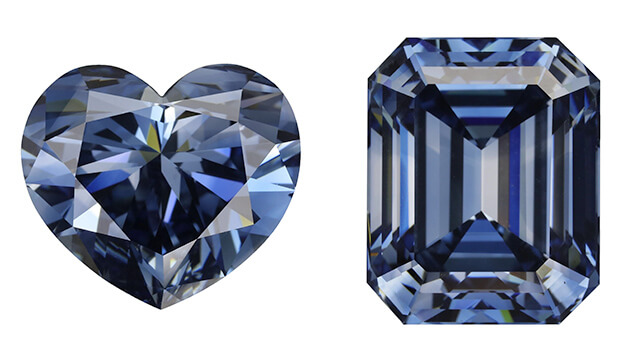
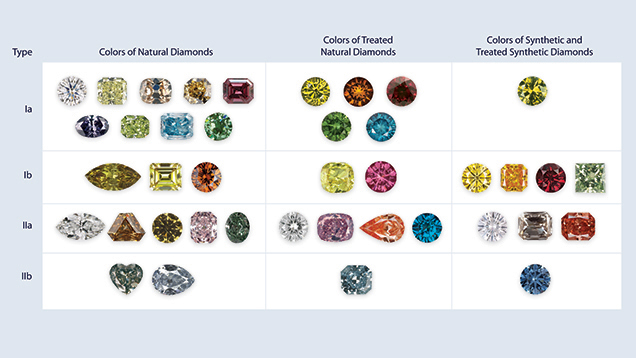
Over the past 30 years, GIA has conducted extensive research on lab-created or synthetic diamonds, gaining deep insights into their manufacturing and identification methods. Although synthetic diamonds are factory-made, their chemical and physical properties are very close to those of natural diamonds.
Scientists first created diamonds in a laboratory in the 1950s. However, the diamonds produced at that time were too small for use in jewelry. By the mid-1990s, larger gem-quality crystals began to be produced, a practice that continues to this day. Today, an increasing number of companies are engaged in the synthetic diamond manufacturing business. Synthetic diamonds for jewelry and industrial use are manufactured in multiple countries/regions, with industrial applications being the primary use for this material.
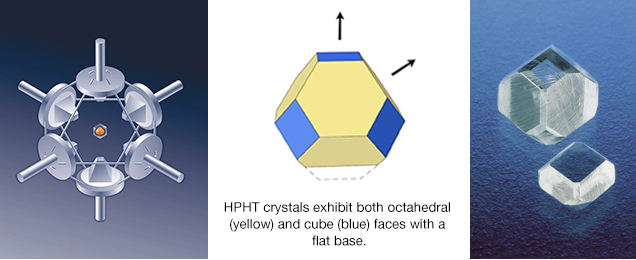
The traditional diamond manufacturing method is called the High Pressure/High Temperature (HPHT) method. It uses a device to simulate the high-pressure, high-temperature conditions under which natural diamonds form deep within the earth, creating synthetic diamonds from carbon material inside the device.
In detail, HPHT diamonds grow in a small chamber located within a device capable of generating extreme pressure. The carbon source (such as graphite) inside the chamber dissolves in a metal flux composed of elements like iron (Fe), nickel (Ni), and cobalt (Co), thereby lowering the temperature and pressure required for diamond growth. The carbon material then moves via the flux towards a cooler diamond seed crystal and crystallizes on it, forming a synthetic diamond crystal. The crystallization process takes from several days to weeks to form one or more crystals.
Faceted synthetic gems often exhibit distinctive color zoning, fluorescence patterns, and graining related to the crystal’s cross-shaped growth sector structure. Sometimes these gems also contain dark metallic flux inclusions. In some cases, this material may exhibit phosphorescence, meaning it continues to glow after exposure to an ultraviolet light source is cut off.
Every few days, the diamonds are removed, the top surface is polished to remove non-diamond carbon, and then they are placed back into the growth chamber. Each batch of diamonds may undergo several start/stop cycles, with the entire growth process taking three to four weeks.
A relatively newer method is called Chemical Vapor Deposition (CVD), which involves injecting carbon-containing gases into a vacuum chamber where they crystallize and deposit onto a synthetic diamond seed. This method requires lower temperatures and pressures than the HPHT method. Both methods are currently very popular for diamond manufacturing. The initial equipment cost for CVD diamond manufacturing is lower than for HPHT, but diamonds produced by this method often require post-growth treatment to improve their color.
In detail, CVD diamonds grow in a vacuum chamber filled with a hydrocarbon gas mixture, such as methane. An energy source (like a microwave beam) breaks down the gas molecules, and carbon atoms adsorb onto a cooler, flat diamond seed plate. The crystallization process takes several weeks, with multiple crystals growing simultaneously. The exact number depends on the size of the vacuum chamber and the number of seed plates. These plate-like crystals typically form a rough black graphite rim that needs to be cut off. They also often exhibit a brown color, which can be removed by heat treatment before the gem faceting step. Most colorless CVD-grown diamonds currently on the market are likely brown crystals that have been decolorized via HPHT annealing.
Although synthetic diamonds share the same chemical composition as natural diamonds, their growth conditions impart distinctive identifying characteristics. GIA scientists use these characteristics to distinguish synthetic from natural diamonds and even to determine the growth method used.
HPHT synthetic diamonds typically contain metallic flux inclusions, which appear black and opaque in transmitted light and metallic in reflected light. This is because the metal used as a catalyst during HPHT diamond growth can sometimes become trapped in the diamond crystal. These flux metal alloys contain elements like iron, nickel, and cobalt. Therefore, synthetic diamonds with larger metallic inclusions can sometimes be attracted to a magnet.
CVD-grown synthetic diamonds do not contain metallic inclusions. However, they often contain dark graphite inclusions or other mineral inclusions formed during their unique growth process. Graphite inclusions differ from metallic ones as they lack a metallic luster.
When examined between two polarizing filters oriented at 90 degrees to each other, natural diamonds typically show bright cross-hatched or interferent mosaic patterns or ‘strain’ colors. These interference colors form due to the immense pressure the diamond endured deep within the earth or during its journey to the surface via volcanic eruption. CVD synthetic diamonds tend to show a banded ‘strain’ pattern, which scientists can use to distinguish them from HPHT synthetics. In contrast, HPHT-grown synthetics develop in an environment of nearly constant pressure and are not subjected to strain, so they show no strain pattern or only a weak banded one.
Fluorescence is another commonly used identifier. Synthetic diamond fluorescence is usually stronger under short-wave than long-wave ultraviolet light, the opposite of natural diamonds. Synthetic diamonds also often show distinctive fluorescence patterns.
GIA uses the DiamondView™ fluorescence imaging instrument to examine diamonds. This instrument can reveal the growth patterns inside the diamond crystal.
The real challenge in diamond identification lies in identifying tiny melee diamonds. In the jewelry industry, melee diamonds are sold in parcels containing hundreds or thousands of stones. Some may mix natural diamonds with CVD/HPHT-grown synthetic diamonds.
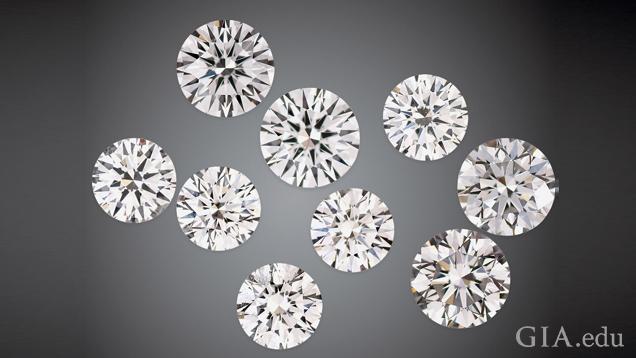
To address this significant challenge, GIA developed the GIA iD100®. This device can be purchased to automatically detect very small diamonds. Additionally, our laboratories offer melee diamond testing services.
As part of the ongoing synthetic diamond research program, GIA has built a CVD growth facility and uses it to manufacture CVD synthetic diamonds for research purposes.