Editor’s Note
This excerpt is from the opening remarks of Guinea’s Minister of Mines, outlining key mining sector reforms implemented since 2010.
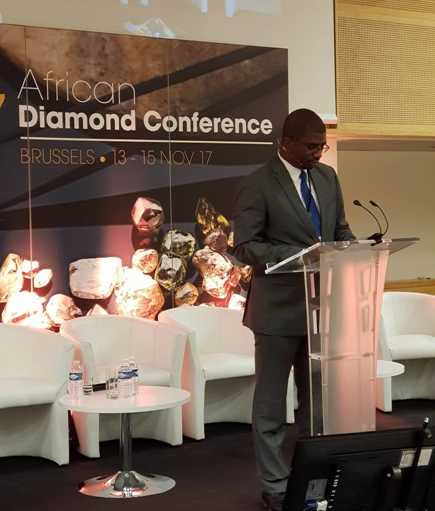
stated Guinean Minister of Mines and Geology, Abdoulaye Magassouba.
Below is the full text of the speech delivered at the African Diamond Conference in Brussels:
Mr. Thabo Mbeki, former President of the Republic of South Africa,
Mr. Deputy Prime Minister, Minister of Development and Cooperation of the Kingdom of Belgium;
Honorable Ministers and Ambassadors, including those from African Diamond Producing Countries,
Mr. President of the Antwerp World Diamond Center (AWDC),
Mr. President of the Kimberley Process,
Representatives of diamond producers,
Representatives of non-governmental organizations,
Distinguished guests,
It is a real pleasure for me to participate in this African Diamond Conference in my dual capacity as Minister of Mines and Geology of the Republic of Guinea and Chairman of the Council of Ministers of the Association of African Diamond Producing Countries (ADPA).
On behalf of Guinea and the ADPA member countries, I would like to thank the authorities of the Kingdom of Belgium for the warm welcome extended to our respective delegations.
The diamond sector occupies a predominant place in the economies of several African countries. The importance of this industry for Africa has been sufficiently emphasized today, notably through the significant investment in research in Angola and its weight in the revenues of states like Botswana.
In countries where artisanal and small-scale diamond mining is developed, several million people derive their main income from it.
Ladies and Gentlemen,
The economies of African diamond-producing countries face unfair competition from synthetic stones, which jeopardize the survival of the diamond industry, particularly in Africa.
This is why it is more than opportune to unite in a synergy of actions to mitigate their impact, as more than half of rough diamonds come from the African continent. We therefore insist on the necessity of working towards absolute transparency for consumers. Consumers have the right to be systematically and conspicuously informed of the exact nature of the products so they can make an informed choice between diamonds and synthetic stones. So that each product is purchased at its fair price.
Ladies and Gentlemen,
I would like to take this opportunity to congratulate the stakeholders of the Kimberley Process. Indeed, thanks to the relevant provisions of this process, the world is now witnessing better governance in the diamond sector: traceability and transparency are improved. We are far from the era when so-called blood diamonds fueled conflicts with their train of misery and desolation.
Despite significant progress, challenges remain, including, among others:
– The implementation of the Washington Declaration;
– Strengthening cross-border cooperation;
– Strengthening the technical capacities of national evaluators;
– Periodic exchanges of best practices to promote information sharing;
– Promotion of geological research for a better understanding of geological potential and its valorization;
– Compliance with environmental standards;
– Development of local content, notably the establishment of local value-creation activities like cutting and polishing services;
– Creation of a diamond exchange meeting international standards.
The Republic of Guinea, as a diamond-producing country, a member of the Kimberley Process, the Association of African Diamond Producing Countries (ADPA), and the Extractive Industries Transparency Initiative (EITI), has undertaken, since the election of President Alpha Condé in 2010, significant reforms including:
– The modernization of the mining cadastre and its online publication;
– Compliance with EITI standards;
– Commitment to reforming artisanal mining;
– Adoption of a local content policy;
– Creation of a Local Development Fund financed by mining operations.
Ladies and Gentlemen,
Today, it has been recognized that notable progress has been made by the diamond industry in improving governance. This momentum must be maintained and even strengthened. It has also been recognized that further efforts are needed by stakeholders to ensure the fair sharing of benefits. Finally, we must note the concern of stakeholders regarding the issue of synthetic stones. I say synthetic stones because diamond has its inalienable attributes.
The progress made by the sector, the efforts made by producing countries, must be sufficiently promoted so that they are justly rewarded by the market. This is why we encourage the Real is Rare campaign, which contributes to achieving this objective.