Editor’s Note
This article explores how accessible drone technology is enabling a new wave of aerial cinematography, from dramatic landscapes to immersive VR, transforming hobbyists into creators.
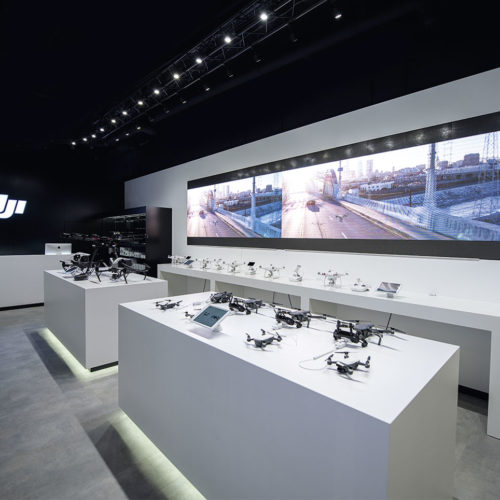
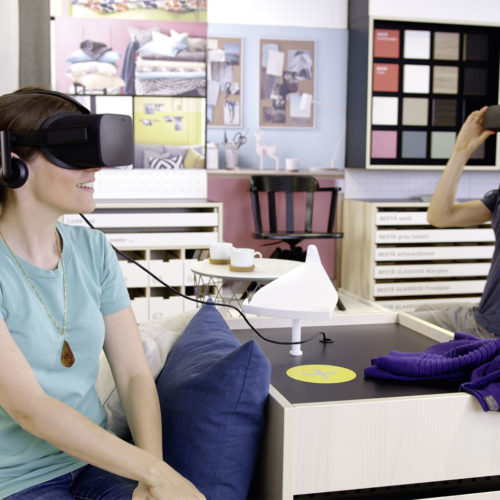
Volcanoes from above, videos of steep cliffs – the company DJI speaks of a “new art form” in connection with film techniques made possible by new drone technologies. With handy camera drones that are easy to control remotely, “video selfies” can be recorded, as well as films from a bird’s-eye view and, with the appropriate device technology, virtual reality films. To demonstrate the creative potential these drones possess even for amateur and hobby filmmakers, the company installed, among other things, a 5.80 m x 2.20 m video wall in its store in the Frankfurt shopping center My Zeil, on which product films are shown. The wall is controlled via a notebook. Customers can try out drone piloting in a “flight cage.” It is now planned to transmit the live camera view from the flight cage directly to the video wall.
Digital screens and video walls, touchscreens, and interactive mirrors: Through the use of digital POS technologies, retailers aim to seamlessly connect their stores with the digital world and, above all, captivate younger target groups. The variety of technologies offered is vast, but the added value for the customer is not always immediately apparent.
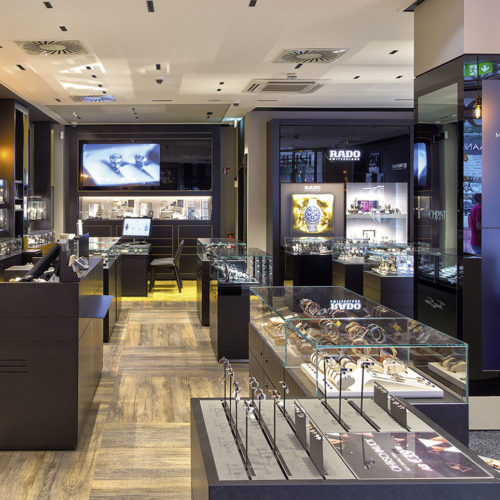
This is what jewelry shopping looks like at jeweler Christ in Hamburg today: In the window facing Spitaler Straße, a 60-inch screen with moving image pictures directs the attention of passersby to the company’s current campaign. In the store, customers inform themselves about brand, product, and service topics at interactive touchscreens. An interactive mirror (“Magic Mirror”) invites them to try on a pearl necklace virtually, which is only available as an online item at Christ. Augmented Reality gives the customer a first impression of whether the piece of jewelry suits their personal style. If yes, the item is purchased – online in the store, of course.
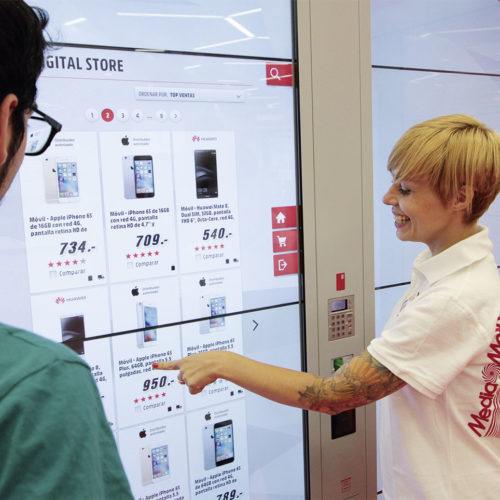
Digital technologies for sales support are spreading more and more in retail stores. Interactive touchscreens, screens and video walls whose content changes every few seconds, and monitors in fitting rooms are intended to make shopping at the POS more inspiring and entertaining.
It is clear: The beautiful new digital world has not yet become widely established, but the trend has been recognized by the retail sector. Omnichannel, i.e., the linking of stationary and digital sales channels, and digital transformation as a general restructuring of the IT structure are the most important technological trends for decision-makers in retail in the coming years. This is the conclusion of the EHI study “IT Trends in Retail 2017.” Projects to implement the omnichannel strategy have the highest priority in every second retail company. By restructuring the IT infrastructure and renewing merchandise management systems, retail is currently creating the technical prerequisites for a seamless system landscape and thus also for the integration of digital in-store technologies as part of its omnichannel strategy – not only for marketing applications but also for optimizing internal business processes. For about one-third of respondents, the “Digital Store” is among the most important technological developments of the next three years (see graphic).
Given the diversity of offerings of digital technologies for sales support, the retail sector sees itself challenged to filter out the applications that offer real added value to the customer. And they must fit the environment and the industry.
PSA Retail, Frankfurt: With a digital in-store experience concept, France’s leading car manufacturer appeals to the digital buyer generation. (Photo: Citroën/Groupe PSA)
According to the EHI Store Monitor 2017, digital screens and video walls have become established in retail. These technologies are in use today at about two-thirds of the retailers surveyed. If in-store TV is added, it’s even over 80 percent of retailers using this technology. The great advantage of Digital Signage is that retailers can tailor their in-store communication for maximum impact. The content can be centrally controlled and locally updated via a digital platform.
Scala, one of the leading providers of Digital Signage solutions, cites the results of its own study in this context, according to which digital presentation leads to 89 percent more views and a 52 percent increased attention from customers compared to analog signage.
Interactive terminals, including kiosk systems on the sales floor, have also become established. They serve customers as a point of contact for their questions but also for the online ordering of items not available in the store’s assortment. However, simply setting up an order terminal in a department and trusting that the consumer will shop in the provider’s web shop on their own does not work. This ordering path is only utilized through the involvement of employees.