Editor’s Note
This landmark ruling by the European Union’s General Court marks a significant legal precedent in the fight against conflict diamonds. By convicting companies for trafficking gems used to fund armed groups, the court reinforces the critical link between corporate accountability and international security.
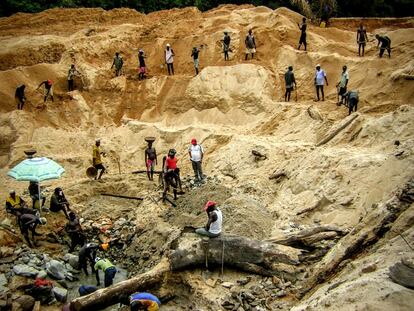
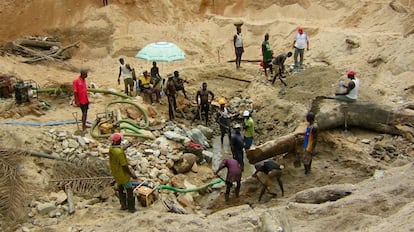
In a historic ruling announced on July 20, the General Court of the European Union (GCEU) convicted a Belgian company and its Central African subsidiary for trafficking diamonds that have been used to finance armed groups fighting in the Central African Republic. The Court upheld the EU Council’s decision to freeze all financial assets of the two companies and declared it illegal to do business with them. This is the first time the European high court has ruled on blood diamonds.
This resolution adds to the initiative approved in May 2017 by the European Parliament, which imposes mandatory controls on the supply of minerals from conflict countries starting January 2021. It seems that finally, the European Union is beginning to take seriously the fight against raw materials that finance conflicts, mainly in Africa.
The case judged by the GCEU has a long history. In August 2015, the United Nations Security Council blacklisted Kardiam, a Belgian company based in Antwerp, and its Central African subsidiary, Badica, the largest diamond trader in the Central African Republic, for violating the 2013 ban on trading these precious stones. Alongside them, it also included the names of three Central Africans linked to the country’s conflict, imposing travel bans and asset freezes: Alfred Yekatom, an anti-Balaka figure known as Colonel Rambo; Habib Sousou, another anti-Balaka commander; and Oumar Younous, a former Seleka general and diamond trafficker.
In May 2014, former President François Bozizé, Nourredine Adam, one of the founders of the Seleka, and Levy Yakete, from the anti-Balaka, were added to the blacklist.
The current conflict in the Central African Republic began in March 2013 when members of the rebel group Seleka seized power with the support of Chad and Sudan. President François Bozizé, who had come to power decades earlier via a coup, fled. Local militias, known as anti-Balaka, organized to oppose the new rulers and their abuses against the civilian population. A new war was served in a nation that has periodically suffered them since its birth. Another conflict that employs thousands of girls and boys as child soldiers.
In recent years, several ceasefire treaties and peace agreements have been signed in the Central African Republic. The most important was in 2014, which allowed elections to be held in 2015 and 2016, won by the current president, Faustin-Archange Touadéra. However, this did not mean the end of violence in the country; it has continued and evolved with the addition of new armed groups (14 are officially recognized) to the already chaotic prevailing situation.
Hence, the Security Council decided to impose sanctions on the main responsible parties.
Following the UN decision, the United States proceeded similarly, as did the European Union, which froze the accounts that Kardiam and Badica had in its territory. Both appealed the decision before the GCEU, arguing that there was no evidence their activities financed armed groups.
Now, the European High Court has upheld the EU’s decision, stating that
These diamonds were exported out of the country, an action that categorizes them as illicit for not respecting the export ban established under the Kimberley Process, a rough diamond certification system to ensure their trade does not fuel conflicts in countries of origin, which came into force in 2002. Similarly, the ruling states that payments made by Badica directly to the Seleka for security and landing fees served to finance the armed group.
and, as noted, joins the law against the import of blood minerals. A document that, although representing great progress in this fight, according to NGOs, has multiple shortcomings that could also influence future rulings.
The first of these is that this regulation focuses only on raw materials, not on finished products. In this way, companies that manufacture their products outside the EU will be able to import blood minerals if they are already part of that finished article, such as mobile phones, for example. In this case, the amount of minerals from conflict countries entering the EU will be unknown, and therefore, it is a loophole that will still allow armed conflicts to be financed.
The European Commission has promised…