Editor’s Note
This article examines the emergence of a new militant group in northern Mozambique, analyzing the complex interplay of international jihadist ideology, local socioeconomic grievances, and state security responses that fuel the conflict.
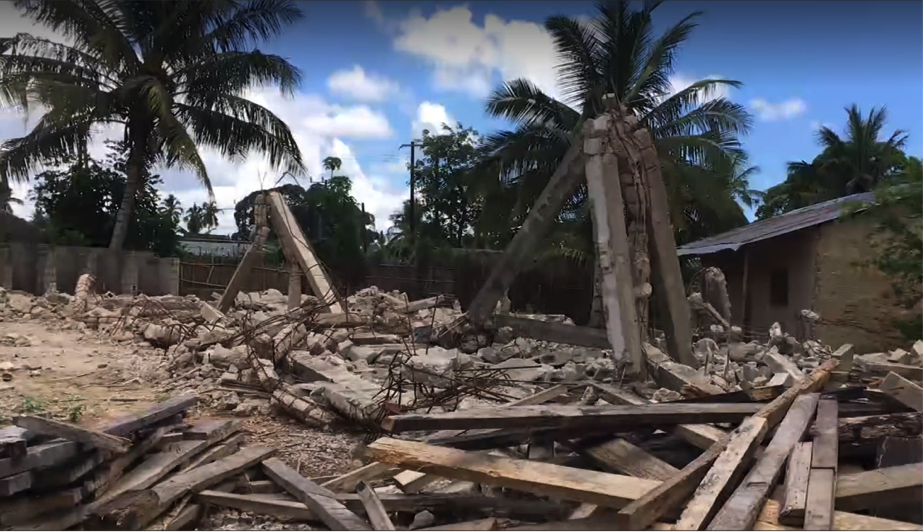
The emergence of a new Islamist militant group in northern Mozambique has raised significant concerns regarding the influence of international jihadist ideology, the social and economic marginalization of local Muslim populations, and oppressive security responses.
News of attacks on October 5, 2017, by an Islamist group on multiple police posts, government officials, and residents of the village of Mocímboa da Praia in Cabo Delgado province took international jihadism observers by surprise. However, the group’s existence did not surprise members of the provincial Islamic Council, who stated they had reported the group’s existence and the threat posed by its extremist ideology to authorities for several years. Despite the warnings, it appears the national police only began taking action in May 2017, arresting members of the movement—which police call Al-Shebab of Mozambique—in the districts of Quissanga and Macomia. By March 2018, police declared having arrested 470 people and prosecuted 370 individuals, including 314 Mozambicans, 52 Tanzanians, 1 Somali, and 3 Ugandans.
The October 2017 attack on police posts suggests the attackers harbored resentment towards local security forces. Village residents stated that many young Muslims had disappeared from the area after the attacks. Rumors explaining the disappearances range from extrajudicial executions by Mozambican security forces to suggestions that some youths fled to Tanzania to avoid being potential targets.
In late December 2017, government forces conducted helicopter raids and bombed from warships the village of Mitumbate in the Mocímboa da Praia district, the group’s suspected stronghold. Government forces reportedly killed 50 people, including women and children, and detained around 200 individuals. Local health authorities explained to a Mozambican newspaper that their hospitals had been overwhelmed by the wounded seeking care.
Despite assurances from the Mozambican national police that they had restored peace to Mocímboa da Praia, other attacks in the province have been attributed to the group. The violence has led some multinational companies operating in the region to evacuate employees.
It appears the group, locally known as Al-Shebab (the Youth) and Swahili Sunna (The Swahili Way), is attracting new recruits. On January 13, national police arrested 24 men arriving by bus from Nacala in Nampula province. They were suspected of traveling to join the group in the neighboring Cabo Delgado province.
The group’s leaders appear to draw inspiration from international jihadism, pursuing the same goals and objectives, such as establishing an Islamic state governed by Sharia law and rejecting the government’s secular education system. According to traditional imams from the Mocímboa da Praia and Montepuez districts, one of the leaders is a Gambian named Musa. The other leader, a Mozambican, goes by the name Nuro Adremane. He is said to have received a scholarship for training in Somalia. He reportedly traveled by car through Tanzania and Kenya to reach Somalia, as other group members had done. The Gambian leader has actively sought to recruit members in the Montepuez districts from a segment of the population that harbors resentment towards security agents of an international mining company and the national police. This suggests the Gambian tried to transform local residents’ resentment into a narrative of revenge.
The fundamentalist interpretations of Islam adhered to by the militant group reinforce an ideology introduced recently to the region by youths who received scholarships to study in Sudan, Saudi Arabia, and Gulf countries. These interpretations are at odds with the Sufi Islam long practiced in the region.
In recent years, the group has used two mosques in Mocímboa da Praia to teach its version of Islam. Children who studied in these mosques and other fundamentalist mosques established in recent years have reached the age of militia participation. Government authorities closed the two mosques following police action in May 2017.
According to Sheikh Bakar of the Montepuez Islamic Council, the group’s leaders were influenced by Sheikh Aboud Rogo Mohammed, the radical Kenyan imam residing in Mombasa, who preaches in Swahili and whose videos have been disseminated across East Africa. Sheikh Aboud Rogo Mohammed was placed on U.S. and U.N. sanctions lists for allegedly supporting Somali Al-Shebab militants. In 2012, he was assassinated by unknown assailants.