Editor’s Note
This article examines the disruptive rise of lab-grown diamonds, which are now virtually indistinguishable from natural stones and are reshaping market dynamics with their significantly lower cost.
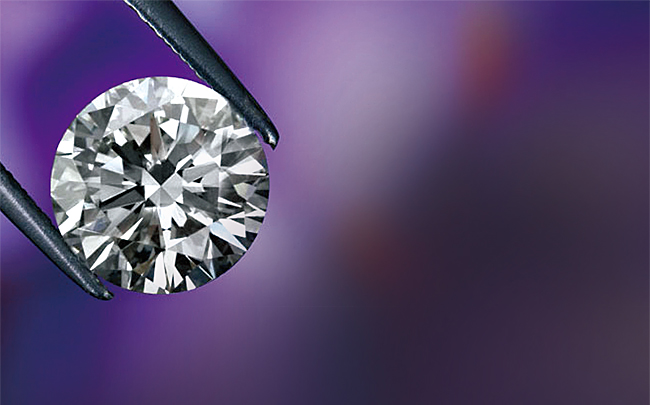
Artificial diamonds are causing a seismic shift in the diamond industry. The technology has reached a level where it is difficult to distinguish artificial diamonds from natural ones with the naked eye. Their prices are also incomparably cheaper than natural diamonds. The world’s leading jewelry companies are on edge about the impact that affordable, high-quality artificial diamonds will have on the gemstone market.
Which company produces the most diamonds in the world? It is the British De Beers Group, which holds 70% of the global diamond market (worth approximately 85 trillion won). This company’s unique characteristic was its stubborn insistence on only natural diamonds. It even established the Diamond Producers Association (DPA) to highlight the appeal of natural diamonds.
Surprisingly, this very De Beers recently entered the artificial synthetic diamond market. Starting September 27th, it launched and began selling its first artificial diamond brand, ‘Lightbox’. These are gem-quality artificial diamonds comparable to natural ones. Why did De Beers, which believed ‘only diamonds mined from the earth hold true value,’ suddenly start selling artificial diamonds?
In short, it’s due to changing demand. When global startups like America’s ‘Diamond Foundry’ and Russia’s ‘New Diamond Technology’ began producing high-purity artificial diamonds in laboratories to an extent that could undermine the value of the natural diamond market, De Beers, stimulated by this, anticipated the shift in demand and jumped directly into producing synthetic diamonds. They judged that sophisticated yet inexpensive artificial diamonds would become popular among cost-conscious consumers in their 20s and 30s. In the US, this age group leads two-thirds of diamond purchases.
Currently, the price of artificial diamonds on the market is up to 30% cheaper than natural diamonds. De Beers’ Lightbox has set prices much lower than that. A 1-carat (200mg mass) artificial diamond costs about 900,000 won. This is one-ninth the price of a natural diamond (up to 8 million won), the lowest level in the industry.
Why did De Beers slash prices so drastically? Experts see it as a strategy to differentiate from natural diamonds and thereby enhance the scarcity value of natural diamonds. It takes De Beers just two weeks to produce an artificial diamond in the lab. This indicates the potential for mass production. Currently, artificial diamonds account for only 2% of the diamond market, but experts forecast this will increase to around 10% by 2030. De Beers’ plan is to increase artificial diamond production to an annual level of 500,000 carats by 2020.
Humans have long made great efforts to create expensive gemstones using cheap materials. It began with alchemy, trying to make gold (Au) from lead (Pb), and based on this, gemstone synthesis started. Diamonds, which were rare due to the difficulty of mining and limited sources, are no exception.
Artificial synthetic diamonds are primarily made in two ways. One is the High-Pressure High-Temperature (HPHT) method. Developed by America’s General Electric (GE) in 1955, this method subjects graphite powder to ultra-high temperatures of 1400–2000°C and ultra-high pressures of 50,000–100,000 atmospheres. This is the current method for producing industrial diamonds.
The other is Chemical Vapor Deposition (CVD) using plasma. This method decomposes gases like methane, a carbon compound, using heat or microwaves to create a high-temperature plasma (the fourth state of matter), which is then sprayed into a vacuum vessel heated above 3000°C to grow into diamond. De Beers’ Lightbox diamonds are made using this method. It’s a technique increasingly used today because it’s fast, growing diamond at a rate of 0.006mm per hour. The important fact is that regardless of the process, the result is a diamond where one carbon atom is bonded to four other carbon atoms, forming a three-dimensional tetrahedron.
It’s common knowledge that diamond is the king of gemstones. But upon closer look, it’s a remarkably simple gem. It’s made from just one material: carbon, like graphite. Charcoal, graphite, and diamond are all composed of the same element, carbon. However, their fate is determined by the conditions of formation (temperature and pressure). If carbon withstands high temperatures and immense pressure deep underground, it becomes hard diamond; if it simply burns, it becomes soft charcoal.
While diamonds and graphite are both made of carbon, the arrangement of atoms differs, making them distinct substances. However, artificially and rapidly grown lab-created diamonds have the same chemical structure and physical properties as natural diamonds. Only the crystal structure differs. Natural diamonds grow over hundreds of millions of years below the Earth’s surface, allowing impurities to become trapped. In contrast, artificial diamonds are made quickly using only carbon in a sealed environment, leaving no room for impurities. The presence or absence of these foreign elements is the only difference between natural and artificial diamonds.
Foreign elements other than carbon determine the subtle color of a diamond. For example, if one nitrogen atom takes the place of a carbon atom, the diamond takes on a deep, beautiful yellow hue. When diamond crystals form, nitrogen, abundant underground, easily replaces carbon. 98% of gem-quality diamonds contain nitrogen atoms.
If boron replaces carbon, the diamond becomes blue. The famous blue of the ‘Hope Diamond’, notorious for its curse of ‘death to those who possess it’, is due to boron. Boron is sparsely distributed underground and rarely included in diamond crystals, making such diamonds extremely expensive.
On the other hand, artificial diamonds made of pure carbon reflect 100% of light, appearing colorless. Just as fish don’t swim in water that’s too clear, a perfect diamond with no impurities lacks subtle charm and is less valuable. The finest diamond brilliance is achieved when very slight impurities are present. Even the top diamond company, De Beers, is determined to commercialize optimal diamonds with a subtle glow through chemical control.
There is no eternal champion in this world. Attention is focused on whether natural diamond, recognized as the hardest substance, will cede its throne as the king of gemstones to its even stronger counterpart, the artificial diamond.