Editor’s Note
This article examines the growing market for synthetic diamonds and its potential impact on the value of natural stones. As lab-grown gems become increasingly indistinguishable from their mined counterparts, questions about long-term valuation and consumer perception are more relevant than ever.
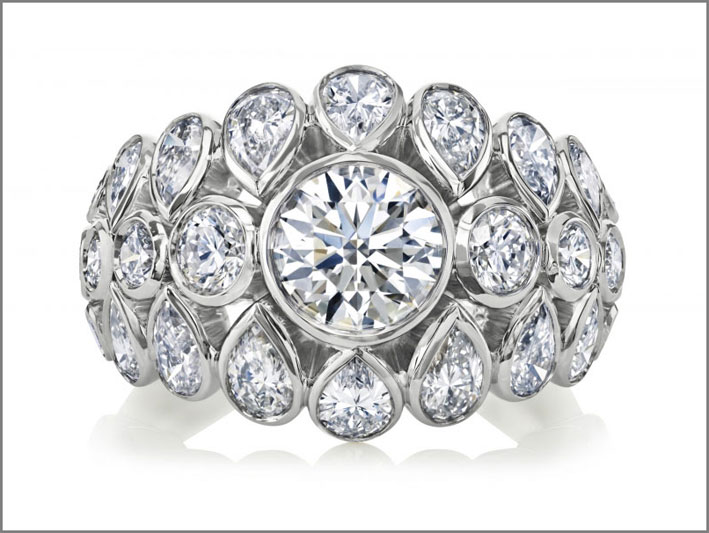
Will the spread of synthetic diamonds lower the value of your natural diamonds? According to this analysis… ♦
These are legitimate questions now revisited by Paul Zimnisky, an independent analyst and consultant for the diamond industry.
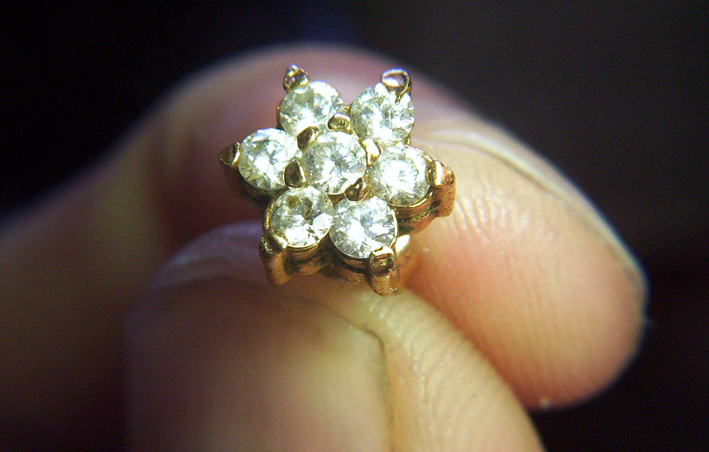
According to Zimnisky’s assessment, the sale of synthetic diamonds will multiply in the coming years. Already, higher-quality diamonds are being produced in colors like pink and blue. Synthetic diamond production for the jewelry market exceeds 1.5 million carats per year. And the prices for high-quality synthetic diamonds sold for jewelry have fallen by 30-40% over the last two years. The trend continues: diamond giant De Beers announced its market entry with synthetic diamonds last year. Estimates suggest the price for De Beers’ synthetic diamonds could be reduced by 65-80% compared to current prices. Furthermore, the largest manufacturer of equipment for producing synthetic diamonds has a year’s worth of backorders.
Consider these numbers carefully: Investment in synthetic diamonds is expected to reach $1.9 billion in the coming years. Accordingly, the lab-grown diamond jewelry market is projected to grow by 22% per year, reaching $5.2 billion by 2023 and then rising again to $14.9 billion by 2035, with a long-term growth rate of about 9 percent. This is also thanks to improvements in production technologies, which should further lower prices. In summary: In the coming years, there will be an invasion of synthetic diamonds, thanks to price reductions, increased production, and the positive image of these stones. Synthetic diamonds are thus considered environmentally friendly (even if in reality they are very energy-intensive), as you don’t have to scour mountains or dig holes in the earth to obtain them.
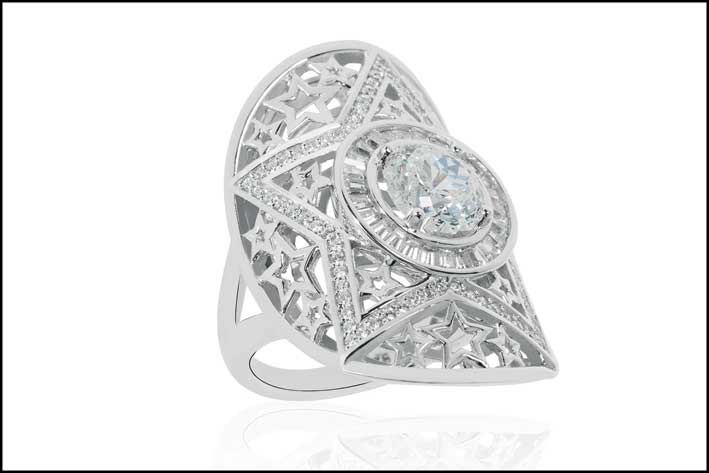
The global jewelry industry, also in Paul Zimnisky’s analysis, is valued at $270 billion. Lab-created diamonds currently make up 2% of the $87 billion market that includes natural stone jewelry. Natural diamonds will still make up the majority of this market in the near future. However, lab-created diamond jewelry pieces are expected to rise to 3.4% by 2035 and to 4.5% by 2035. Most jewelry with synthetic diamonds is sold at a price between $250 and $1000.
It’s not just synthetic diamonds. For years, the world of bijoux has also used rubies, sapphires, emeralds, etc., created in the laboratory. Unlike diamonds, these stones are very affordable. If you see jewelry with ruby-colored or sapphire-colored stones for a few dozen euros, you can be sure they are synthetic imitations, even if this is not (unfortunately) indicated in the description of the bijou. The current size of this market is estimated at around $40 billion. Compared to synthetic colored gemstones, lab diamonds account for less than 1%. However, as the price of diamonds falls, their prevalence in the fashion bijoux sector also increases: Lab diamonds will make up 3% of the fashion jewelry market by 2023 and nearly 7% by 2035, with a price under $250. This is another reason that could affect the value of your diamonds.

Natural diamonds currently make up more than 95% of the diamond jewelry market. However, natural diamond production is expected to decline over the next four years. And this is also because diamond mines are still running out, although there are still some deposits yet to be discovered. From another perspective, this trend (i.e., the decline in mined natural stones) could add value to natural diamonds despite the spread of lab-grown gems. According to the analyst, consumers in countries like China and India may not perceive lab-created diamonds as a substitute for natural diamonds. In short, marketing will play a key role in convincing those buying a jewel to choose a diamond. A diamond is forever? Yes, but which one?