Editor’s Note
This article offers a glimpse into Antwerp’s historic diamond district, a critical hub where the majority of the world’s rough stones are traded. It explores the challenges and transformations facing this centuries-old industry.
“Jewelry-less?” Carlo Ratzersdorfer is irritated. From the desk of his spacious, bright office, the diamond dealer from Antwerp casts a brief glance at what is probably the most famous street in the Belgian port city: On the 200-meter-long “Hoveniersstraat,” the offices of around 1,600 diamond wholesalers and four diamond exchanges are crammed together.
Here beats the heart of the global diamond trade. Here, 85 percent of the world’s rough diamonds are traded.
Here, jewels are not sold to private customers, but diamonds are traded on a large scale. To be precise: to the tune of around $260 million worth every day. “Functionality” is what matters to the 69-year-old dealer, whose great-great-grandfather was Viennese.
And security, of course: The quarter, protected by barriers – “not even a truck can get through,” assures Ratzersdorfer – is guarded by the military, police, private security personnel, and cameras. No visitor is allowed into offices and exchanges without strict controls and accompaniment.
Carlo Ratzersdorfer has been in the diamond business for over 40 years.
he says in excellent German, with a hint of soft Viennese intonation still audible.
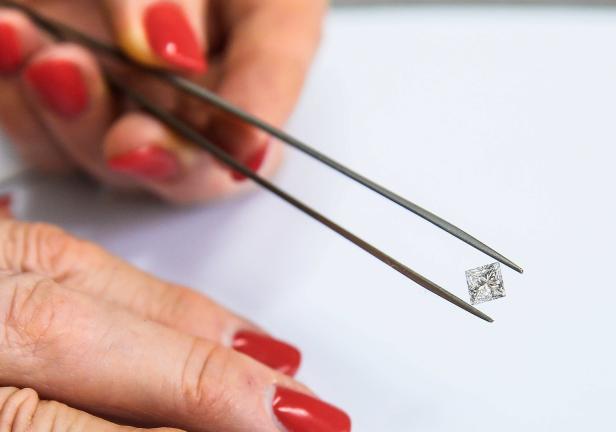
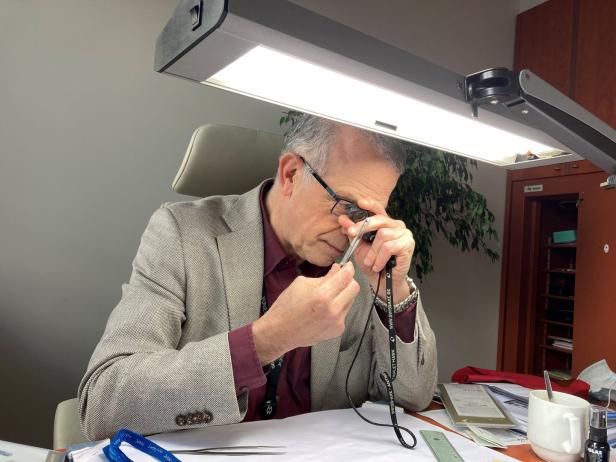
One doesn’t even need to ask why: To confirm his enthusiasm, the youthful man in his late sixties retrieves one of his valuable stones from the safe, prepares tweezers and a loupe, and invites admiration for the cut stone:
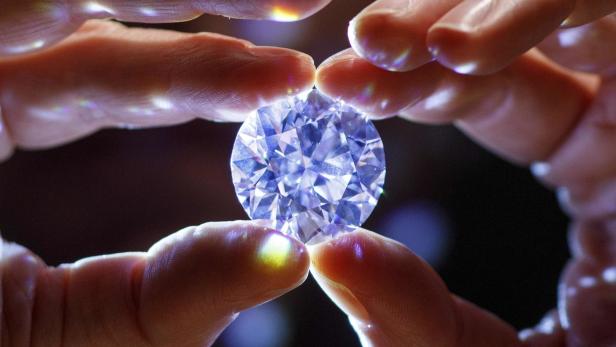
he describes.
The value of the small stone lying on the table is $16,000. 1.5 carats. Viewed under the loupe: pure beauty.
The value of a diamond is measured by the four Cs: Colour, Cut, Clarity, Carat.
adds Ratzersdorfer:
And that even more so in times of the coronavirus pandemic. Already during the first lockdown in spring, the industry experienced
describes the “diamantaire.”
For those who save do not buy diamonds. And those who invest for hard times rarely put their wealth into diamonds: the valuation of the gemstones is too volatile.
Antwerp’s tradition of diamond cutting and trading is over five hundred years old. Because European Jews were not allowed to acquire land or practice many professions until well after the Middle Ages, they concentrated on trade – including in diamonds.
Although modern diamond cutting was discovered by an inhabitant of the city of Bruges, it was in Antwerp that it was brought to perfection. The favorable location at the port did the rest.
To this day, the diamond industry is an important pillar for Belgium’s economy – it contributes five percent of Belgian exports and secures a total of around 30,000 jobs.
But where Orthodox Jews with their typical black coats and hats once dominated the street scene of the diamond district, more and more Indians are now mixing in. They already form the largest group among Antwerp’s “diamantaires.”
In general, much has changed in the world capital of diamond trading in recent years. Deals and sales are concluded in offices and in front of the computer. The large exchange hall decorated with marble pillars near Ratzersdorfer’s office, on the other hand, is almost empty.