Editor’s Note
This profile of M.P. Ahamed, founder of Malabar Gold & Diamonds, illustrates a foundational business principle: meticulous execution in ordinary tasks can build an extraordinary enterprise. His journey from spice trader to industry titan is a testament to the power of consistency and precision.
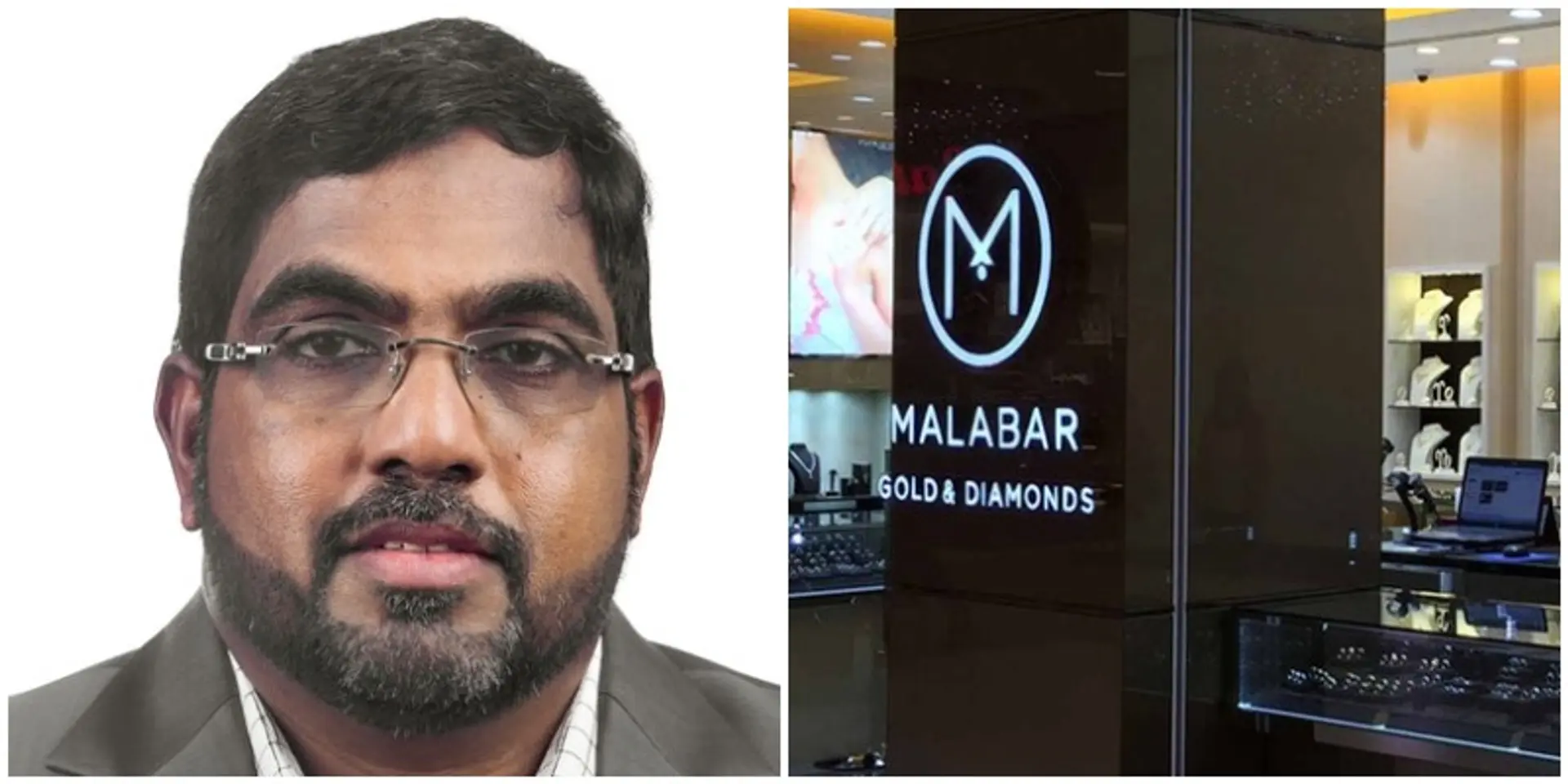
One of the secrets of success is to do ordinary things extraordinarily well, and without mistakes. M.P. Ahamed, the 62-year-old founder of Malabar Gold & Diamonds, is a prime example of this. Born into a family of traders and landowners, Ahamed began his entrepreneurial journey at the age of 20 by establishing a spice trading venture in 1979. He traded cardamom, pepper, and coconut with retailers in Kozhikode (then Calicut), Kerala. However, he soon realized that the trading business would not scale significantly.
K.P. Narayanan, Head of Media and Marketing at Malabar Gold & Diamonds, shares insights into Ahamed’s early life:
Narayanan recounts that in the early years of Ahamed’s business journey, a significant amount of his money was stuck with a retailer in Mumbai. Due to financial distress, the retailer was unable to pay the outstanding amount and was planning to shut down his business. The retailer promised Ahamed he would settle the dues by selling his own brand.
This incident served as a cognitive lesson for Ahamed. He understood the importance of building a brand and soon realized he needed to create his own. But not in the spice trade. He decided to leap into a completely different journey.
Ahamed conducted extensive market research and realized that the jewelry sector was largely dominated by the unorganized sector. This became his motivation to start his new venture. Summoning all his courage, he decided to establish a business in the industry and promote his native region, Malabar. However, he lacked the funds for such a significant move.
Ahamed explains:
Thus, in 1993, the company started with a small 400 sq ft shop in Calicut. Ahamed began by purchasing gold bars and then getting jewelry crafted by goldsmiths. The start was good, with customers enamored by the designs and collection. Within a short time, Malabar Golds & Diamonds expanded to two more stores in other small towns of Kerala – Tirur and Tellicherry. Seeing the business progressing well, in 1995, Ahamed closed the old store and opened one that was 4,000 sq ft.
In 1999, Ahamed identified the need to enhance the quality of gold jewelry. He was at the forefront of introducing BIS-hallmarked jewelry in Kerala. The 916-carat meter in gold added distinct beauty, and since then, the brand never looked back.
In 2001, Malabar Golds & Diamonds stepped outside India and opened its first store in the Gulf region. By then, the company had 10 directors. Malabar opened its 50th store in Riyadh in 2011. By that time, the company had sold goods worth ₹12,000 crore. By 2013, it had a retail network of 103 outlets across seven countries, plus 10 wholesale units, offices in India and UAE, design centers, and factories.
Malabar became the world’s third-largest jewelry retailer by annual turnover, with over 80 showrooms worldwide, establishing a strong presence in both India and the Middle East. In 2016, the company opened its 150th store in Belgaum. The group completed 22 years in the jewelry retail industry with contemporary designs. In 2017, to strengthen its global position as a leading jewelry retailer, Malabar Gold & Diamonds established a store in Dubai, which was its 200th store.
One of the top five jewelry retailers globally, Malabar Gold & Diamonds opened 11 new showrooms across six countries on a single day, January 12, 2018. Bollywood actor Anil Kapoor inaugurated its outlet in Lulu Hajana, Sharjah. In 2019, the company made a grand entry into the USA by opening its 250th outlet in Chicago. The company, which started in 1993 with seven investors, now has 4,600 investors. In the last financial year, Malabar Golds & Diamonds achieved a turnover of ₹27,000 crore. Its pieces are manufactured in factory units located in Calicut, Thrissur, Coimbatore, Bengaluru, Hyderabad, Mumbai, and Kolkata in India. Malabar also has a facility in Dubai. Narayanan says 60 percent of products are purchased from suppliers. The company also imports jewelry to meet customer demand.
Narayanan says scaling a business is always associated with challenges related to operations, regulations, markets, and consumer sentiment. Currently, consumer sentiment has improved due to the existing economic landscape and fluctuations in gold prices. However, the company is confident that conditions will improve over time.
On the regulatory side, Malabar feels that high import duties pose a challenge for organized jewelry retail, as it indirectly promotes illegal gold transactions. Banks and financial institutions tighten credit risk for the gem and jewelry sector, which in turn reduces capital-raising options for organized jewelry retail chains like Malabar.