Editor’s Note
While major jewelry companies have made progress in sourcing, this report highlights a critical gap: most cannot guarantee their products are free from human rights abuses. The pandemic has exacerbated risks for miners, underscoring the need for stronger, enforceable regulations rather than voluntary measures alone.
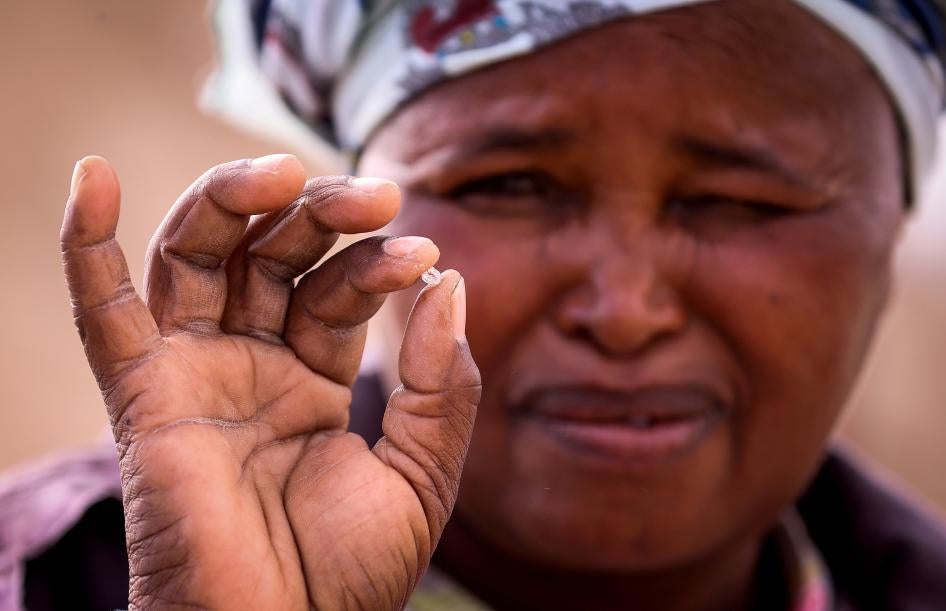
Major jewelry companies are improving their sourcing of gold and diamonds, but most cannot assure consumers that their jewelry is free from human rights abuses.
Many workers in gold and diamond mines labor under dangerous conditions. The Covid-19 pandemic has increased the risks of exploitation and abuse.
Voluntary standards can encourage better practices, but only mandatory legal requirements will ensure that all jewelry and watch companies take human rights seriously.
(London) – Major jewelry companies are improving their sourcing standards for gold and diamonds, but most cannot assure their consumers that their jewelry is free from human rights abuses, Human Rights Watch said in a report released today ahead of the holiday shopping season.
The 84-page report, “Sparkling Jewels, Opaque Supply Chains: Jewelry Companies, Changing Sourcing Practices, and Covid-19,” analyzes and ranks 15 jewelry and watch brands on their efforts to prevent and address human rights abuses and environmental harm in their gold and diamond supply chains. Since Human Rights Watch first reported on these issues in 2018, company actions continue to be reviewed. While most of the jewelry companies examined have taken some steps to improve their practices, most still do not meet international standards.
Human Rights Watch also assessed the impact of Covid-19 on the mining and jewelry sectors. Mine workers, their families, and communities have been deprived of income in places where mining has stalled due to lockdowns. Conversely, where industrial mining has continued, miners work close to each other in enclosed spaces and sometimes even live together in hostels, putting them at greater risk. In some small-scale mining areas, child labor and illegal mining and trading have increased.
Human Rights Watch conducted extensive research in numerous countries where abusive practices corrupt the supply chain.
In Venezuela, armed groups known as “unions” control illegal gold mines and have committed horrific abuses against residents and miners, including punitive amputations and torture.
In Zimbabwe, the state-owned Zimbabwe Consolidated Diamond Company has hired private security agents who have mistreated residents accused of mining diamonds, including threatening them with dogs.
Hazardous child labor occurs in small-scale gold mining areas in Ghana, Mali, the Philippines, and Tanzania, where children are exposed to mercury used in the process. Children have died in mining accidents.
Jewelry and watch companies have a responsibility to conduct human rights and environmental due diligence to ensure they do not cause or contribute to rights abuses in their supply chains, in accordance with the United Nations Guiding Principles on Business and Human Rights. “Due diligence” refers to a company’s process to identify, prevent, address, and remedy environmental and human rights impacts in its supply chains.
The 15 assessed companies collectively generate over $40 billion in annual revenue, about 15 percent of global jewelry sales. Nine companies responded in writing to letters requesting information on their sourcing policies and practices: Boodles, Bulgari, Cartier, Chopard, Chow Tai Fook, Pandora, Signet, Tanishq, and Tiffany & Co. Six companies did not respond to multiple requests: Cristo, Harry Winston, Kalyan, Mikimoto, Rolex, and TBZ. Human Rights Watch based its assessment on information received or publicly available.
Eleven of the assessed companies have taken some steps to improve their human rights due diligence since the publication of the 2018 report, “The Hidden Cost of Jewelry: Human Rights in Supply Chains and the Responsibility of Jewelry Companies.”