Editor’s Note
This article contains disturbing accounts of violence against miners in some African diamond operations. While the Kimberley Process certifies “conflict-free” diamonds based on specific criteria, activists argue that systemic abuse and exploitation in mining areas constitute a broader, often unaddressed, conflict. The views expressed highlight ongoing debates about ethical sourcing and the real human cost behind the global diamond trade.
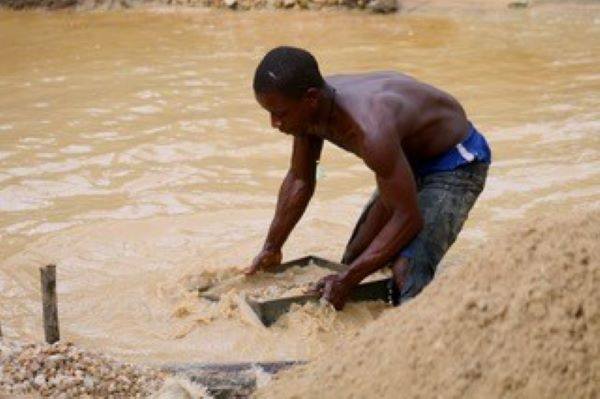
“If we consider the violence and sexual violence suffered by diamond miners in Africa as a form of ‘conflict,’ then there are almost no truly conflict-free diamonds circulating in the world.” Shamiso Mtisi, Global Coordinator of the Kimberley Process Civil Society Coalition, stated this at a seminar hosted by the NGO Diamond for Peace (DFP). The perpetrators of assaults, rapes, torture, and murders against miners are often private mining company security guards or soldiers hired by African governments.
For diamond buyers, it is currently almost impossible to distinguish whether a rough diamond is truly ‘conflict-free,’ including from contexts involving assault and rape. Mtisi reveals, “Diamonds with Kimberley Process certification and diamonds that are truly conflict-free (meaning no human rights violations during mining) are completely different.”
However, the Kimberley Process definition remains narrow. It certifies a diamond as non-conflict based solely on one point: “whether the rough diamond is used by rebel movements in Africa to finance efforts to overthrow legitimate governments.” Whether diamond miners or local residents in mining areas suffer human rights violations is not included in the definition at all.
Many victims of violence and sexual violence are mining workers in countries like Zimbabwe, Tanzania, the Central African Republic, the Democratic Republic of Congo, and Angola.
According to Mtisi, in 2017, the decomposed body of a mining worker tortured by private security guards was found in the grasslands around the Marange mine in eastern Zimbabwe. There are also reports from 2013 and 2016 of residents in the Shinyanga region of northern Tanzania being shot by private security guards, similar to the Marange case, resulting in amputations below the right knee.
According to “Blood Diamonds – Angola’s Corruption and Anguish Over Diamonds” (by Rafael Marques de Morais), overseen by Diamond for Peace, the aim of private security guards (security companies responsible for mine security) is to seize more than half of the diamond mining profits. They allegedly threaten artisanal miners with statements like “if you have money, the torture will be lighter,” and illegally charge fees for access to mining areas. Forcing labor without food, breaks, or wages is also commonplace.
It is known that over 70 cases of sexual violence against women by private security guards occurred in Cuango City, Lunda Norte Province, northern Angola, between 2009 and 2011. Most of the women’s bodies were found with their tongues, genitals, fingers, eyeballs, and internal organs removed.
The background to these bizarre sexual violence incidents is a superstition believed by diamond dealers. Dealers in Cuango reportedly believe in the superstition that “removing a woman’s organs, performing a ritual, and selling those organs can bring great profit in diamond trading.”
The current situation in diamond mines across Africa, including Cuango, remains unclear. Mtisi notes, “Failing to capture the voices of diamond miners and people living in mining areas who suffer human rights violations is one of the challenges of the Kimberley Process.”
Even jewelry companies in Australia and Canada that declare they “only import conflict-free rough diamonds” cannot confirm if those diamonds are truly free of human rights violations. The jewelry brand “My Fair Diamond,” operating in Europe and the US, has its own conflict-free standards. However, as third-party audit conditions cannot be verified, it remains unclear if human rights violations are truly absent.
Hans Merket, a researcher at the International Peace Information Service (IPIS), who spoke at the event alongside Mtisi, points out limitations in the “conflict diamond export ban” decided by the Kimberley Process certification scheme.