Editor’s Note
Tiffany & Co. has announced new principles to increase transparency in its diamond supply chain, pledging to disclose the origin and journey of its gems. This move aims to address long-standing human rights concerns in diamond mining by reinforcing the brand’s commitment to ethical sourcing.
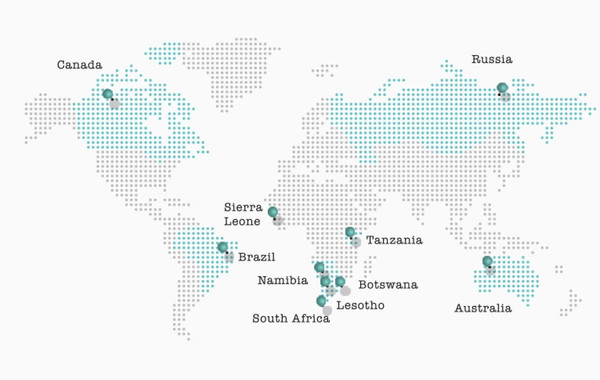
Tiffany & Co. has detailed its commitment to ethical and responsible purchasing on its website, explaining the importance of diamond origin and its efforts to expand supply chain transparency.
Will controversies over human rights violations in diamond mining subside? Tiffany has announced new principles for supply chain transparency.
On the 19th (local time), the world-renowned jewelry brand Tiffany announced that it will disclose the origin and supply process of its diamonds to expand the transparency of its supply chain. Since last October, Tiffany has been registering individual information for each newly supplied diamond over 0.18 carats, including the purchase region and origin.
Going forward, the company plans to disclose not only detailed information about the diamonds but also the step-by-step supply process, including purchase and mining, to customers. The aim is to alleviate customer concerns about human rights violations occurring during diamond mining and to meet customer demand for ethical and environmentally friendly diamonds.
According to Tiffany, “For years, we have sourced diamonds from conflict-free countries and worked to reduce our social (S) and environmental (E) impact in this process.” In 2014, Tiffany declared that it would purchase 100% of its diamonds only from countries with verified mining and supply sources that participate in the Kimberley Process Certification Scheme. The Kimberley Process certifies that rough diamonds are from ‘conflict-free countries’ upon shipment and prevents diamonds from conflict zones from entering the legitimate trade market.
Tiffany disclosed that it employs over 4,000 people in Botswana, Africa, and generates over $59 million in economic impact.
Furthermore, from 2017 to 2019, the company increased its workforce by over 2,000, focusing on overseas diamond facilities and U.S. jewelry manufacturing, and developed a system to track individually registered rough stones. Tiffany stated it will further expand these efforts to disclose in detail the specific origin of diamonds and the detailed processes of mining, sorting, cutting, and setting the rough stones.
According to Tiffany, the diamond supply process is as follows: Diamonds are mined from conflict-free countries in Southern Africa, Russia, Namibia, etc., then brought to Belgium for sorting. They are then transferred to Mauritius, Botswana, Cambodia, etc., for refining, before being sent to the U.S. and Southeast Asian institutes for final quality control. Finally, jewelry products are manufactured using the diamond rough in various factories and then sold.
However, due to the nature of jewelry products and raw materials, tracing their sources is very challenging. It reportedly took Tiffany decades to fully realize supply chain transparency. Because Tiffany’s supply chain is complex and vast, tracking very small-sized products is not easy.
Meanwhile, the global gemstone industry generates approximately $80 billion in annual revenue, yet its supply chains remain opaque.
Despite these complex processes, Tiffany has declared it will be the first among global luxury jewelry companies to lead in supply chain transparency. The company stated it does not purchase diamonds from Zimbabwe or Angola, where human rights violations occur during mining, and that its supply chain information will be provided along with a certificate explaining the history of the gemstone in the jewelry product.
In a company statement, Tiffany said:
Andrew Hart, Senior Vice President of Diamond and Jewelry Supply at Tiffany, said:
To track diamond rough in detail, Tiffany also operates jewelry manufacturing workshops worldwide, including the Tiffany Gemological Laboratory in New York, and facilities in Belgium, Mauritius, Botswana, Vietnam, Cambodia, and the United States.