Editor’s Note
This article highlights a shift in the *Diablo II: Resurrected* economy, as players increasingly trade for perfect gems to fuel end-game crafting and rerolling activities.
Recently, looking at trade-related posts for Diablo II: Resurrected, there is a growing trend of players purchasing perfect gems. Some are even selling items for perfect amethysts and other gems. As two months have passed since the game’s launch, users who have finished setting up their hunting gear are now showing interest in option rerolling and crafting.
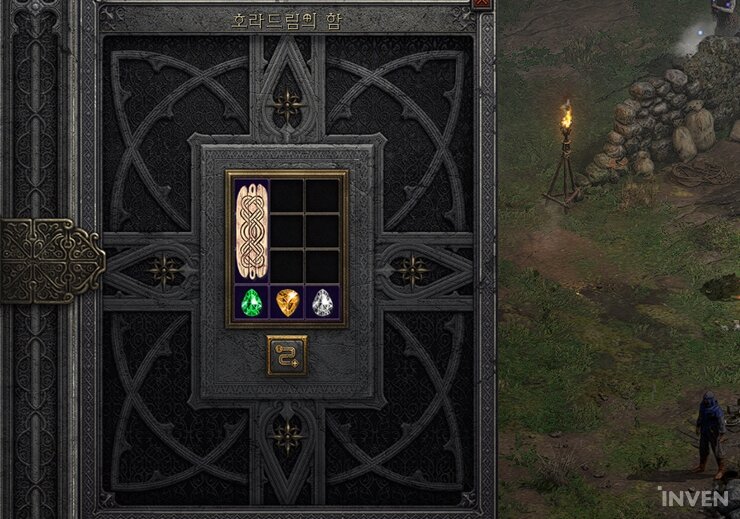
Option rerolling refers to combining three perfect gems and a magic-grade item in the Horadric Cube. Charms are a representative item used for rerolling, and other items like magic Monarchs are also used as materials. In crafting, Caster amulets are the most popular. Today, we will briefly introduce option rerolling and major crafting methods that many are attempting in hopes of a huge jackpot.
This is the first method that comes to mind when thinking about option rerolling. By placing a charm and three perfect gems in the Horadric Cube and combining them, the charm’s options change. The available options are determined by the item level (ilvl), so charms dropped by Baal, Nihlathak, or Diablo are typically used. While charms with lower ilvls can be used, if they have an ilvl too low to receive good options, you may only waste perfect gems. Any type of gem can be used for rerolling.
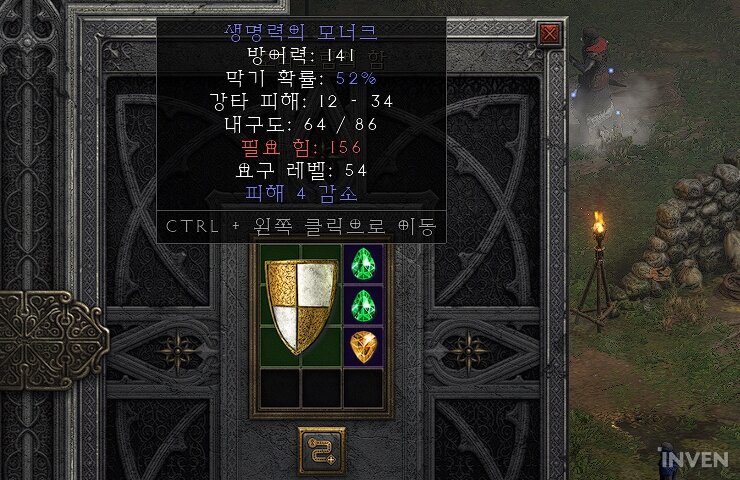
The principle itself is the same as charm rerolling. By combining a magic Monarch and three perfect gems in the Horadric Cube, if you get a magic Monarch with 30% Faster Block Rate, 20% Chance to Block, and 4 sockets (commonly called ‘twin-block’), it can be traded for an enormous price. Besides twin-block, magic Monarchs with life options (up to 60) are also known to be very expensive, and ‘half-block’ (30% Faster Block Rate, 10% Chance to Block) or -30% Requirements also hold significant value.
These areas include the Cave (Levels 1-2), Forgotten Tower (Levels 3-4) in Act 1 Hell; the Rocky Waste (Level 1), Lost City, Harem (Level 2), and Palace Cellar (Levels 1-3) in Act 2. Not just Monarchs, but all magic-grade items can be rerolled.
Users who specifically gather perfect skulls often perform rare Diadem rerolling. By combining a rare item with six perfect skulls, the item’s grade remains the same while only its options change. If you obtain a rare Diadem with +2 to a class skill tree, plus Faster Cast Rate, Faster Run/Walk, stats, resistances, or 2 sockets, it could potentially turn your Diablo life around.
While other rare items can also be rerolled, this method using six perfect skulls has the characteristic of slightly lowering the item level (ilvl) each time it is performed. Therefore, if repeated, you might never get the desired prefix. Since Diadems are not negatively affected in terms of available options even when their ilvl drops, they are primarily used for this cube recipe. If you obtain a normal Diadem, you can upgrade it to rare using the Act 1 Horadric Malus quest and then use it.
In crafting, Caster amulets are the most popular. An amulet with +2 to a Mage class skill tree and 10% Faster Cast Rate is usually tradable, and one with +2 to Sorceress skills and 20% Faster Cast Rate can fetch a surprisingly high price. If it additionally has resistances and stats, it can be considered a top-tier item. Common options for Caster crafts include 4-10% Regenerate Mana and +10-20 to Mana, with the base amulet providing 5-10% Faster Cast Rate.
Materials for Caster amulet crafting require a Ral rune, a Jewel, a perfect amethyst, and a magic amulet. For a +2 to class skills to appear on a crafted amulet, the sum of the character level and the amulet’s ilvl divided by 2 must be 90 or higher. If your character is level 93 or above, you can gamble for an amulet and then craft it with the same character to meet this condition.
This is an item primarily crafted by Bowazon players for practical use. Hit Power gloves come with the Knockback property, which can aid in hunting. If they have +2 to Amazon Passive and Magic skills or +2 to Bow and Crossbow skills combined with 20% Increased Attack Speed, stats, or resistances, their value increases significantly.
Crafting Hit Power gloves requires a perfect sapphire, a Jewel, an Ort rune, and a magic-grade Chain Gloves, Heavy Bracers, or Vambraces. Other glove types cannot be used. Many choose Heavy Bracers considering strength requirements and affix levels. To avoid unwanted mods, some use level 77-78 characters to gamble for the base material. I occasionally buy Chain Gloves when gambling to collect a few Heavy Bracers that appear by chance.
Common options for the Blood series crafts include 1-3% Life Stolen Per Hit and +10-30 to Life. Popular individual crafts are rings with +1-5 to Strength or gloves with 5-10% Crushing Blow. Ring crafting materials require a perfect ruby, a Jewel, a magic-grade ring, and a Sol rune.
The reason for crafting Blood rings is primarily to obtain the Strength bonus. If combined with additional mods like Faster Cast Rate, Mana Steal, resistances, or stats, their value becomes substantial. Like other crafted items, there is an optimal level known. Using a ring gambled with a level 89 character for crafting can allow the Mana Steal (6%) affix to appear, meeting the condition for a potential ‘dual-leech’ ring. For Faster Cast Rate alone, level 77 or above is sufficient.
Blood gloves require a perfect ruby, a Jewel, magic Heavy Gloves/Sharkskin Gloves/Vampirebone Gloves, and a Nef rune. While not used by many characters, some melee classes like Smite Paladins use them. Sharkskin Gloves are often chosen as the base material. Using a level 76-78 character to gamble for the base and then craft can satisfy the conditions for getting 20% Increased Attack Speed, Strength, or Dexterity while excluding unwanted mods.