Editor’s Note
This article explores the often-overlooked diamond trade between India and Israel, a multi-billion dollar exchange that forms a cornerstone of their bilateral relationship. It highlights how commerce can forge deep and enduring diplomatic links.
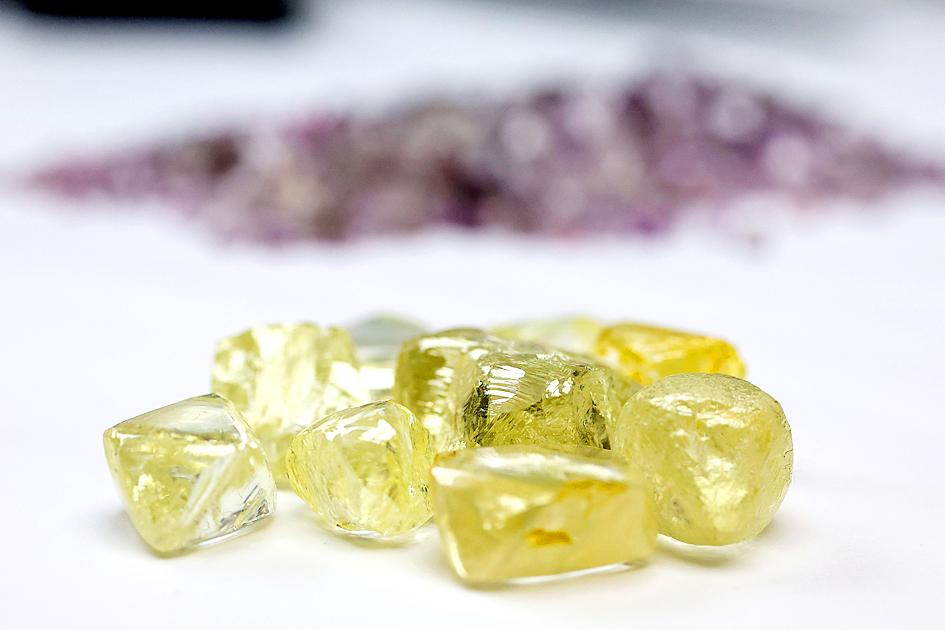
In his small office in the Israel Diamond Exchange near the coastal city of Tel Aviv, Pravin Kukadia proudly presents his collection of precious stones.
Between Kukadia’s homeland, India, and his country of residence, Israel, diamonds have forged a key diplomatic and economic link — representing about US$1.5 billion a year and roughly half of all trade between the nations, diamond experts say.
Kukadia first came to Israel in 1996, but soon made regular visits to Israel as a buyer for his family business based in Surat in western India — where 90 percent of the world’s diamonds are cut and polished.
Today, the 56-year-old specializes in trading large stones.
In 2003, he moved with his wife and two children to develop his business in Israel, because it was “a major player in the diamond industry” and at the forefront of innovation in the field.
At that time, India “didn’t have the technology like here,” said Kukadia, who imported Israeli technology including laser-machines for his Indian operations.

The Israel Diamond Exchange is home to about 30 Indian companies, making India the foreign nation with the biggest number of firms on the bourse, Kukadia added.
Most Indian diamond families, about 80 people, live close to the diamond exchange in the city of Ramat Gan, and many stay in the same building.
Israeli immigration lawyer Joshua Pex said that Indian diamond traders enjoy a “special status” in Israel, aimed at promoting trade with India.
The huge complex of the diamond exchange is also home to the State Bank of India, the only foreign bank present there, alongside two Israeli banks.

Israel sources raw stones from around the world, while many Indian companies specialize in polishing the rocks into gleaming gems.
While India recognized Israel in 1950, it has traditionally expressed support for the creation of a Palestinian state, and did not establish diplomatic relations with the Jewish state until 1992.
However, bilateral ties go beyond diamonds.
On Thursday, Israeli Minister of Defense Benny Gantz visited India as part of the 30th anniversary of official diplomatic links, where he urged a deepening of defense ties.
Israel sells about US$1 billion of military equipment to India a year.

Cooperation agreements have also multiplied in the fields of water systems, agriculture, health and solar energy.