Editor’s Note
This article explores the potential of betavoltaic cells as a novel, long-lasting power source, highlighting their role in the pursuit of clean energy and the challenges of nuclear waste management.
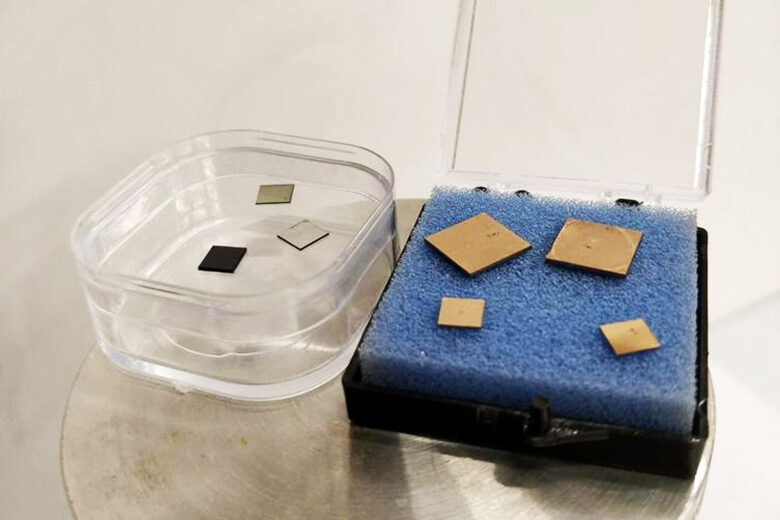
Electricity is a vital energy source for humanity. This is why scientists continue to search for effective solutions for its production and storage. Carbon neutrality is one of the main criteria engineers must consider. In this regard, nuclear power is considered a more or less interesting option because it emits almost no greenhouse gases. Unfortunately, the management of nuclear waste from reactors has always been a problem. However, according to a recent report published by a research group from the University of Bristol, the situation could soon change.
The team has indeed found a new way to recycle these elements, which pose a great danger to wildlife and flora, but also to humans. Specifically, the researchers have developed radioactive diamond batteries. These are devices using betavoltaic cells. In other words, they produce an electric current through the beta decay of radioactive waste.
To generate electricity, each radioactive betavoltaic cell must be surrounded by semiconductors. Unfortunately, this means the power produced decreases as the radioactive source moves away.
To remedy this problem, the inventors used a polycrystalline diamond (PCD). The radioactive accumulators were manufactured using a process identical to that of artificial diamond production. The process in question is known as chemical vapor deposition.
However, the engineers modified the process of growing radioactive diamonds. They notably used radioactive methane containing the radioactive isotope Carbon-14 from irradiated graphite blocks of a nuclear reactor. According to their explanations, their nuclear diamond batteries are theoretically capable of generating electricity for more than 1000 years without needing to be recharged.
Certainly, the power produced by the device will not be sufficient to power common electrical appliances, but the researchers still put forward promising possibilities for use. Their radioactive diamond batteries could, among other things, serve as a power source for pacemakers.
In short, these are primarily accumulators whose application is limited to small devices that do not consume too much energy. Currently, a prototype is being tested. Based on the results, the team will or will not make improvements. In any case, Arkenlight, the company that will be responsible for commercializing the technology, already plans large-scale production of the battery starting in 2023.