Editor’s Note
This article explores the Hermès Pavilion, a temporary structure designed by Toyo Ito that blends Japanese teahouse traditions with modern, sustainable design. It highlights the fusion of heritage and innovation, reflecting Hermès’ commitment to craftsmanship and natural materials.
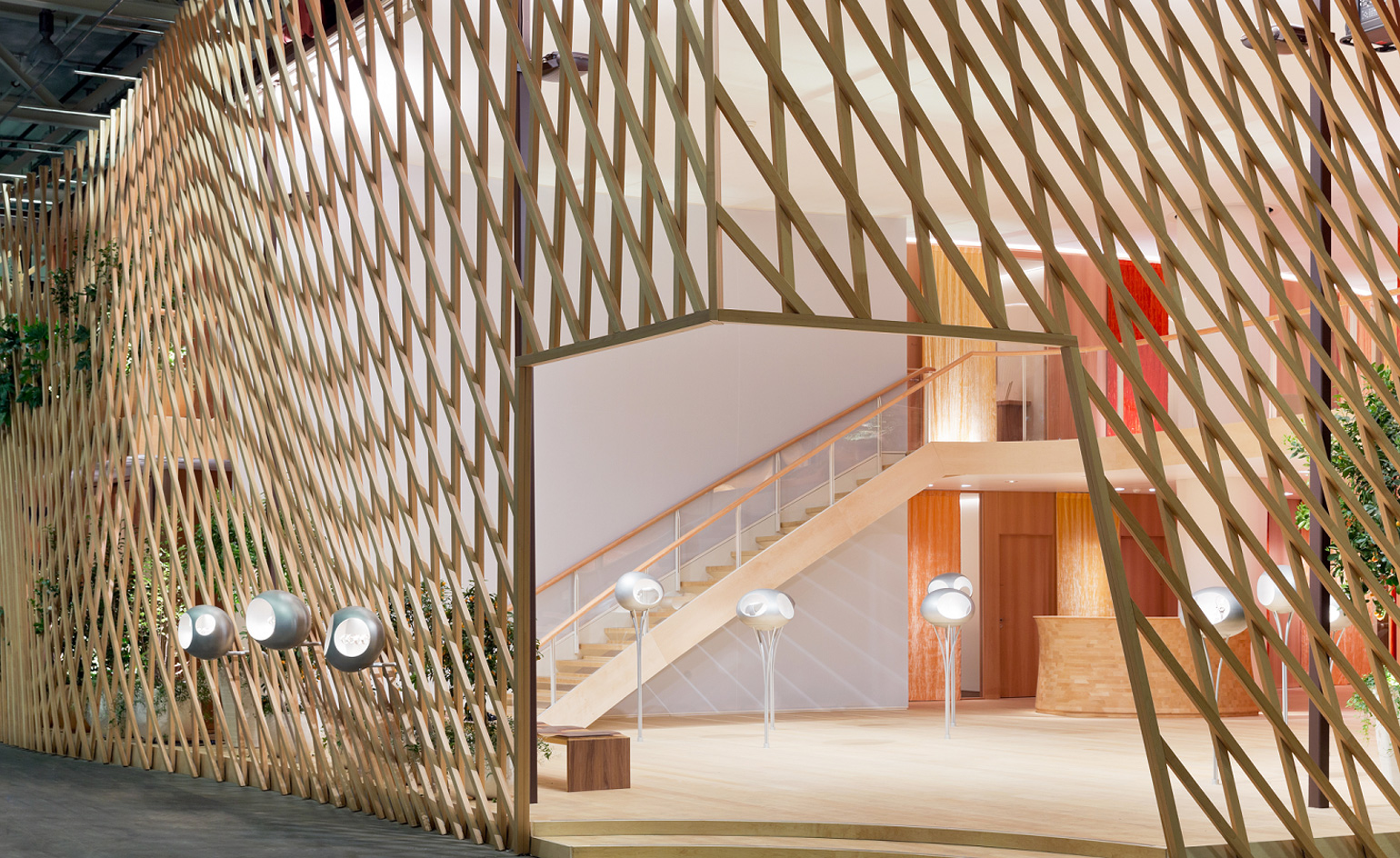
Drawing on traditional Japanese teahouse structures, architect Toyo Ito took an organic approach that also embodies Hermès values of natural materials and handworked craft. His main drive was to suggest different eras and forms; a fusion of heritage and modernity. Ito’s two-storey ‘box’ sprawls over 1,040 sq m and, like the other pavilions, has had to adhere to the rigours of a design that can be dismantled and reassembled every year. The metallic framework is clad with 624 interlocking wooden strips that form a shell over the inner structure made of wood, glass and metal. Between the two ‘skins’, 167 plants form a corridor of green.
Appearing in the distance like a home away from home, Rolex’s 1,230 sq m of beige, green and bronze dominates Hall 1 of Baselworld village like no other. The world’s most instantly recognizable watch brand has drawn elements from its best recognized watch design – the Rolex Oyster – to define its architectural presence. The waterproof nature of the watch is represented by aquatic motifs, such as the walnut wood relief that defines the exterior, reminiscent of ripples of sand. Inside, three storeys are joined together by a feature staircase, with wide glass-sided walkway bridges bridging the upper levels, one of which is dominated by a 40-seat restaurant.
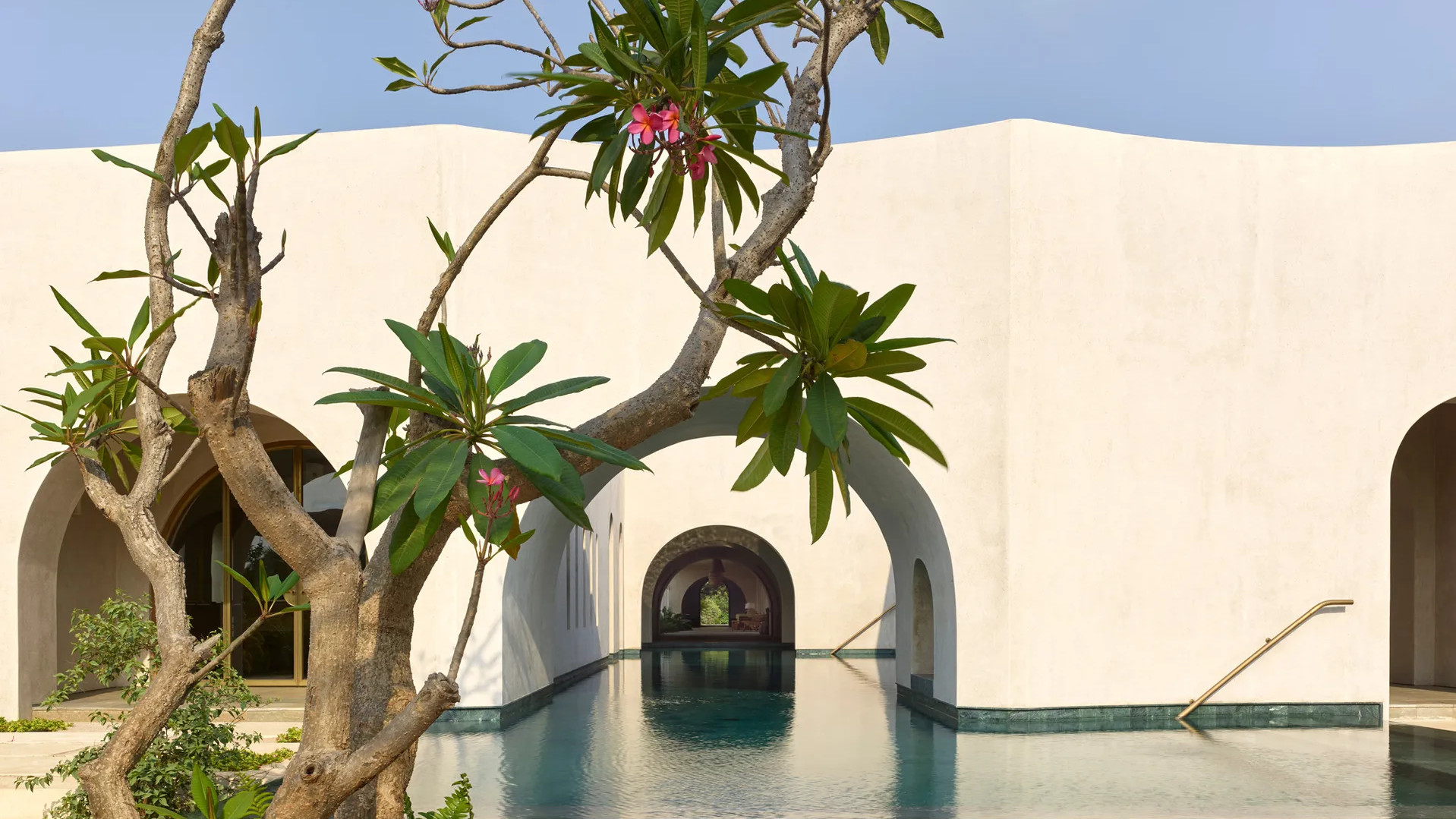
Created by the house’s in-house design team, the interiors of Boucheron’s on-site boutiques, such as the one at Harrods and this pop-up Basel space, are deliberately ethereal. Their light feel is directly drawn from the fact that its flagship Paris boutique occupies the most-light filled corner on the Place Vendôme – a godsend to those dedicated to the business of jewellery and watch making. This pavilion design inverts the heavier natural wood interiors of that building, delivering a more contemporary take, where chalk-white walls are accented by champagne-gold details and expansive mirrors.
Peter Marino’s geometrically precise black-and-white monolith housing 1580 sq m worth of haute horlogerie is perfectly in tune with Chanel’s house codes: no matter that you can’t see in – like all things Chanel, you get the picture at first glance. While the three-storey exterior, mounted on an aluminum structure, remains, each year the interior is revived with a new theme. As yet that is unrevealed but key design ticks from Mademoiselle’s apartment, such as tweeds, rock crystal and Chinoiserie, will be adhered to throughout.

The house palette of Dior grey is realised in super-sleek form via a considered exterior of textured finishes incorporating a gloss black frame, mirrored accents and a mesh ‘veil’ designed to emulate the netting that was a typically used in original Dior dresses and headpieces. The interior emulates the classic wood panelling of the couture salon at the Avenue Montaigne, with a new theme adding to the story each year. This year, Raf Simons’ influence on Dior’s current colour and form is sure to be reflected.