Editor’s Note
This article explores the real billionaire, Lev Leviev, whose name and purported fortune were allegedly used by the “Tinder Swindler” to con victims. It details Leviev’s own controversial rise and connections.
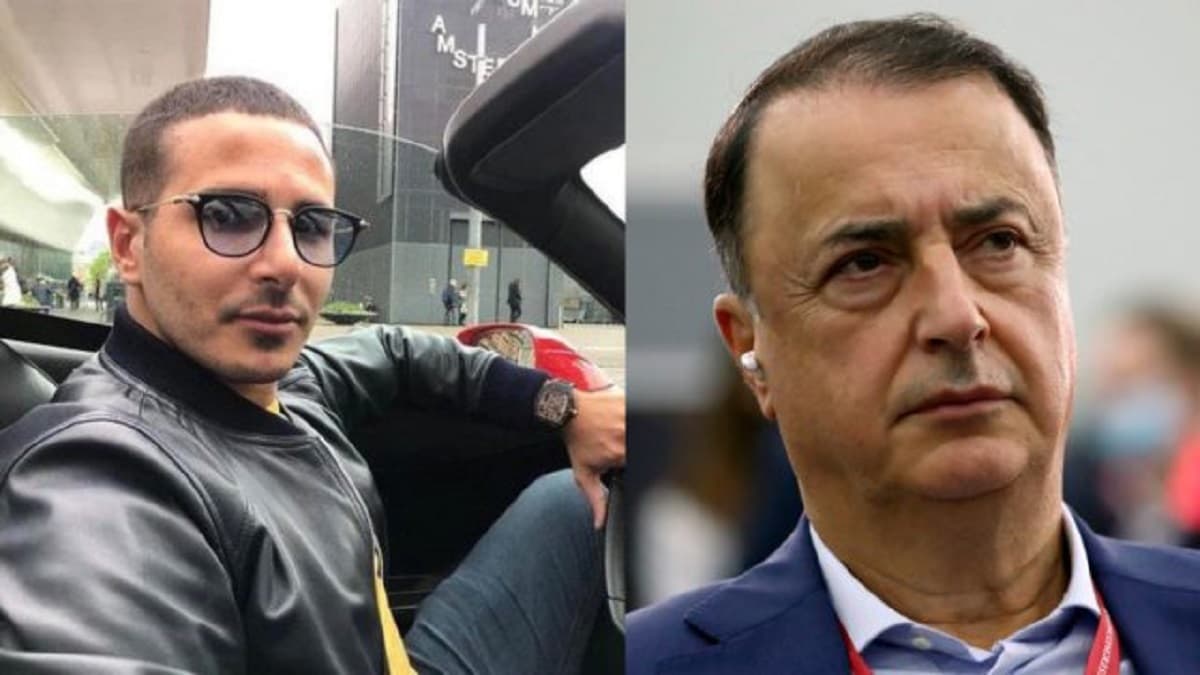
Lev Leviev, the owner of LLD Diamonds, is notable for his connections with Vladimir Putin and a former Angolan president, who helped him build his empire.
Private jets, priceless diamonds, and fleeing the law: this describes a day in the life of Simon Leviev, also known as the “Tinder Swindler” (thanks to the story depicted in Netflix’s new hit), who allegedly swindled dozens of women out of an estimated $10 million by posing as the son of Lev Leviev, the Israeli diamond magnate.
Simon Leviev, whose real name is Shimon Hayut, served five months of a 15-month sentence in Israel on fraud charges and was allegedly released early in 2020 for good behavior.
Approximately two weeks ago, his Instagram profile showed him enjoying a lifestyle full of luxuries despite being banned from Tinder and other dating apps several days prior.
In many ways, the personality of the “Tinder Swindler” mirrors that of the former billionaire he had chosen as his fictional father. In 2003, a Forbes journalist met with Lev Leviev and his group of bodyguards on a tour of Ukraine for a cover story that narrated how he rose to become the “king of diamonds.”
What was the key to his success? His close connections with figures like Vladimir Putin and Angolan President José Eduardo dos Santos, who helped him acquire gems, seize mines, and undermine the dominance of the De Beers company in the market.
In other words, Leviev’s fortune (Forbes’ latest estimate of just under $1 billion in 2020) is very real, even if “Simon Leviev” is not. Last week, Lev Leviev’s company LLD Diamonds issued a statement saying:
Here is the Forbes cover story from September 15, 2003, about Lev Leviev, “the billionaire who dethroned De Beers.”
Police await Lev Leviev once his Gulfstream 2000 jet lands in Kiev after a three-hour flight from Tel Aviv. This is not a criminal extradition, but a welcoming committee, which includes a caravan of limousines and Mercedes-Benz, each with two armed bodyguards. The entourage speeds along Ukraine’s roads, through traffic lights, past lonely farms and dusty roads to the village of Zhitomir.
Leviev is a local hero: he restored the only remaining synagogue in this city, which the Nazis had turned into an arms depot and the communists into a cinema. Now, a motley klezmer band serenades him as photographers take pictures and children perform a traditional Hasidic dance in his honor.
In about 400 villages in Russia and the former Soviet Republic, this scene has been repeated countless times. Leviev is a 47-year-old Israeli citizen born in Uzbekistan and a devout Lubavitcher who donates at least $30 million a year to bring lost Jews back to their flock.
This little-known billionaire is also the nightmare of the diamond mining and marketing giant, De Beers, known as “The Syndicate.” Leviev was once a shareholder and one of the few exclusive buyers of De Beers’ rough diamonds.
He is currently the world’s largest cutter and polisher of precious gems and a primary source of rough stones for other cutters, polishers, and jewelers. Those who have witnessed his rise over the past three decades say it was his intense hatred for De Beers that drove him, as he was irritated by the Syndicate’s high-handed treatment of buyers, who were handed boxes of rough diamonds at “take it or leave it” prices and risked being shut out forever if they refused.
Leviev does not openly criticize his former South African business partner, but his defiance seems barely concealed.
In that sense, Leviev has taken significant business away from De Beers in Russia and Angola, two of the world’s largest producers of rough diamonds by value. His conviction has inspired others, such as Rio Tinto, owner of Australia’s Argyle mine, which bypassed De Beers for the first time in 1996 to sell its 42 million carats directly to polishers in Antwerp.
In the early 1990s, the Russian government began selling part of its rough supply to others, despite its long-standing exclusive agreement with De Beers. This was once miners discovered huge diamond reserves in Canada’s Northwest Territories; De Beers had to fight, but its share of the rough diamond market, 80% five years ago, has shrunk to 60%.
The reason Leviev is such a great threat is that he has profoundly shaken the diamond business tied to its tradition.
Until recently, De Beers had virtual control over global supplies, determining who could buy uncut stones, in what quantities, quality, and where cutting centers were allowed to thrive.