Editor’s Note
As luxury watch thefts rise globally, even private collectors are altering their daily habits. This article explores the personal impact of this trend through the story of one YouTuber who no longer wears her prized watch in public.
Brittany Pearce no longer wears her beloved Rolex Daytona. At least not in public.
She is not the only collector worried about unwanted and potentially dangerous attention. Reports of high-end watch thefts, many of them violent, are soaring in cities worldwide. This poses a threat not only to consumers but also to the approximately 100 top-tier Swiss brands, whose sales could be affected if suddenly one of their watches became something people are afraid to wear.
While there are no national statistics on watch theft, authorities in major cities have reported spikes. London’s Metropolitan Police launched an operation this summer to contain the problem after knife-point robberies increased by 60% between May and June. In Paris, a police group dedicated to stopping luxury watch theft now has 30 officers.
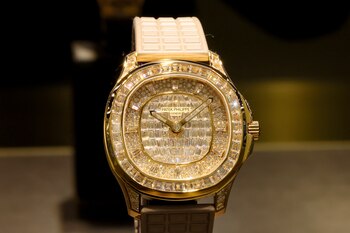
In London, police data indicates that 667 Rolex watches were stolen between January and September. And in an unfortunate twist on its slogan, “you never actually own a Patek Philippe,” 73 watches from the luxurious Swiss brand were stolen in the English capital from the start of the year to September, up from 60 in the same period last year.

The robberies are not only happening on the streets. Last week, English football star Raheem Sterling rushed back from Qatar after an armed robbery at his home near London, where the apparent target was a watch collection worth $365,940. English professional cyclist Mark Cavendish also suffered the theft of two Richard Mille watches at his home in Essex last year.
In a sense, watchmakers are victims of their own success. As social media influencers have made six-figure watches more recognizable, thieves have learned which high-end accessories are worth targeting. In 2022, the average price of a stolen luxury watch in London was around £9,000, up from between £4,000 and £5,000 in previous years, according to police data.
This lifestyle trend has given rise to a darker phenomenon: YouTube is filled with security camera footage and bystander videos of people being violently assaulted to steal their expensive watches. In one video, a thief rides a scooter alongside a luxury car and smashes the window with a hammer to steal the driver’s watch. In another, a couple is assaulted during the day in an upscale area of London.
Collectors have taken notice.

So far, luxury watch sales have remained relatively strong, although prices for the most coveted Rolex, Patek, and Audemars Piguet models have fallen sharply since March on the secondary market. Last year, Swiss watch exports reached a record 22.3 billion francs ($24.1 billion), according to the Federation of the Swiss Watch Industry, and are on track to break records again in 2022.
For now, watchmakers are watching how crime affects sales.
The Geneva giant controls nearly 29% of the Swiss luxury watch market, according to Morgan Stanley estimates, with annual sales around $8.5 billion.
Spokespeople for Patek Philippe and Audemars Piguet, maker of the Royal Oak, also said the issue was “worrying” but declined to comment on how or if they were addressing it.
Europeans are not the only ones who are nervous: according to the Los Angeles County Sheriff’s Department, from the beginning of the year to mid-November, there were 206 robberies in the region involving at least one watch valued at $5,000 or more. This represents an increase of nearly 30% compared to the same period in 2021. Police have attributed the crimes to organized gangs and have advised residents to avoid wearing expensive jewelry in public.
