Editor’s Note
The House of Gübelin has opened a new museum in Lucerne dedicated to the world of colored gemstones. This piece explores its focus on the science, history, and artistry behind these natural treasures, as well as the legacy of the family-run brand.

The House of Gübelin has opened the Gübelin Gem Museum in Lucerne, Switzerland. The compact museum is host to a variety of multi-media displays exploring the creation, origin and appeal of colored gemstones, as well as the history and innovations of the six-generation family business.
Founded in 1854, the company has launched many influential projects, such as the Gem Lab, the gemological laboratory started in 1923. The museum’s opening honors the Gem Lab’s 100th anniversary. Inside, exhibits offer an overview of technology history, starting at the lab’s beginnings and exploring up to the latest analytical possibilities, including Gübelin’s other projects, the blockchain-based Provenance Proof and Gemtelligence, a gemstone analyzation tool that uses AI.

Gem Lab’s success and eventual development into a renowned institution is credited heavily to the late Eduard Josef Gübelin. The Lucerne gemmologist, considered by many as one of the fathers of modern gemology, is known for his research in gemstone inclusions and the role they play in determining the stone’s identity, authenticity, and origins.
While visiting mines around the world, the gemologist collected stones. Though it has been continuously expanded, the original reference stone collection formed the basis for the work of the Gem Lab and proved central to Gemtelligence as well. The collection is considered the most complete of its kind in the world, according to Gübelin, currently comprising more than 28,000 gemstones from all commercially relevant mines, as well as stones from exhausted sources.
Located in the heart of the exhibit, 174 selected gemstones from the collection are on view at the museum. Nearby, other artifacts and instruments from Gübelin’s travels are displayed as well.
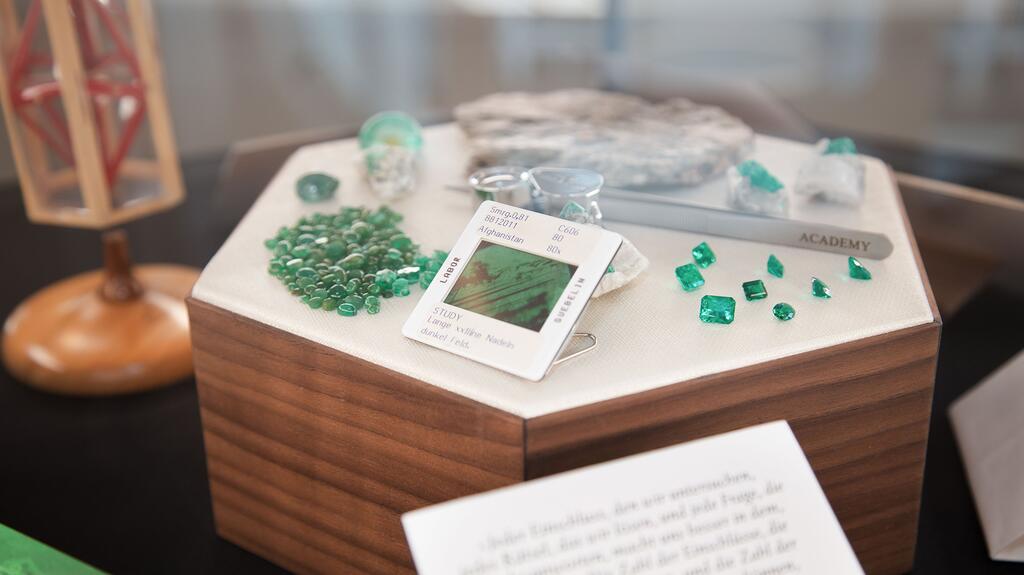
Along with loose stones, a selection of more than 50 watches and jewelry pieces from key historical and cultural style-defining moments are on view. Thomas Gübelin, who ran the company from 1988 until 2007, began expanding the company’s collection of watches and jewelry early in his career.
The museum will also serve as the new home of the Gübelin Academy, the house’s institution for professional courses and certifications.
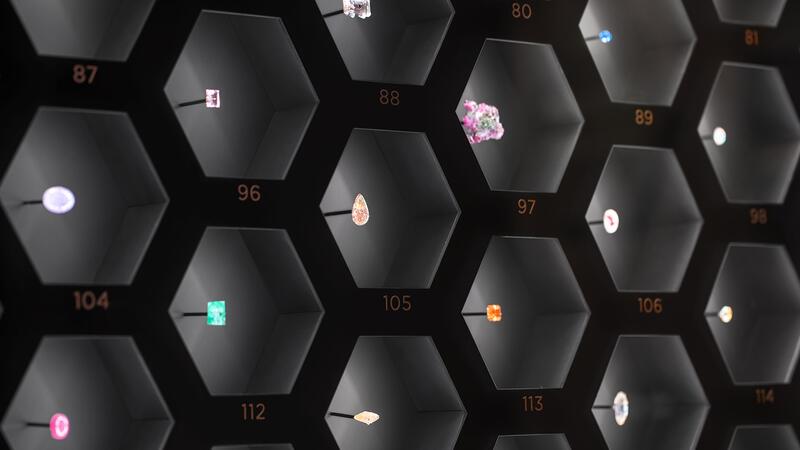
The museum is located at Schwanenplatz 7 on the upstairs floor of the “Haus zum Stein” building, which aptly translates to “The House of Stones.” Gübelin curated the museum with jewelry expert Beatriz Chadour-Sampson, who works with the Swiss National Museum in Zurich and the Victoria and Albert Museum in London. Gübelin staged the museum with Atelier Ingold Raschke. Edward Boehm, the grandson of Eduard Josef Gübelin and a gemologist himself, contributed to the conception and execution and provided some exhibits. The exhibitions will be continuously expanded.