Editor’s Note
This article highlights the opening of a massive new complex in Surat, India, consolidating its status as the global hub for diamond processing. The scale of the facility underscores the city’s pivotal role in an industry that handles the vast majority of the world’s gemstones.
Surat, India, is the world’s gemstone capital: 90% of the planet’s diamonds are cut there. This city in the state of Gujarat now boasts a record-breaking building to house this colossal industry on an area larger than the Champs-Élysées.
No fewer than 65,000 diamond professionals, including cutters, polishers, and traders, will be able to work in this gigantic complex in the Indian city of Surat, located 240 km north of Mumbai.
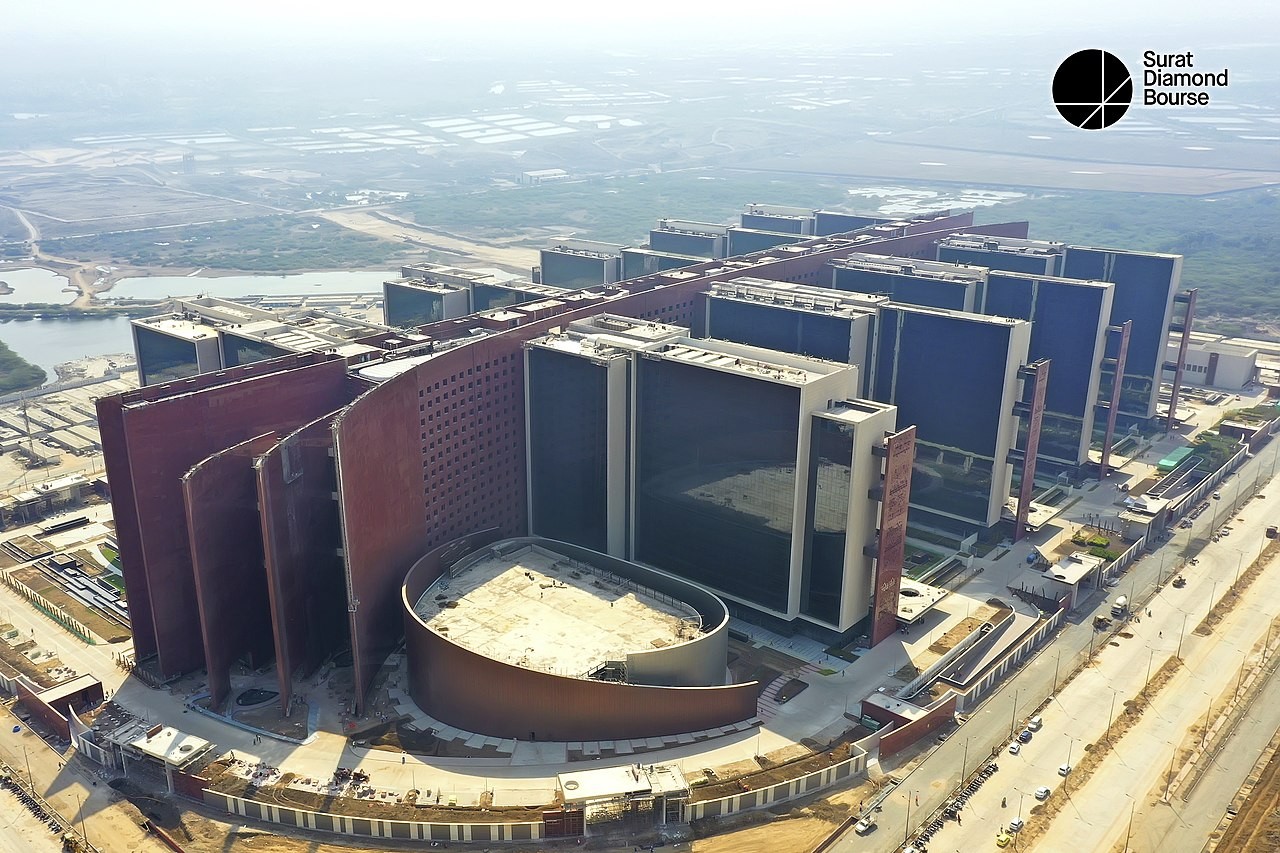
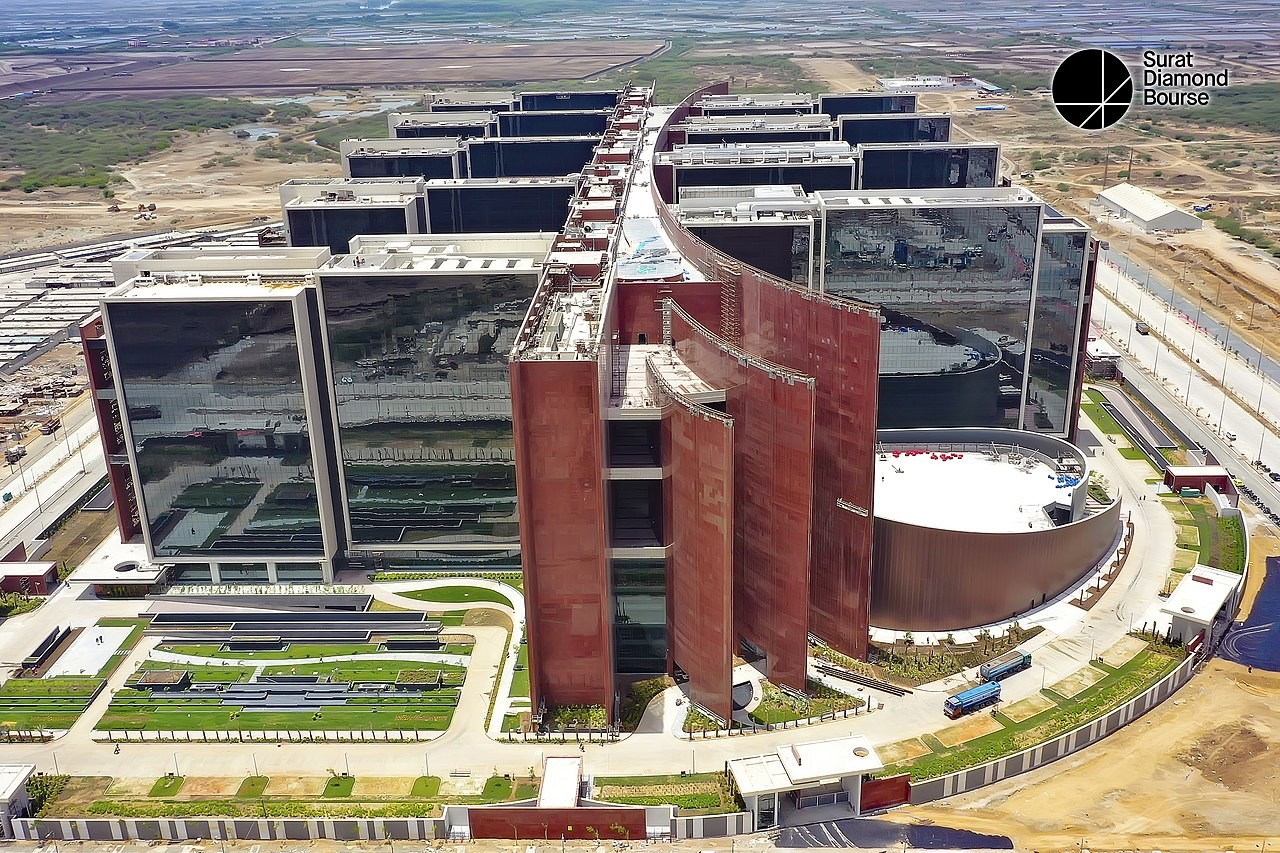
The Surat Diamond Bourse building is an impressive architectural work that symbolizes the grandeur and importance of India’s diamond industry. Comprising a series of nine rectangular structures radiating from a central spine and interconnected, this sprawling 15-story complex was built on a site spanning over 14 hectares, equivalent to 22 football fields—an area larger than the Champs-Élysées. With its 7.1 million square meters of workspace, the complex surpasses the Pentagon as the world’s largest office building.
The Surat Diamond Bourse will eventually host over 65,000 diamond professionals, including cutters, polishers, and traders. The first occupants will move in this November, after four years of construction, two of which were hampered by Covid-related delays.
The complex features marble floors and bright atriums connecting more than 4,700 offices, which can also serve as small workshops for diamond cutting and polishing. The offices are linked by a long central corridor—a configuration reminiscent of an airport terminal. This project, estimated at 330 million francs, includes 131 elevators, as well as restaurants, shops, wellness centers, and conference rooms.
Glass, steel, and marble blend brilliantly to better reflect the splendor of diamonds. But environmental considerations were not forgotten.
The complex was designed by the Indian firm Morphogenesis following an international competition. The architects opted for a bold aesthetic, blending materials like glass, steel, and marble to create a captivating structure that reflects the beauty of the diamonds it houses. Reflective glass panels add a touch of brilliance, casting shimmering reflections throughout the day. The exterior façades are decorated with subtle geometric patterns inspired by Indian art and craftsmanship.
Beyond its aesthetic appeal, the Surat Diamond Bourse also aims to be environmentally friendly. Significant efforts were made to integrate sustainable practices into the building’s design. Solar panels are installed on the roof for efficient use of solar energy. Furthermore, rainwater harvesting systems are in place to minimize water consumption.
The complex is also designed to optimize natural lighting, thereby reducing reliance on artificial lighting during the day. Green spaces and indoor gardens are incorporated to create a pleasant indoor environment while contributing to air quality. Half of the building is cooled by natural ventilation.