Editor’s Note
This article highlights the growing focus on lab-grown diamonds as a sustainable alternative. While chemically identical to mined diamonds, their laboratory origin allows for significantly lower pricing and a reduced environmental footprint.
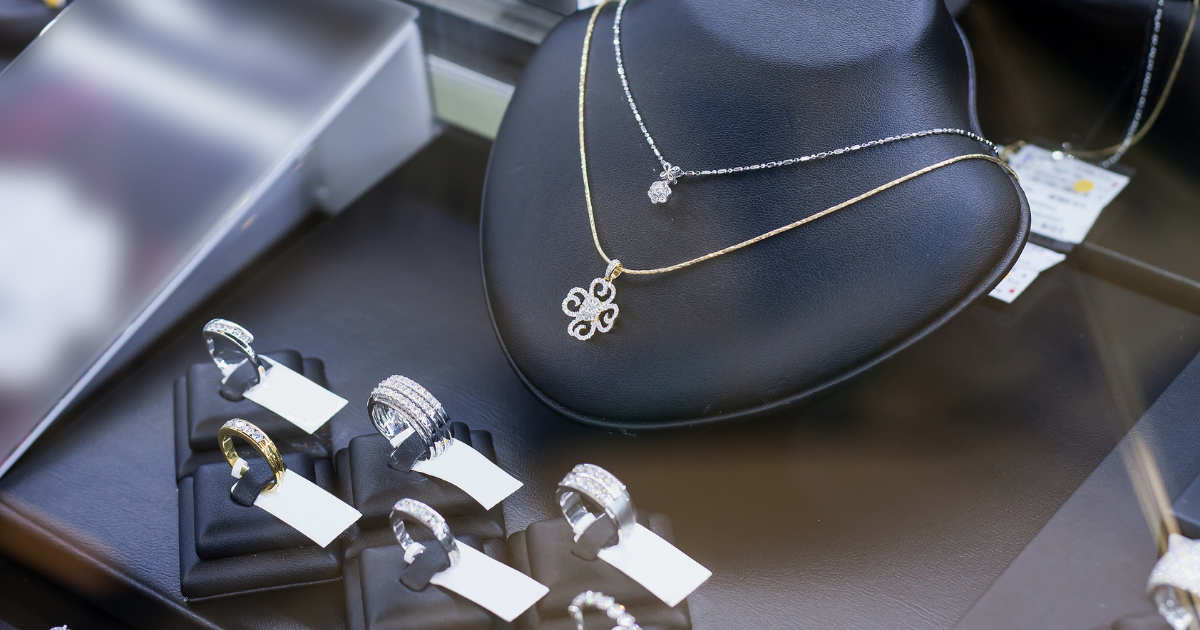
Tomei Diamond Co., Ltd. places importance on a sustainable society and is particularly focused on lab-grown diamonds. While their composition is the same as natural diamonds, the place and time required for their creation are vastly different. As the name suggests, lab-grown diamonds are created within a laboratory, which offers the benefit of being priced at about 1/2 to 1/4 of the cost of natural diamonds. Furthermore, since there is no mixing of impurities as can happen with natural diamonds, it is possible to produce large quantities of consistent quality.
Moreover, the mining of natural diamonds involves various issues such as slave labor, environmental destruction, and pollution, and can sometimes be a source of conflict funding. The potential for lab-grown diamond production to resolve these concerns is viewed from an SDGs perspective as enabling both environmental consideration and an approach to social challenges, and is highly regarded in Europe and America.
Digital Jewelry, which operates a support business for creating jewelry designers suited for the metaverse era, has perfected its DDM (Direct Digital Manufacturing) system using micro-factories to realize a world where “anyone can design jewelry,” delivering ordered products without delay and without holding inventory. Their partner, Tomei Diamond Co., Ltd., as a pioneer in industrial diamonds, has long responded to various customer needs, but venturing into the jewelry industry is a new endeavor. Through this partnership, Digital Jewelry will manufacture the entire volume of jewelry using lab-grown diamonds, supporting Tomei Diamond’s smooth and swift entry into the jewelry industry.
Digital Jewelry has introduced its proprietary DDM (Direct Digital Manufacturing) process, which uses 3D printers to manufacture parts and products directly from digital data. Jewelry designs created using CAD can be viewed by customers as images or 3D CG, and customers can also hold and inspect samples directly manufactured by 3D printers. Subsequently, after the final casting process, customers receive the finished product by mail and can wear it, constituting a system that provides custom orders with short lead times.
