Editor’s Note
This article examines the cultural and economic forces behind the diamond engagement ring, questioning its necessity and highlighting the ethical and affordable alternatives offered by lab-grown gems.

An entire industry thrives on the myth of the “engagement ring,” having established a global standard that a proper ring should feature a diamond. The size of the stone is often seen as a measure of the depth of love. However, natural diamonds face two major issues: their price and their extraction. The film “Blood Diamond” depicted the extreme and murderous mining of diamonds during a civil war. Mercenary Danny Archer (Leonardo DiCaprio) quipped:
But nowadays, girls are less dreamy, and there is an alternative for them: lab-grown diamonds. Sparkling stones that are deceptively similar to diamonds have existed for a long time. Yet, such stones had to live with the stigma of being mere imitations of real diamonds. In contrast, a lab-grown diamond is chemically identical to its expensive mined counterparts.
Economic analyst Nadia Tamariki found that natural diamonds in her desired size were unaffordable for her and her fiancé. She told the “Sydney Morning Herald”:
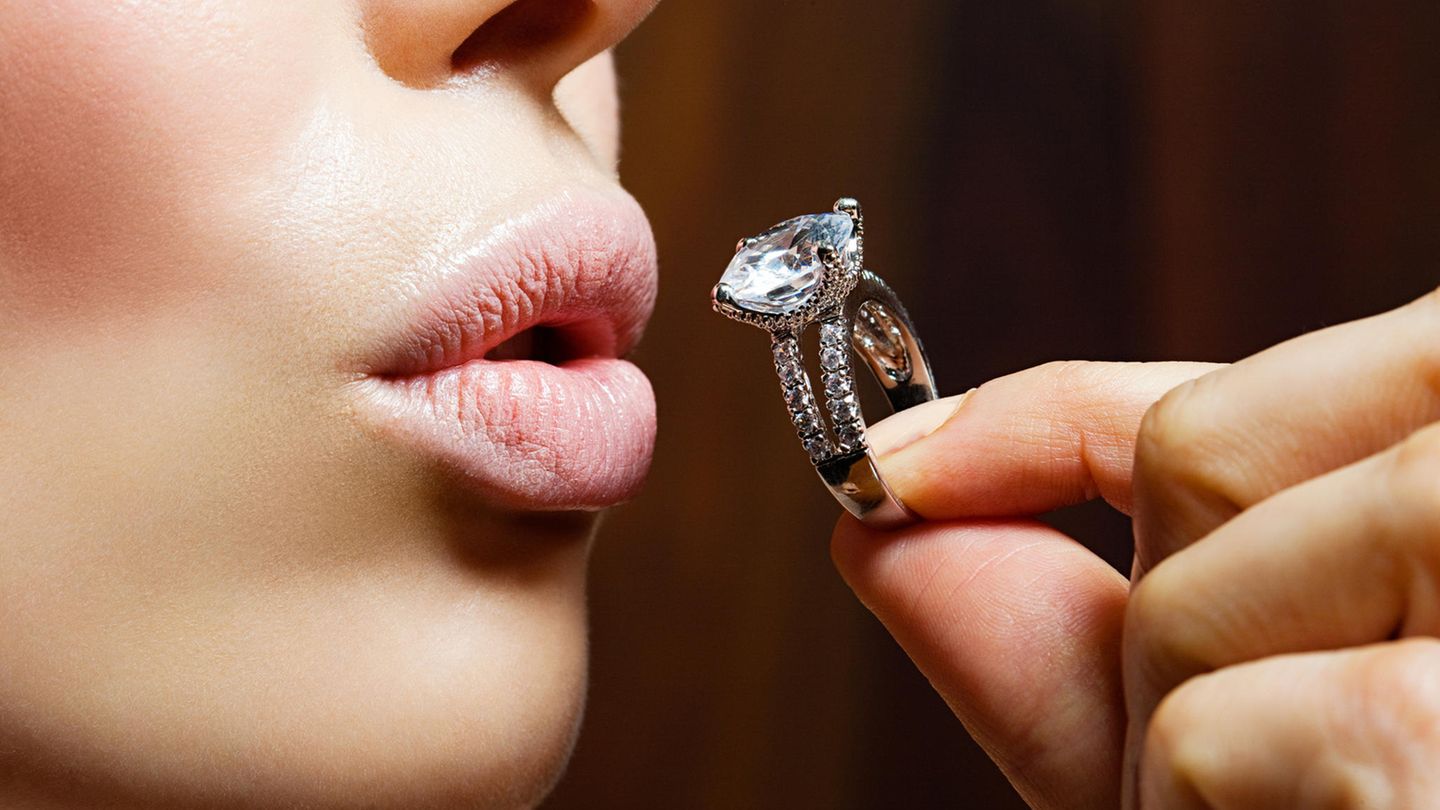
That was important to her. She cannot perceive the difference.
This is no surprise. According to the Gemological Institute of America (GIA), the difference can now only be detected with specialized measuring equipment.
In numbers: As of August 2023, the price for a lab-grown diamond is $1,425 per carat, while the price for a natural diamond is $5,185.

The Michael Hill chain operates 145 jewelry stores and has been selling lab-grown diamonds for two and a half years. They do so discreetly, as the company does not want to jeopardize its traditional business with mined diamonds. Lab-grown diamonds currently account for 6 percent of Michael Hill’s diamond sales, with a rising trend. CEO Daniel Bracken told the “Sydney Morning Herald” matter-of-factly:
Accountant Melanie Foote is a typical customer of this kind.
The main thing was that the ring made an impression, and it did.

But is it also a good investment? Prices for lab-grown diamonds have fallen by 75 percent since 2016. Their proliferation has also impacted the prices of mined diamonds, which have dropped by 21 percent over the same period. Further price declines are expected in the future. India and China account for 75 percent of global lab-grown diamond production. However, if prices continue to slide as they have, the myth of diamonds’ eternal value may eventually come to an end. Then, every woman could afford large stones, marking the end of the era of exclusivity.
Leonardo DiCaprio has not let go of the role of the unscrupulous Danny Archer. He is a co-financier of Vrai, a jewelry collection featuring lab-grown diamonds. At Vrai, customers can have their dream diamond grown to order, specifying shape, cut, and size.