Editor’s Note
This article examines the diamond industry’s unprecedented efforts to stabilize prices, including De Beers’ recent shift in sales strategy.
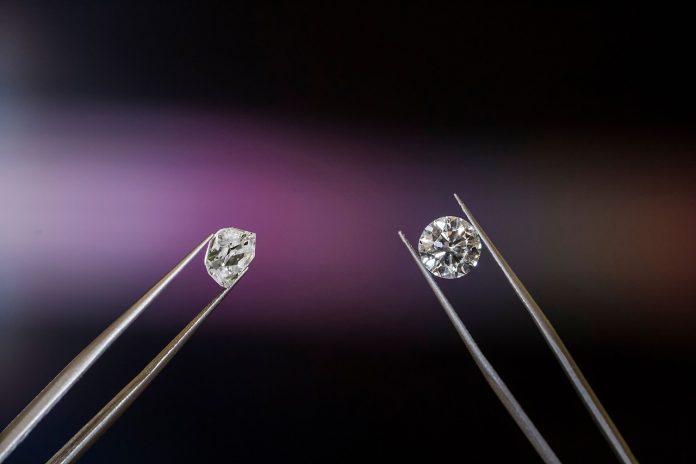
In the wake of a diamond price crash, the industry’s biggest players have pulled out all the stops to stem the decline. It finally seems to be having some effect.
When the world’s most important diamond buyers arrived at De Beers’ offices in Botswana late last month, their hosts offered them a rare choice: they could choose to buy nothing at all.
De Beers markets its rough diamonds through a series of carefully choreographed sales, typically expecting its handpicked buyers to purchase their full contractual allocation at prices set by De Beers, or face potential penalties in the future. But with global prices in free fall, the former diamond monopoly has been forced to allow more and more flexibility, culminating in dropping the restrictions entirely.
These concessions are the latest in a series of increasingly desperate moves by the industry to curb this year’s plunge in diamond prices, after a slowdown in consumer demand left buyers sitting on huge stockpiles. De Beers’ main rival, Russian miner Alrosa PJSC, has canceled all sales for two months, while the Indian market — the main cutting and trading hub — has voluntarily halted imports.
At the recent De Beers sale, buyers from India and Antwerp seized on the unusual flexibility, purchasing a combined $80 million in uncut gems. Typically, De Beers would expect sales of between $400 million and $500 million at such events. Apart from the early days of the pandemic — when sales were halted entirely — the company has never sold so few stones since it began publishing results in 2016.
The speed and scale of the diamond price collapse has taken many by surprise.
During the global pandemic, the diamond industry was one of the biggest winners, as locked-down shoppers turned to diamond jewelry and other luxury goods. But as economies reopened, demand cooled rapidly, leaving many in the industry holding too much stock, bought at prices that were too high.
What looked like a cooling quickly turned into a crash. The US, the industry’s most important market, was rocked by rising inflation pressures, while the key growth market of China was hit by a property crisis, sapping consumer confidence. Making matters worse, the emerging lab-grown diamond industry began making significant inroads in some key areas.
While there are many different categories of diamonds, wholesale polished diamond prices are down roughly 20% this year, driving down prices for uncut rough by as much as 35%, with the steepest falls coming in late summer and early autumn.
The industry’s response has been to restrict supply in a way that is almost unprecedented, and that now appears to be finally starting to work.
Over the past week, prices at some smaller tenders and auctions have risen by 5% to 10% as shortages of certain stones begin to appear. With Indian factories planning to reopen next month after a long Diwali shutdown, there is now growing confidence that the worst is over.
The diamond price crash coincides with a broader weakness in the luxury market. Luxury giant LVMH Moet Hennessy Louis Vuitton SE, which owns 75 brands from Christian Dior to Bulgari, has disappointed investors this year as China’s recovery fell short of expectations and demand from US consumers cooled, with the stock losing more than $100 billion in value since mid-April. Last week, Cartier owner Richemont reported an unexpected drop in earnings as luxury watch revenue fell surprisingly and high-end consumers cut back.
However, the diamond industry has specific peculiarities that make it more vulnerable to a slowdown in consumer demand. De Beers sells its gems through 10 sales a year, and buyers typically have to accept the price and quantity on offer.
When prices are rising, as they were for much of the past two years, those buyers are often incentivized to speculate, betting that buying unprofitable stones now will pay off if prices continue to rise. Buyers also get bigger allocations for large purchases, a practice in the industry known as “buying for position.”
These mechanisms tend to create speculative bubbles that burst when consumer demand slows and stockpiles of polished diamonds build up.
In response, Alrosa halted diamond sales for two months, while the Indian diamond industry voluntarily halted imports until mid-December. De Beers allowed its customers to reject all purchases without any impact on their future allocations for the last two sales of the year.
While both major diamond miners have a long history of restricting supply or letting buyers reject some goods when demand is weak, the speed and scale of the joint action is highly unusual outside of the pandemic.
While prices have stopped falling and are rising again in some areas, much will depend on the key holiday season, from Thanksgiving to Chinese New Year, and how the big miners that have built up large stockpiles of unsold gems reintroduce them to the market.
There is uncertainty within the industry about how much of the slowdown is driven by macroeconomic weakness, or a more worrying shift in consumer choice. Lab-grown diamonds have made rapid inroads in some key areas of the market, and the industry remains concerned about whether Gen Z consumers view diamonds in the same way as previous generations.