Editor’s Note
This article discusses the EU and G7’s move toward comprehensive sanctions on Russian diamonds, highlighting the challenges in tracing a diamond’s origin through complex global supply chains.

[Alpha Economy = (Barcelona) Correspondent Kim Dong-hyun] The European Union (EU) and the Group of Seven (G7) are moving to impose full-scale sanctions on Russian diamonds.
While diamonds typically have their origin marked in their rough state, they become mixed with diamonds from various regions during subsequent processing, leading to them being labeled with a ‘mixed origin’ and making it impossible to know their precise source.
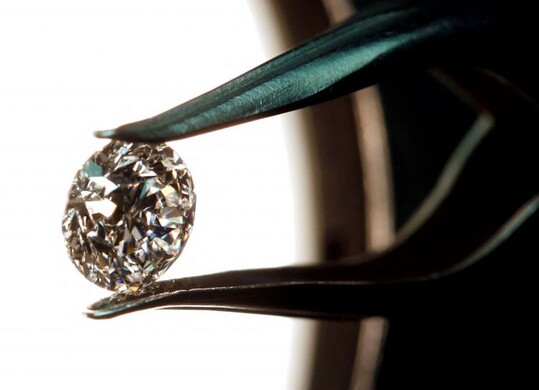
It has been reported that the EU and G7 are reviewing measures to track the origin of diamonds in order to block the export of Russian diamonds, which are being traded under the label of so-called ‘mixed origin’ after being blended with diamonds from other parts of the world.
According to foreign media reports on the 19th (local time), “The G7 and EU are discussing measures to accurately track the origin of diamonds circulating in the market, including Russian diamonds, in order to end exports of Russian diamonds,” and reported that “a related statement could be issued around the 24th, the first anniversary of Russia’s invasion of Ukraine.”

In April of last year, the United States imposed sanctions on Alrosa, Russia’s largest diamond mining company, worth approximately $80 billion. However, as it accounts for 30% of the global diamond market, it appears that exports have continued without major difficulties despite U.S. sanctions.
However, opposition to diamond sanctions appears to be intense in countries with a high proportion of diamond-cutting industries, such as Belgium. There are concerns that even if the EU imposes sanctions, the trade will simply shift to India, thereby only increasing India’s share of processing.

Diamonds imported from Russia account for about 25% of all diamonds processed in Antwerp. It was revealed that over €1.2 billion was imported over an eight-month period last year.