Editor’s Note
This article highlights a significant development in Morocco’s luxury sector, as Ghita Kittane introduces the first circular jewellery brand to the local market. It underscores a growing trend towards sustainability within high jewellery, merging traditional craftsmanship with modern, responsible values.
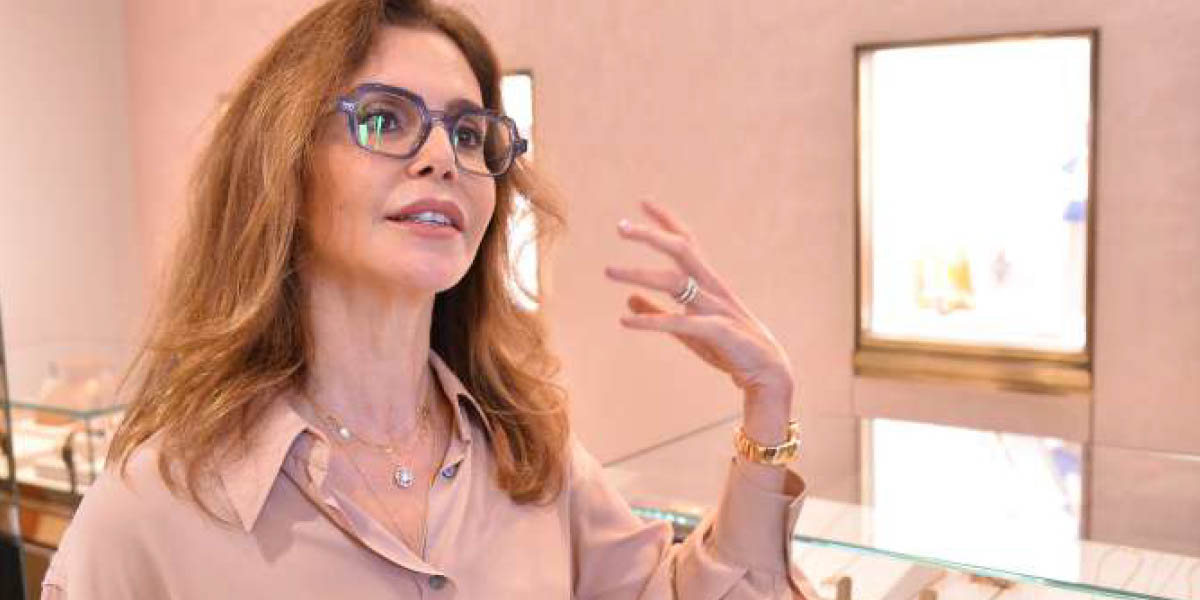
Ghita Kittane, co-founder of Neyleen Fine Jewellery, has just made waves in the Moroccan high jewellery sphere. She has launched the first circular jewellery brand on the local market through the exclusive distribution of the Rouvenat brand.
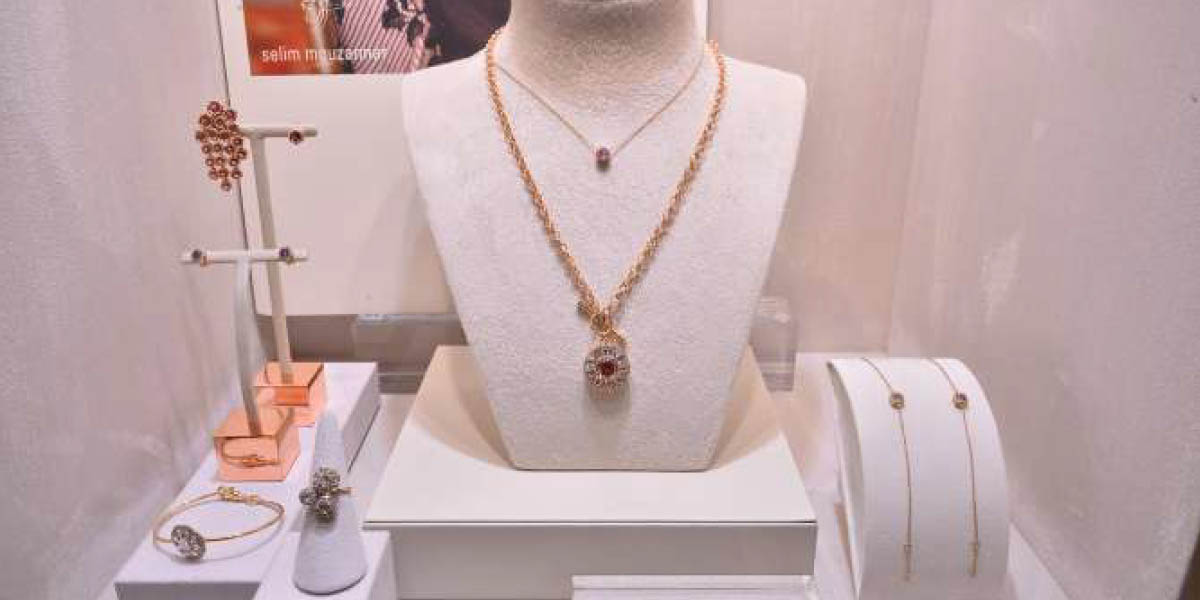
The founder of Neyleen Fine Jewellery, Ghita Kittane, confirms her passion for luxury jewellery by exclusively distributing the Rouvenat brand in the Moroccan market. This “resurrected” French high jewellery brand is distinguished, in particular, by its circular and eco-creation nature.
Always seeking innovation in her field of predilection, Ghita Kittane did not hesitate to choose the Rouvenat brand to add to the other brands that adorn her store: Caterina B, Cathy Waterman, Sorellina… This French high jewellery brand is particularly special because of its history, as well as the very nature of the design of its unique models.
The particularity of Rouvenat’s creations lies, notably, in their circular aspect, which means that the precious stones used, or the materials (gold or silver) are not mined but are entirely recycled. These can be stones or materials that are several years old, or even several centuries old, and are either presented by clients or unearthed at auctions, from private treasures…
This is why each Rouvenat creation is unique and is accompanied by a certificate of authenticity which, among other things, guarantees the traceability of the model. In fact, Rouvenat only uses old stones selected by its creative studio and validated by its gemologists.
Each stone is accompanied by a certificate and an attestation of age, which can range from five years to several centuries. This certificate is guaranteed and secured by blockchain. Furthermore, Rouvenat commits to resetting its clients’ old stones into new creations. Concretely, Rouvenat’s jeweller-artisans appraise each stone and reset it into the creation of the client’s choice. Two simple conditions must be met: the stone must meet the “Rouvenat quality,” and its age must be verifiable.
The history of Rouvenat can be summarized as the awakening of a jewellery house whose foundation dates back to the mid-19th century. Its founder, Léon Rouvenat, revolutionized the world of jewellery when he set up, with peers, a jewellery pavilion at the 1851 Great Exhibition. Moreover, he inaugurated the world’s first jewellery factory by inviting clients to participate in the creation process. This constituted another revolution at the time, as it was the jewellers who would travel to their clients. His creation concept was based, notably, on the sense of the eternal by adopting the circular form.
However, when he died in 1874, all his work disappeared with him for no apparent reason and in a completely inexplicable manner. It took the period of confinement imposed by Covid-19 for four major names in French jewellery, Fréderic de Narp, Caroline de Fontenay, Sandrine de Laage, and Marie Berthelon, to reflect on the possibility of creating luxury jewellery while considering new consumption patterns and, above all, environmental impact. They managed to access Rouvenat’s archives and thus obtained over 3,000 period gouaches, collected in 12 leather-bound notebooks in perfect condition, from a Parisian antique dealer. And that is how the House of Rouvenat was able to relaunch on solid foundations and continue to tell its new vision of luxury and beauty.