Editor’s Note
This article examines China’s pivotal role in the rapidly expanding lab-grown diamond industry, a sector challenging traditional notions of luxury and value. It explores the technological and market dynamics behind this shift.

“A diamond is forever.”
This advertising slogan from De Beers, the global monopolist of natural diamonds, has made diamonds a symbol of love and a must-have luxury item for many when getting married.
However, the rise of lab-grown diamonds is breaking the diamond myth. Data shows that China has become the world’s largest producer of lab-grown diamonds. Compared to the millions of years required for natural diamond formation, lab-grown diamonds can be produced in just 7 to 10 days, with lower costs and prices only one-third or even less than one-fifth of natural diamonds.
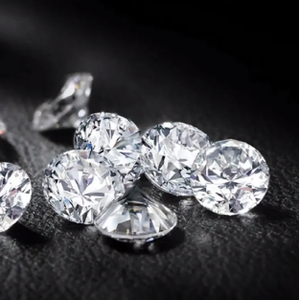
It’s worth noting that lab-grown diamonds are real diamonds, with physical and chemical properties identical to natural diamonds. In terms of chemical composition, both lab-grown and natural diamonds are composed of carbon atoms. Physically, core indicators such as hardness, refractive index, and dispersion value of lab-grown diamonds are the same as those of natural diamonds, fundamentally different from common diamond substitutes like zircon and moissanite. Zircon’s main component is zirconium silicate, while moissanite’s is silicon carbide.
According to Bain & Company data, the global production of gem-quality lab-grown diamond rough in 2020 was about 7 million carats. Regionally, China had the largest output, approximately 3 million carats, accounting for about 40%.
In China, lab-grown diamond production capacity is mainly concentrated in Henan province. Four Henan-based companies—Zhongbing Hongjian, Huanghe Whirlwind, Power Diamond, and Yujingangshi—supply over 80% of China’s lab-grown diamond rough.
China’s emergence as a major producer of lab-grown diamonds has historical reasons. In the 1960s, to break dependence on imported synthetic diamonds, Zhengzhou Sanmo Institute developed China’s first domestic two-anvil press and successfully produced China’s first synthetic diamond, establishing Henan’s research status in the synthetic diamond industry. Driven by Zhengzhou Sanmo Institute, a large number of synthetic diamond manufacturers emerged in Henan, with many going public.
Initially, synthetic diamonds produced by these companies were mainly used in industrial applications. Later, based on related technologies and equipment, they also entered the consumer-grade lab-grown diamond market.
Take Power Diamond as an example. Founded in 2010, it initially mainly produced synthetic diamond monocrystals. In 2016, it began entering the lab-grown diamond market. Since 2021, Power Diamond’s lab-grown diamond business has developed rapidly, achieving revenue of 197 million yuan, a year-on-year increase of 428.11%, accounting for 39.57% of total revenue and becoming the company’s largest business. In the first half of 2022, the revenue share of lab-grown diamonds at Power Diamond further increased to 49.60%.
It is worth noting that the gross profit margin for producing lab-grown diamonds is surprisingly high. Data shows that in the first half of 2022, the gross profit margins for Power Diamond’s three major businesses—lab-grown diamonds, diamond monocrystals, and diamond micropowder—were 83.44%, 57.94%, and 52.40% respectively. The gross profit margin for lab-grown diamonds is significantly higher than other businesses.
Due to shorter synthesis cycles, lab-grown diamonds have a cost advantage over natural diamonds.
According to Bain & Company data, in 2021, the retail price of lab-grown diamonds as a percentage of natural diamond prices dropped from 35% in 2020 to 30%, and the wholesale price percentage dropped from 20% to 14%, with room for further decline in the future.
Despite cost and production advantages, lab-grown diamonds have not yet become mainstream in the domestic jewelry market.

Data shows that the United States is currently the largest consumer market for lab-grown diamonds globally, accounting for about 80% of consumption in 2019, while China’s consumption share was only 10%. A survey shows that among reasons for US consumers purchasing lab-grown diamonds, value for money ranked highest at 62%, followed by ethical factors (20%) and environmental factors (18%).
In recent years, due to complex economic conditions, US consumers have become more willing to use lab-grown diamonds as affordable alternatives to natural diamonds. According to recent data from Tenoris, the penetration rate of lab-grown diamonds in the US engagement ring market has increased from 6% in 2021 to 10%.
Globally, well-known jewelry brands have also embraced lab-grown diamonds. Swarovski launched the lab-grown diamond brand Diama in 2017; diamond leader De Beers launched the lab-grown diamond jewelry brand Lightbox in 2018; jewelry brand Pandora announced in 2021 that it would fully adopt lab-grown diamonds for its new product series.
In the domestic market, traditional jewelry brands have been relatively cautious and late in their approach to lab-grown diamonds. In 2021, Laomiao Gold’s parent company, Yuyuan Inc., launched the lab-grown diamond brand “LUSANT”; in 2022, Mankalan Jewelry established the lab-grown diamond brand “Ownshine”.
Judging from the prices of these lab-grown diamond products, they are indeed much cheaper than natural diamond products. On e-commerce platforms, a 1-carat LUSANT lab-grown diamond ring (D color, SI2 clarity) sells for around 10,000 yuan; while a 1-carat natural diamond ring from DR (J color, SI1 clarity) sells for as high as 75,000 yuan.
Additionally, some emerging domestic lab-grown diamond brands have been born in recent years, such as LightMark. However, overall, these domestic lab-grown diamond brands were established relatively late, and their brand influence is still very limited, especially as sales channels are mainly online, with very few offline store layouts to reach consumers.
In reality, the reasons for the low penetration rate of lab-grown diamonds in China are, on one hand, the limited layout of traditional jewelry brands, and on the other hand, related to consumer perceptions and awareness.
For traditional jewelry brands, the scarcity of natural diamonds is the main factor supporting their high product prices. If natural diamond products and lab-grown diamond products are sold simultaneously in the same store, the marketing appeal of “A diamond is forever” loses its effect.
Take DR diamond rings as an example. It has always claimed that a man can only customize one ring in his lifetime, to be given to only one person. If natural diamonds are largely replaced by lab-grown diamonds, losing their scarcity, the concept of “only one ring in a lifetime” becomes a joke.
For consumers, when mentioning lab-grown or synthetic diamonds, many consumers’ first impression is questioning whether they are real diamonds, which is also the biggest obstacle to the popularization of lab-grown diamonds among consumers.
He believes that as more and more domestic jewelry brands begin to layout in lab-grown diamonds, the increase in market acceptance is only a matter of time. In his view, the main bottleneck in the development of domestic lab-grown diamonds lies in the healthy integration of the supply chain, rather than engaging in price wars leading to internal competition; secondly, establishing a certification system for lab-grown diamonds, not blindly trusting foreign certificates; thirdly, in product design, it should break free from the stereotypical rare attribute of natural diamonds and present the beauty of diamonds through excellent jewelry design.
Due to the limited popularity of lab-grown diamonds, domestic lab-grown diamond producers are also getting restless.
In August this year, Power Diamond and Chow Tai Fook Jewelry jointly invested in establishing a lab-grown diamond jewelry brand to promote the domestic lab-grown diamond retail market; earlier, Yujingangshi launched its own jewelry brand Mutika, although judging from the situation of Mutika’s official JD.com flagship store, sales are clearly not ideal.
The development of China’s lab-grown diamond industry still has a long way to go.