Editor’s Note
This article details the laboratory analysis of oral care pastes, focusing on specific compounds and elements. The findings are based on declared ingredients and measured content.
In the laboratory, we had the pastes analyzed for organohalogen compounds and elements – including lead, cadmium, chromium, copper, arsenic, as well as zinc and aluminum. Based on declarations, we recorded and evaluated the fluoride content, titanium dioxide (CI 77891), PEG/PEG derivatives, sodium lauryl sulfate (in the ingredient list: Sodium Lauryl Sulfate; SLS), zinc salts (in the ingredient list: Zinc Gluconate, Zinc Lactate, Zinc Chloride, Zinc Oxide, Zinc Citrate, Zinc Sulfate), and synthetic polymers. For toothpastes containing these zinc compounds, we checked whether the packaging indicated the usage note “For adults only.” We also examined the declared age recommendations in relation to the fluoride amount used.
Under the test result “Further shortcomings lead to a downgrade by two grades”: synthetic polymers (here: PVP, PVM/MA Copolymer, Carbomer) in the formulation. Downgrades by one grade each are triggered by: a) Outer cardboard packaging that does not protect glass; b) A proportion of recycled content (post-consumer recycled material, PCR) of less than 30 percent relative to the total weight of the plastic packaging, no information on this, and/or insufficient proof upon our request; c) Addition of a zinc salt, but the explicit note “for adults only” is missing; d) Usage instructions/recommendations for children up to 6 years for a toothpaste with a fluoride content of more than 1,000 ppm.
In adult toothpastes, fluoride is the most important ingredient against cavities. In contrast, the white pigment titanium dioxide, which is now banned in food, is undesirable. A surfactant that can irritate mucous membranes also has no place in toothpastes. Nevertheless, we encountered these in our toothpaste test.
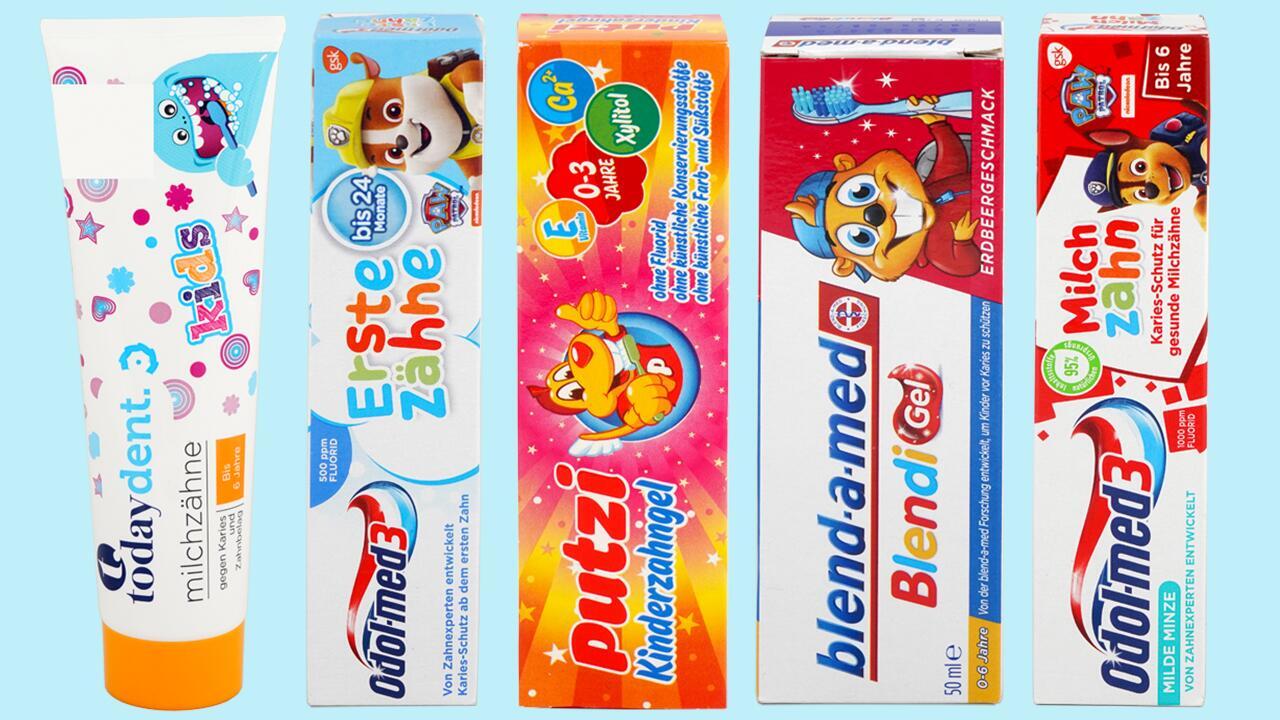
We tested 48 universal toothpastes, including 17 products with natural cosmetics certification.
A recommendable toothpaste should protect against cavities and be free of controversial substances: 18 out of 48 products in our test achieve this.
Universal toothpastes without zinc are also suitable for children from the age of six.
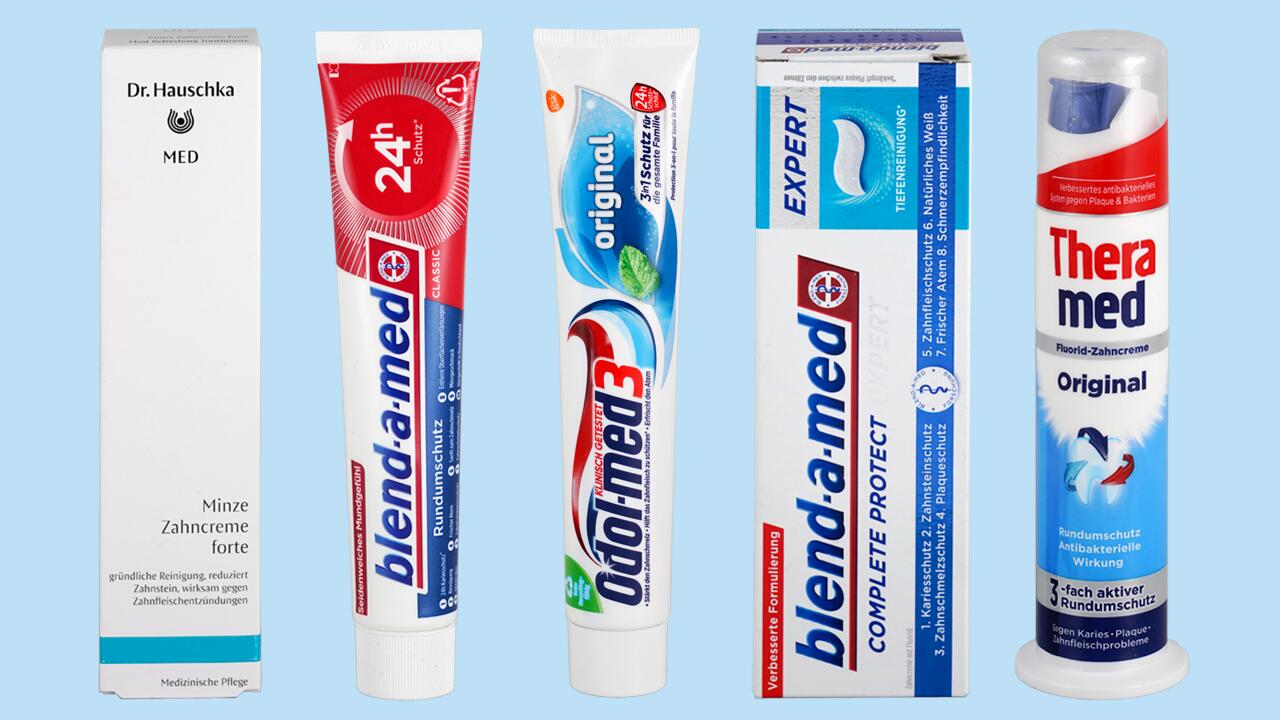
Since the ban on titanium dioxide in food, the substance has also fallen out of favor in cosmetics that end up in the mouth. The cosmetics industry is reacting, but not all toothpaste formulations have been changed yet.
19 toothpastes in the test fail with “poor” or “insufficient,” including well-known brands.
In the case of titanium dioxide in toothpaste, this consumer pressure exists. The whitening agent was banned in food in 2022 due to its potentially genotoxic effect.
A prime example – or counterexample – are lipsticks. They also contain titanium dioxide and are swallowed in not insignificant amounts. But because there has been no scandal mood among consumers so far, the cosmetics manufacturers in our last test tersely retreated to the position that titanium dioxide in cosmetics is still permitted.
It’s different with the universal toothpastes in this test: In 13 of the 48 tested toothpastes, the white pigment is still present. However, many manufacturers have already reformulated their products or reported back to us that they intend to do so in the near future.

Whether this is because the cosmetics industry has suddenly discovered consumer protection for itself, because it expects a ban in the foreseeable future, or because pastes with CI 77891/Titanium Dioxide have simply become shelf-warmers – the development is welcome in any case.
Titanium dioxide is not the only problem with the toothpastes in the test. A large market share, especially in the natural cosmetics segment, is held by toothpastes without fluoride.
According to the guideline of dental medicine – “Caries prophylaxis for permanent teeth – basic recommendations” – the protective effect of fluoride against cavities is clearly proven, which is why teeth should be brushed daily with a toothpaste containing at least 1,000 milligrams per kilogram (mg/kg or ppm) of fluoride.
In our view, there is also nothing to argue about this. Therefore, toothpastes without fluoride do not score better than “poor.”
In a large proportion of the fluoride-free natural cosmetic pastes, the commissioned laboratory detected the problematic heavy metal lead in quantities above the level defined as technically avoidable by the German Federal Office of Consumer Protection and Food Safety (BVL).