Editor’s Note
As the summer dining season peaks, crayfish prices in Hunan are defying expectations with a notable decline. This article examines the recent market trends and factors behind the drop, offering insight into the seasonal dynamics of this popular delicacy.
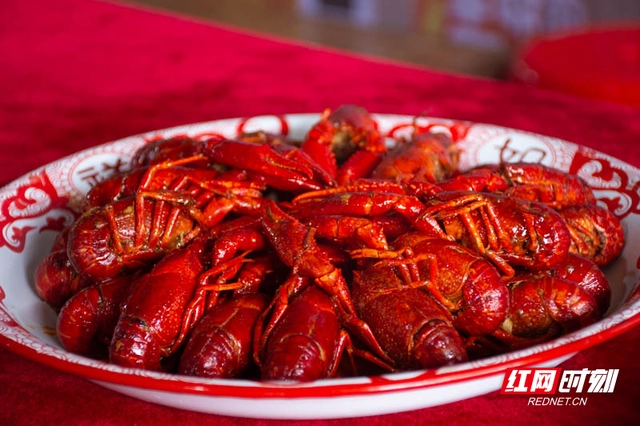
As summer arrives, Hunan’s late-night snack restaurants are bustling, with the “top-tier delicacy” crayfish making a comeback. However, crayfish prices are falling instead of rising. According to the “Hunan Major Agricultural Product Wholesale Price Monitoring Weekly Report,” from May 13 to May 19, the average wholesale price for crayfish was 29.6 yuan per kilogram, down 10.8% week-on-week and 25.3% year-on-year. It is expected that market transaction volume will continue to rise while prices keep falling in the later period.
Every May is the period when local crayfish in Hunan grow the fastest and have the highest market supply. After the May Day holiday, crayfish production increased. Additionally, this year’s high temperatures arrived early, and paddy field crayfish have successively entered maturity. Some farmers have increased their crayfish catch to avoid affecting the upcoming mid-season rice planting, naturally leading to lower prices.
Typically, crayfish prices follow a “V”-shaped trend: they gradually decline from the initial market entry, hitting the bottom from late May to early June, before slowly rising again. Before June, Hunan mainly sells local crayfish; from June to around the Mid-Autumn Festival, crayfish from Hubei, Jiangsu, Anhui, and other regions are the main supply. After October, crayfish from Guangxi, Yunnan, and other areas begin to enter the market. This year, the subsequent supply of crayfish will be sufficient, with little price fluctuation.
Seasonal fruits are flooding the market across the province, with both seasonal and previously high-priced fruits entering a降价 mode. Previously “high-priced fruits” like durian, lychee, and cherries have seen significant price drops. Seasonal fruits such as watermelon and honeydew melon have also seen price reductions to varying degrees, allowing consumers to fully enjoy a “fruit feast.”
Monitoring shows the average retail price for fruits was 11.94 yuan per kilogram, a slight decrease of 0.5%. Among them, except for citrus and apple prices which rose by 0.5% and 0.4% respectively, prices for watermelon, pineapple, grape, pear, banana, and mango fell by 4.1%, 0.5%, 0.2%, 0.2%, 0.1%, and 0.1% respectively.
Recently, major southern fruit production areas like Guangdong, Guangxi, and Yunnan, as well as northern ones like Shandong, Shaanxi, and Xinjiang, have seen a large volume of fresh seasonal fruits entering the market, pulling down the overall fruit prices in the province. If there are no adverse effects from extreme weather later, the supply of spring and summer fruits is expected to maintain a growth trend for a relatively long period, and fruit prices across the province are expected to continue a stable, slightly declining trend.
Currently, the province’s temperatures are suitable, conducive to vegetable production, harvesting, and transportation. The supply of local seasonal vegetables has increased, and the overall market supply of vegetables is relatively ample. This week, vegetable prices showed a stable trend with slight declines.
Monitoring shows the average retail price for vegetables this week was 7.71 yuan per kilogram, down 0.5%. Among the 7 major categories and 30 types of key monitored vegetables, 18 decreased, 11 increased, and 1 remained unchanged. Among them, legume prices fell across the board; root and tuber, melon, solanaceous fruit, and allium vegetable prices mostly fell with few increases; leafy and brassica vegetable prices mostly rose with few decreases. Prices for cucumber, cowpea, bitter gourd, zucchini, and tomato fell by 3.7%, 3.3%, 2.8%, 2.8%, and 2% respectively; prices for cauliflower and Chinese cabbage rose by 2% and 2.2% respectively; price changes for other vegetables did not exceed 2%.
Since May, the pork market has been in an off-season for consumption, with pig prices in the province running at low levels. This week’s monitoring shows the retail price for fresh pork was 26.43 yuan per kilogram, and for hind leg meat was 28.84 yuan per kilogram, down 0.3% and 0.1% respectively, continuing the decline from the previous week.