Editor’s Note
This article highlights Jaipur’s status as the world’s largest hub for gemstone and jewelry trading, underscoring its pivotal role in the global market from dawn to dusk.
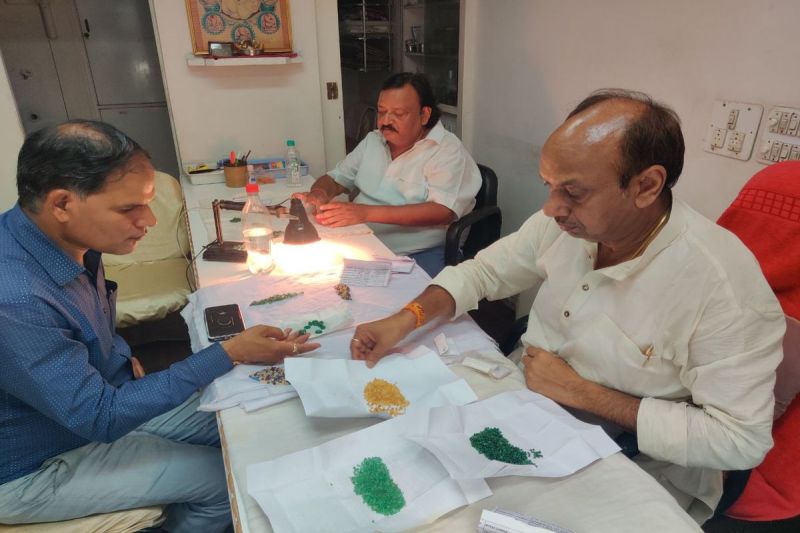
Jaipur, the capital of Rajasthan, is home to the largest gemstone and jewelry market, where trading in gemstones and ornaments takes place from morning till evening. In terms of jewelry, this market remains the world’s largest center for import and export.
Upon entering Gopalji Ka Rasta from Johari Bazaar, shops selling mawa (milk solids) and paneer (cottage cheese) come into view. A little further ahead, people are seen purchasing gemstones, color stones, and navratnas (nine gems). According to traders, gemstones and other jewelry from here are sent all over the world. The market also has fashion jewelry shops. There are 700 to 800 shops dealing in gemstones, color stones, etc., in the market. On Gopalji Ka Rasta itself, there are over a thousand offices and trading counters (gaddiyan) for gemstones and jewelry, where buyers from across the country and abroad come to purchase and sell goods. Additionally, there are more than 10 shops selling mawa, along with shops for fabrics and other goods.
The market has no parking arrangements, leading to traffic jams throughout the day. With no designated parking spaces, vehicles remain parked on the road all day.
The drainage system is completely broken, with dirty water continuously flowing from chambers.
Sanitation efforts are merely for show, with garbage lying around.
Gopalji Ka Rasta houses ancient temples. These include the Thakurji Jagannathji Temple, Gopalji Temple, Ganga Mata Temple, world-famous Jain Temple, Chauth Mata Temple, among others. Several processions also pass through the market. The oldest Hedi Parikrama (procession) also passes through this market.