Editor’s Note
This article explores the growing appeal of lab-grown diamonds, highlighting their identical quality to natural stones, lower cost, and ethical advantages. As consumer preferences shift, these sustainable alternatives are reshaping the jewelry industry.
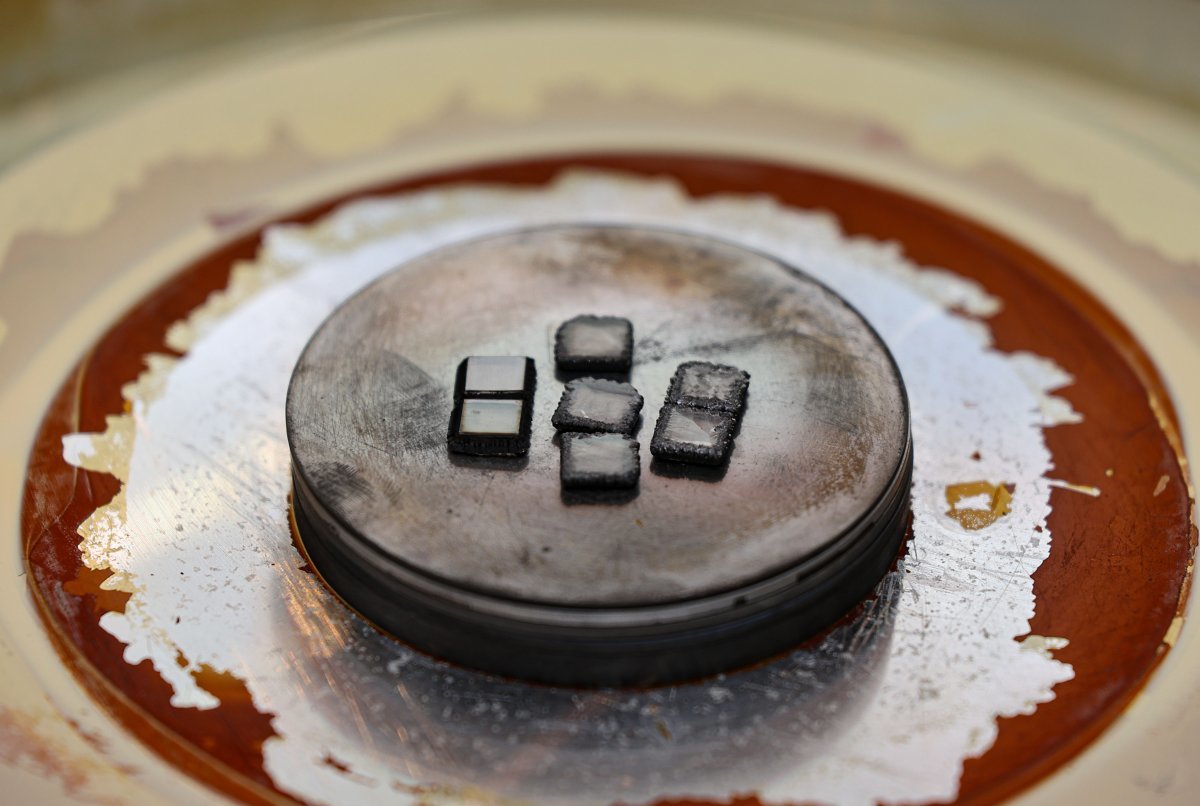
Lab-grown diamonds, created in laboratories, are gaining popularity. They share the same composition and quality as natural diamonds but are significantly cheaper, and they come without concerns about environmental pollution or labor exploitation.
Lab-grown diamonds are synthetic diamonds produced in laboratories, not mined from nature. Their price is about one-fifth to one-tenth that of natural diamonds. They are created by artificially replicating the conditions under which natural diamonds form, using methods like High Pressure High Temperature (HPHT) or Chemical Vapor Deposition (CVD). Over 2-4 weeks, carbon is gradually added to a diamond seed to grow it larger. Multiple seeds can be grown simultaneously, allowing for the production of dozens of lab-grown diamonds at once. They are chemically, physically, and optically identical to mined diamonds, making them indistinguishable even to gemologists without special equipment.
While synthetic diamonds existed in the past, they carried a strong ‘fake’ image. However, growing concerns about the massive environmental pollution from natural diamond mining have spurred a global search for alternatives. Mining natural diamonds requires digging 3-4 km deep and vast amounts of water for washing soil—about 500 liters per carat. In contrast, producing the same amount of lab-grown diamond requires only about 18.5 liters of water to cool machinery. There is also significant aversion to so-called ‘blood diamonds’ mined in conflict zones like Africa, where exploitation funds civil wars. Russian natural diamonds are embroiled in controversy for allegedly funding the war in Ukraine, leading to international import bans.
Recent advancements in production technology have also fueled the popularity of lab-grown diamonds. Although synthetic diamonds were first successfully developed by GE in 1954 for industrial use, technological limitations prevented perfect color replication of natural diamonds. However, since the 2010s, the ability to produce synthetic diamonds identical to natural ones has sparked a global ‘lab-grown diamond’ craze. In South Korea, KDT Diamond succeeded in producing lab-grown diamonds in late 2021.
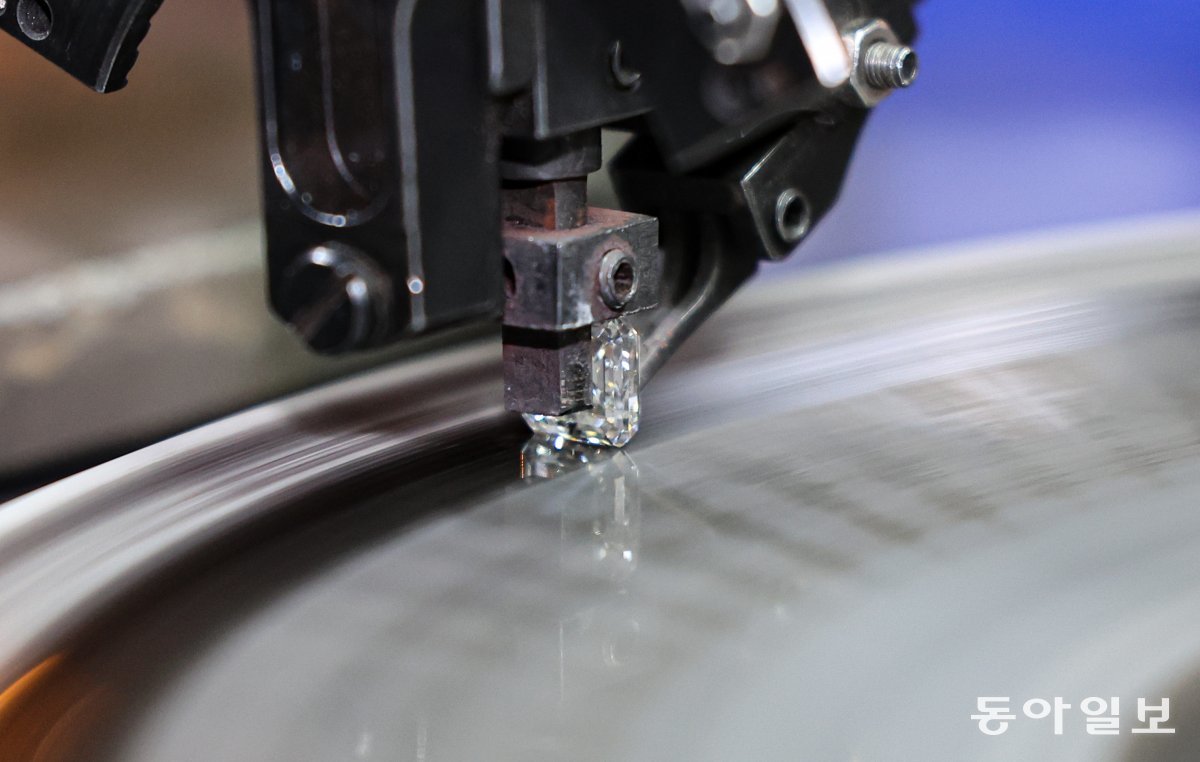
The spread of lab-grown diamonds is changing the landscape of South Korea’s wedding industry. They are particularly a hot topic among couples about to marry. A recent poll in an online wedding cafe asked, ‘Would you choose a 0.5-carat natural diamond or a 1-carat lab-grown diamond?’ Over half (52%) preferred lab-grown.
The number of jewelry companies handling lab-grown diamonds is also increasing. In a jewelry district in Seoul’s Jongno-gu, the number of stores handling lab-grown diamonds has more than doubled in the past three months.
Domestic distributors are also quickly entering the lab-grown diamond market. Not only large corporations handling jewelry like E-Land Group and Loyd but also department stores and e-commerce companies have started selling lab-grown diamonds. E-Land Group opened a pop-up store for its lab-grown diamond brand ‘The Grace London’ at Lotte Department Store’s Dongtan branch last month, recording over 100 million won in sales in just two hours. Loyd sold about 1,000 pieces of its 1-carat lab-grown diamond ring launched at 1 million won within three weeks.
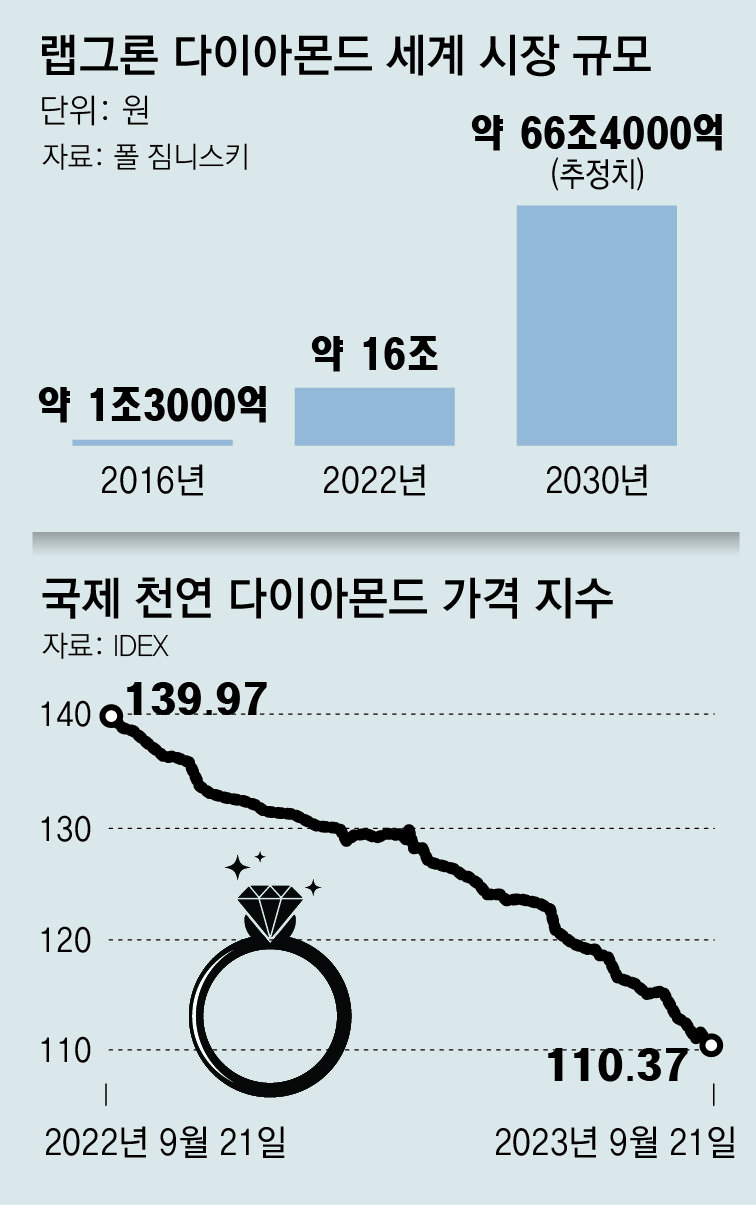
Amid the explosive popularity of lab-grown diamonds, some overseas forecasts suggest natural diamonds’ lifespan is limited. Indeed, natural diamond prices are trending downward. De Beers Group, which monopolizes about 90% of global natural diamond production, significantly lowered prices in July for ‘Select Makeable’ diamonds, mainly used in wedding rings. This product traded at $1,400 in June last year but fell nearly 40% to $850 a year later.
According to diamond market research firm Paul Zimnisky, the global lab-grown diamond market, which was under $1 billion in 2016, is projected to grow to about $49.9 billion by 2030.
Given this situation, even luxury brands are entering the lab-grown diamond market. LVMH, owner of Louis Vuitton, invested in Israeli lab-grown diamond startup Lusix in July. Tag Heuer, under LVMH, debuted the ‘Carrera Plasma’ adorned with lab-grown diamonds earlier this year, an industry first.
A visit to the lab of KDT Diamond, a lab-grown diamond company that first succeeded in domestic production in 2021.
KDT succeeded in late 2021 through industry-academia collaboration with Seoul National University of Science and Technology’s Department of New Materials Engineering, becoming the 8th globally to produce lab-grown diamonds 100% identical to natural ones in composition. The company uses the Chemical Vapor Deposition (CVD) method, placing a diamond seed in a machine, injecting methane and nitrogen, and raising the internal temperature above 1000 degrees Celsius. It takes about 100 hours to create a 1mm diameter diamond rough, and about two and a half weeks for a 1-carat (approx. 4mm) stone.
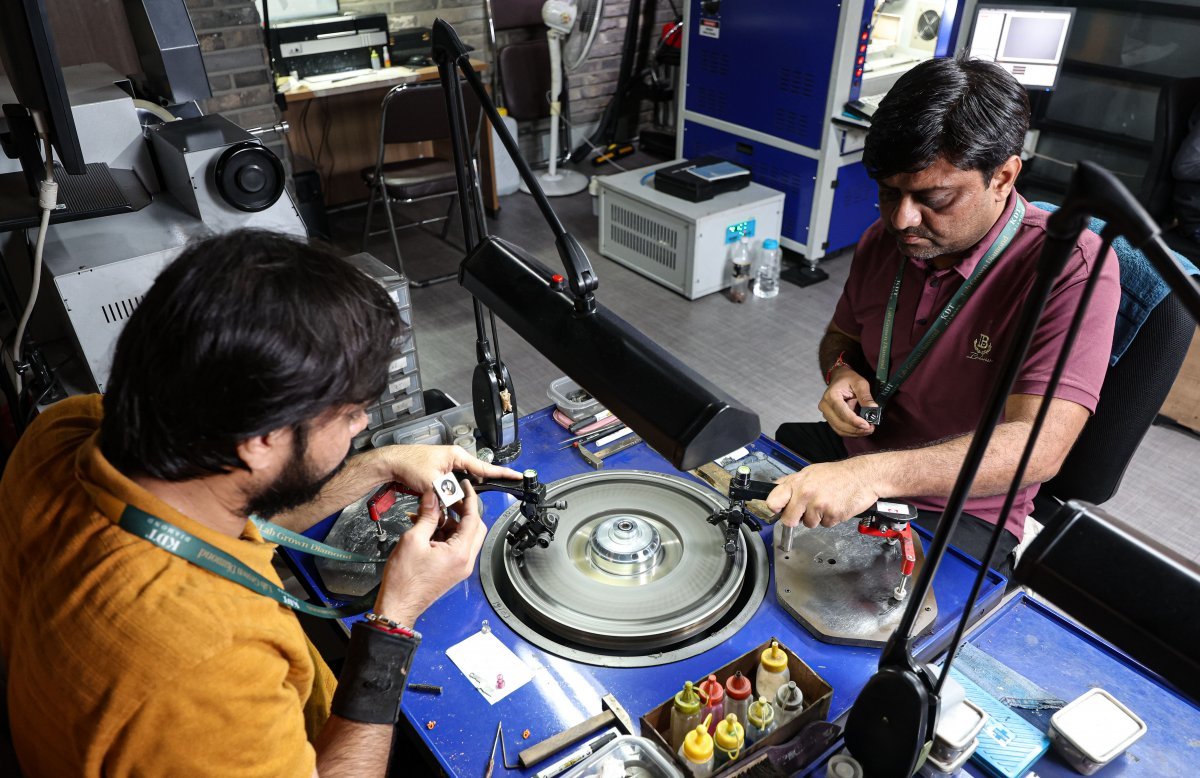
KDT Diamond anticipates rapid market growth for lab-grown diamonds. Currently producing about 1,200 carats annually, they plan to expand production to 35,000 carats soon.