Editor’s Note
This article explores the rise of lab-grown diamonds, highlighting their identical properties to natural stones and their ethical and environmental advantages. It also notes South Korea’s recent entry into this innovative field.
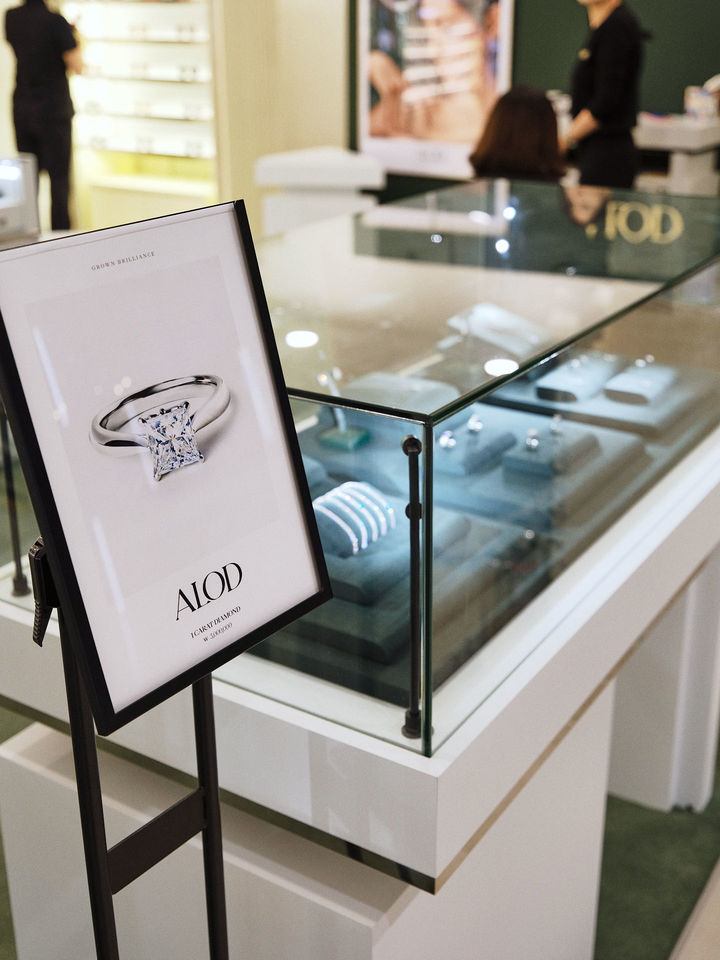
Lab-grown diamonds, produced in laboratories, share 100% identical composition and structure with natural diamonds. They are gaining popularity in the era of eco-friendly and ethical consumption, as their production process raises no concerns about environmental pollution or labor exploitation. South Korea, which previously relied on imported rough diamonds, has succeeded in becoming the world’s 8th country to develop this technology, raising expectations for revitalizing the domestic market.
[Seoul=Newsis] Reporter Lee Hye-won = Consumer interest in lab-grown diamonds is heating up recently.
Lab-grown diamonds refer to diamonds produced by growing them in a laboratory. They are 100% identical to natural diamonds in physical, chemical, and optical properties, yet their price is only 20-30% of that of natural products, leading to an increasing trend of consumers seeking lab-grown diamonds.
According to a report by renowned global diamond analyst Paul Zimnisky on the 29th, the lab-grown diamond market, valued at $2 billion (approximately 2.6 trillion KRW) in 2021, is projected to nearly double to $3.9 billion (approximately 5.2 trillion KRW) by 2025.
The ongoing controversy over environmental pollution and unethical labor exploitation in the natural diamond mining process is also having a positive impact on the lab-grown diamond market. For consumers oriented towards eco-friendly and ethical consumption, lab-grown diamonds are emerging as a good alternative.
In reality, the lab-grown diamond market is growing rapidly. According to Edahn Golan Diamond Research & Data, the sales share of lab-grown diamonds compared to natural diamonds has increased significantly from 2.4% in 2020 to 9.3% this year.
As the growth of lab-grown diamonds continues, natural diamond prices have recently been unable to escape a downtrend. De Beers, a leader in the global diamond market, stated that as of late July, the price of rough diamonds in the ‘select makeables’ grade had fallen by about 40% compared to June last year. The global rough diamond price index also showed that natural diamond prices have fallen by 24.2% from last year’s peak.
However, whether the price weakness of natural diamonds will persist remains uncertain. This is because the mining volume of natural rough diamonds is steadily decreasing. According to the Antwerp Diamond Centre (AWDC) and Bain & Company, mining volume is decreasing by an average of about 5% annually due to mine aging and depletion, and it is expected to drop from 111 million carats in 2020 to 14 million carats by 2050.
On the other hand, demand for rough diamonds is increasing with a stable upward trend. Coupled with the supply decrease, this is expected to lead to an imbalance between supply and demand. According to Frost & Sullivan, the shortage of rough diamond supply is expected to reach 86 million carats in 2026 and 278 million carats by 2050.
Experts believe that lab-grown diamonds will not replace natural diamonds but will form different markets and grow separately.
The United States, China, and India are prominent in lab-grown diamond production. Although China has the highest market share of 50-60% by production volume, the United States and India can be seen as leading the production market due to China’s high volume of low-quality diamond production.
A representative company is De Beers, which invested $94 million (approximately 127 billion KRW) in 2020 to establish a production base capable of producing 200,000 carats of lab-grown diamonds.
South Korea is just at the starting stage. Until recently, it relied on imports for lab-grown rough diamonds. However, with diamond specialist company KDT Diamond successfully developing lab-grown diamonds domestically for the first time at the end of 2021, South Korea became the world’s 8th lab-grown diamond producing country. KDT Diamond registered related patents this year and is currently the only company in South Korea producing lab-grown diamonds in-house.
KDT Diamond plans to establish a new factory in India to meet the increasing consumer demand. The factory is scheduled to start operations by the end of March next year, with plans to produce 36,000 carats using its own technology in the first year of establishment. Long-term, the goal is annual production of 100,000 carats. To this end, the company plans to establish a local corporation in India and hire about 150 employees.
E-World, a jewelry and theme park affiliate of the E-Land Group, has also signed a contract with a local Indian factory to secure the supply of lab-grown diamonds. The production facility of the contracted Indian company covers 330,000 square meters and can produce 12,000 carats of lab-grown diamonds per month.
With the smooth supply of lab-grown rough diamonds, the domestic market is also expected to be revitalized. Many companies have already created their own brands and are challenging the lab-grown diamond distribution market. The size of the domestic market this year is about 70 billion KRW, which is not yet large, but it has increased by about 40% compared to last year.
Wolgok Jewelry Industry Research Institute, the only jewelry research institution in South Korea, predicts the growth rate of the lab-grown diamond market over the next 5-10 years to be 17%-29%, and forecasts that by 2031, it will grow to between 186 billion KRW and a maximum of 248 billion KRW.