Editor’s Note
This article explores the rising trend of gemstone investment as a perceived safe-haven asset during periods of market volatility. It highlights how high-net-worth individuals are diversifying portfolios and how new financial technologies, like security tokens, are making this asset class more accessible.
Interest in gemstone investment is growing among high-net-worth individuals. As global market uncertainty increases due to events like the Silicon Valley Bank (SVB) crisis, investors are turning their eyes to gemstones, considered safe-haven assets, rather than volatile stocks. Furthermore, the financial authorities’ introduction of security tokens (ST) has fueled interest in ‘jewelry-tech’ by opening the path for fractional investment in gemstones. General investors are also broadening their investment scope to include platinum and diamonds, in addition to gold and silver.
Rahul Kadakia, Christie’s International Head of Jewelry, made this statement last November after an auction in Geneva, Switzerland, exceeded initial estimates and performed well despite global inflation.
The primary reason high-net-worth individuals are moving beyond gold, the quintessential safe-haven asset, to focus on top-tier gemstone investment is scarcity and the resulting low volatility. In reality, gemstones possess scarcity, making their value less prone to fluctuation. Even during the 2008 global financial crisis, while the value of traditional assets like real estate and securities fell, the blue diamond ‘Wittelsbach-Graff’ was auctioned for $24.3 million (approximately 32.5 billion KRW), setting a new record for diamond auction prices. Limited supply acts as a factor driving up gemstone prices. The Argyle mine in Australia, which produced about 90% of the world’s pink diamonds, closed in 2020 after 37 years of operation.
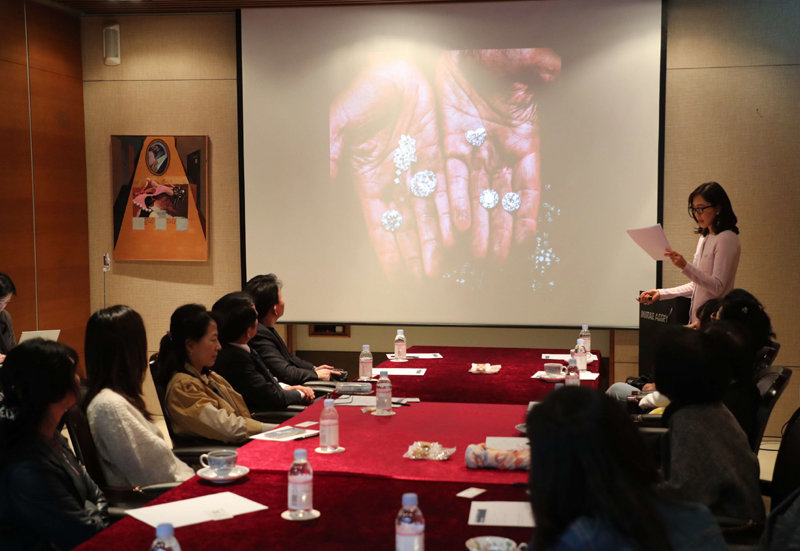
Shin Hye-jeong, CEO of Pax Consulting, explained this trend.
Additionally, holding top-tier gemstones can provide tax benefits. Unlike real estate, which requires annual property taxes, gemstones do not incur separate taxes after purchase. Consequently, they are favored as a means of property inheritance to avoid gift and inheritance taxes.
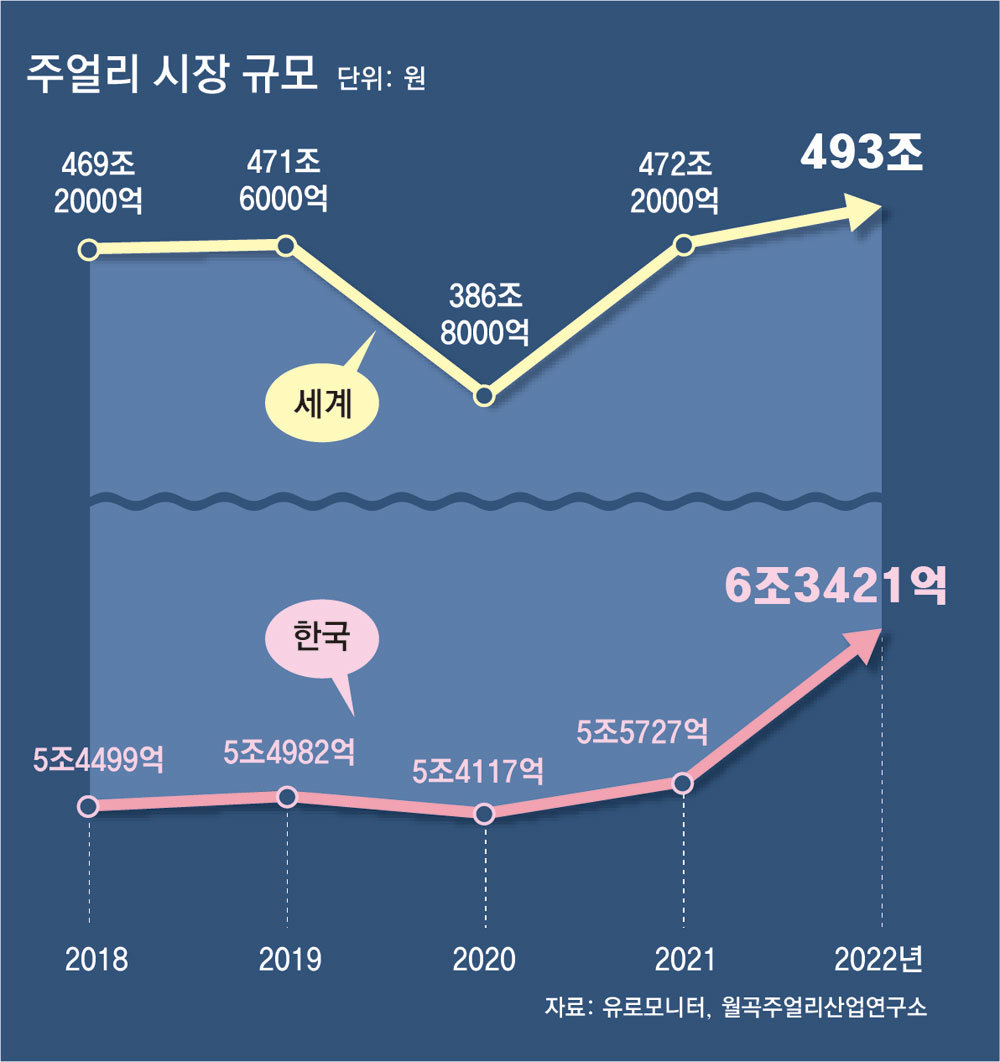
Based on these advantages, the jewelry market is trending towards growth. According to an analysis of Euromonitor data by the domestic private research institute Wolgok Jewelry Industry Research Institute, the global jewelry market size last year is estimated at $368.2 billion (approximately 492 trillion KRW), a 4.4% growth compared to 2021. The domestic jewelry market size also increased by 13.8% last year compared to the previous year.
General consumers are also gradually opening their eyes to gemstone investment, focusing on diamonds and other stones. An official from a precious metals company in Jongno-gu, Seoul, said, “1-carat diamonds with SI2 (clarity grade) are popular with customers because there isn’t a big difference in price when buying and selling. Those seeking liquidity tend to buy them at a low price.”
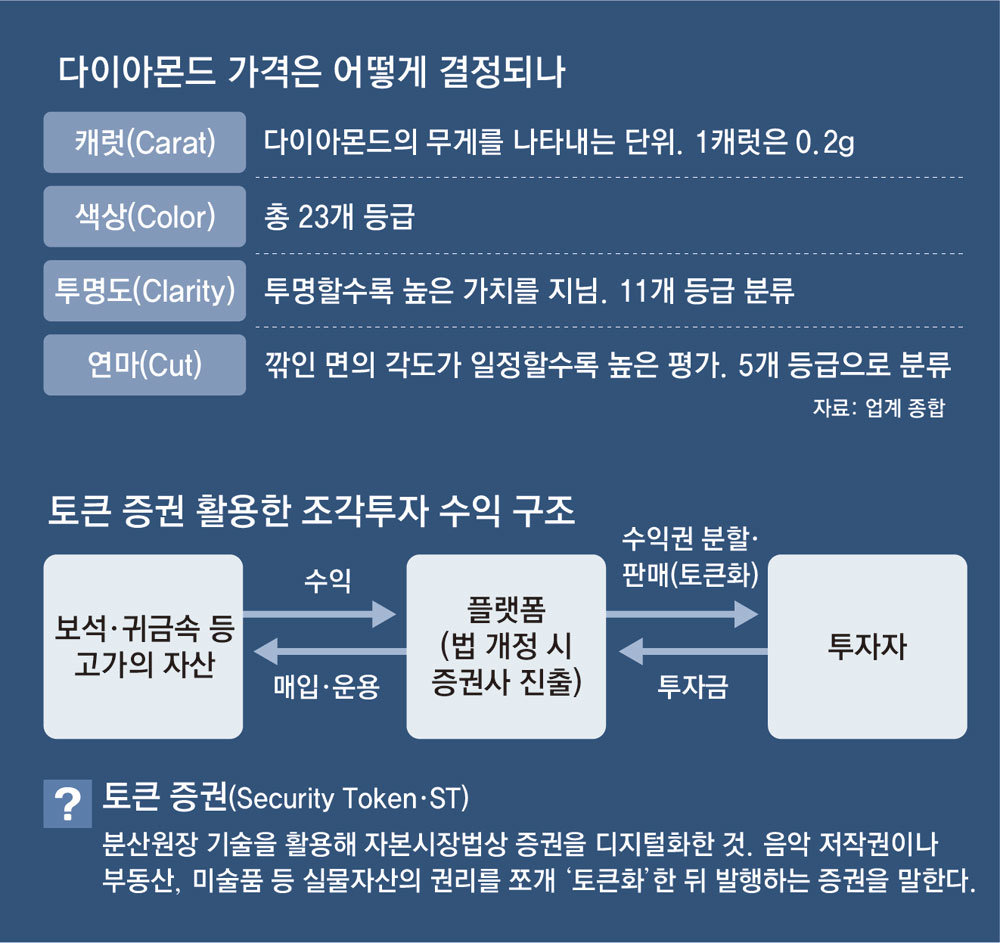
If considering investment, one should also evaluate value when choosing engagement gifts. In the case of diamonds, the most representative gift, prices vary significantly depending on grade. The four factors determining a diamond’s grade are Color, Carat, Cut, and Clarity, known as the ‘4Cs’. Unlike gold, where price is consistent with weight, diamond prices rise sharply as carat size increases.
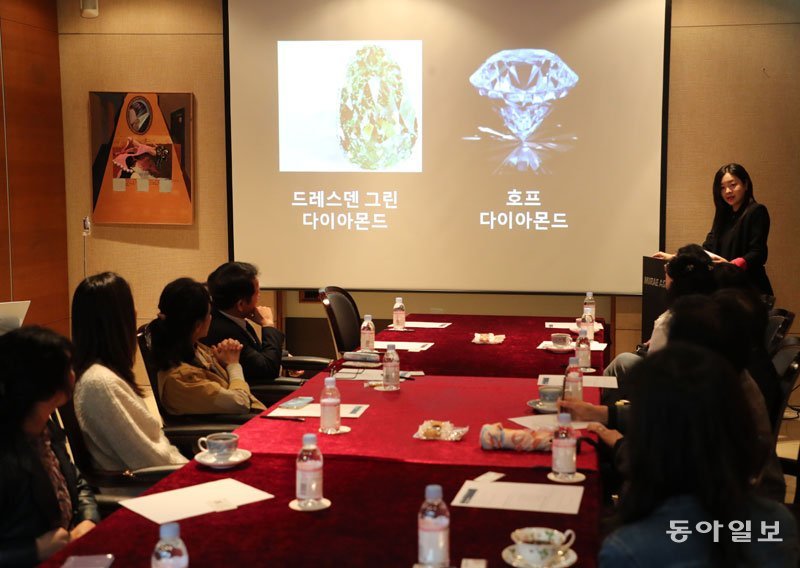
Experts also advise that if one desires diamond investment, it’s better to purchase a high-grade stone from the start. The 3 to 5 ‘boo’ (a Korean unit for small diamonds, roughly 0.3-0.5 carats) diamonds often used in gifts have a large price gap when resold. This is not only due to decreased scarcity from the proliferation of synthetic diamonds but also reduced demand from declining marriage rates and simplified gift-giving.
Seo Min-cheol, a director at the Korea Gold Exchange, provided this explanation.
If hesitant to directly invest millions of won in gemstones, there is also the method of indirect investment through fund products. Recently, with China’s reopening boosting demand for high-end products, the returns of related products are rising.
Meanwhile, as financial authorities move to institutionalize ‘Security Tokens (ST)’, ‘fractional investment’ in gemstones and precious metals is also expected to become possible. ST refers to securities issued by ‘tokenizing’—splitting the rights to—high-value physical assets like gemstones, real estate, and artworks. It is known that Hana Securities is discussing forming a consortium with KOSDAQ-listed IT Cen to enter the gold and silver Security Token Offering (STO) market.
Jung Yun-seok, Senior Manager at Mirae Asset Securities WM Gangnam Finance Center, predicted this development.