Editor’s Note
This article examines the sharp contraction of South Korea’s wedding jewelry market, which has halved in a decade to a historic low of 800 billion won. The decline is driven by a plummeting marriage rate, shifting consumer habits among younger generations, and a challenging landscape for traditional jewelers, even as luxury imports grow.
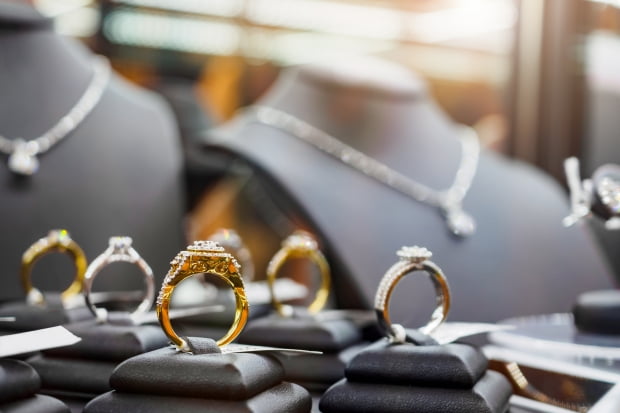
The wedding jewelry market has been halved due to a declining marriage rate.
Last year’s wedding jewelry market was 800 billion won.
Halved in 10 years… “Historically the lowest.”
The 2030 consumer base is disappearing due to fewer marriages.
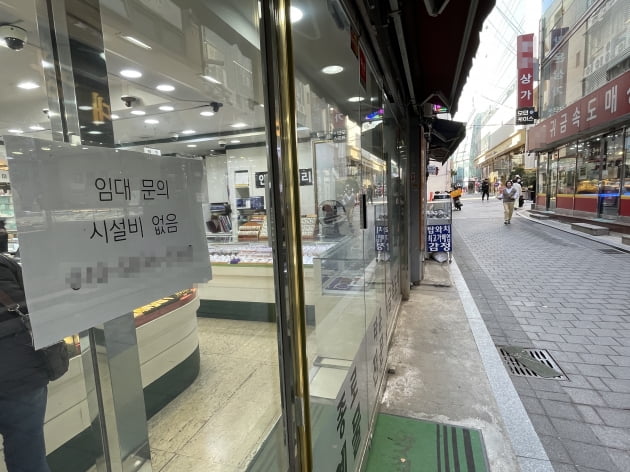
Jongno’s precious metals street is plastered with ‘For Rent’ signs.
Jewelry imports surpass $1 billion for the first time.
‘Open runs’ at department store luxury sections.
On the 22nd, Seoul’s Bongik-dong Jongno precious metals street was quiet. Even with the spring wedding season approaching, there were no soon-to-be-married couples shopping for wedding gifts. Over the past decade, the marriage rate has halved, and the footsteps of people in their 20s and 30s visiting the precious metals street have almost ceased. Mr. A, a precious metals shop owner met on-site, lamented, “It’s a pity the core customer base has disappeared. Who would have thought Jongno’s precious metals street, once boasting the world’s largest scale, would end up like this?”
Wedding jewelry is a representative industry hit directly by the sharp decline in marriage rates. Over the past 10 years, consumption of wedding items like diamond rings has significantly decreased, shrinking the market size to about half. However, the overall jewelry market is rapidly growing, fueled by imported luxury consumption. Analysis suggests that polarization within the jewelry market is intensifying due to changes in population structure and consumption patterns.

According to the Wolgok Jewelry Industry Research Institute, last year’s wedding jewelry market size was 819.7 billion won, a 25.9% decrease compared to the previous year, marking the lowest figure since statistics began in 2010. Compared to ten years ago in 2012 (1.6049 trillion won), it has been halved.
The diamond market, accounting for about two-thirds of the wedding jewelry market, was recorded at 457.3 billion won last year, a sharp 35.6% decrease year-on-year. On Hyeon-seong, head of the Wolgok Jewelry Industry Research Institute, explained, “The average purchase cost per couple for wedding jewelry was also the lowest since the survey began.”
Industry insiders unanimously agree, “Due to the decrease in marriages, the consumer base has disappeared, and the wedding jewelry market itself is vanishing.” Indeed, the number of domestic marriages peaked at 435,000 in 1996 and has steadily declined since. The latest annual statistic from 2021 recorded 193,000 marriages, an all-time low. Although marriage numbers saw a slight rebound in the last quarter of last year for the first time in 15 quarters, experts believe this is merely a base effect from COVID-19, and the declining trend in marriages will continue for the time being.
Merchants on Jongno’s precious metals street feel the impact of these industrial changes more acutely than anyone. Until the mid-2000s, it boasted the world’s largest single precious metals commercial district, with over 3,000 wholesale/retail shops and workshops. Now, the downturn is so severe that ‘For Rent’ signs appear on about every third or fourth shop. According to Seoul City, the five-year survival rate for newly opened watch/jewelry stores near Jongno 3-ga Station is 64.8%. This means one out of three stores closes within five years of opening.
The overall jewelry market, which had been on a downward trend since 2016, showed a significant rebound last year. Last year’s market size was 6.3421 trillion won, a 13.8% growth compared to the previous year. Among non-wedding jewelry, general jewelry made of gold and platinum reached a record high of 4.9074 trillion won, an increase of 1.1652 trillion won year-on-year. An industry insider noted, “This was influenced by the surge in retail prices due to the skyrocketing price of gold last year, affected by factors like the Ukraine war.”

Increased consumption of imported luxury jewelry also contributed to the overall market growth. According to the Korea Customs Service, last year’s jewelry import value reached a record high of $1.07082 billion (approximately 1.4 trillion won). Two-thirds of imported jewelry comes from Italy, France, and the United States, where many luxury brands are concentrated. It is interpreted that consumption psychology, suppressed after last year’s COVID-19 situation, exploded, leading to a surge in luxury jewelry consumption at department stores, etc. Department store officials explain that ‘open runs’ (entering immediately when the store opens) to purchase luxury jewelry brands like Van Cleef & Arpels and Cartier have become common, and even then, stock shortages often lead to wasted trips.
According to a Morgan Stanley report, last year’s domestic luxury consumption was $16.8 billion (approximately 21.88 trillion won), a 24% increase from the previous year, amounting to $325 (approximately 420,000 won) per capita. This placed the country at the top globally for per capita luxury spending, surpassing the United States ($280) and China ($55).