Editor’s Note
This article highlights a significant yet under-supported sector of South Korea’s retail landscape. While the jewelry market has achieved notable scale, surpassing even major outdoor apparel brands, its fragmented structure and lack of policy backing threaten its future growth. The piece underscores the need for strategic support to help this vibrant industry realize its full potential.
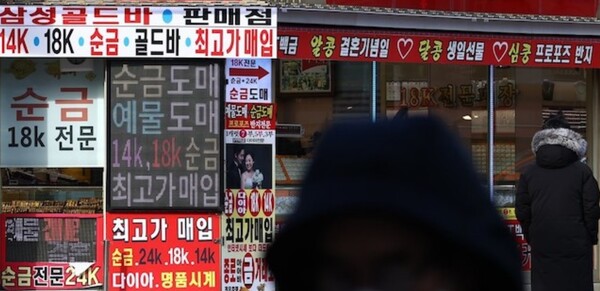
South Korea’s jewelry market has surpassed the outdoor market, which includes popular fashion brands like The North Face and Black Yak, in size. However, the market is predominantly composed of individual proprietors, and a lack of policy support to underpin their growth is causing a loss of additional growth momentum.
According to a survey on jewelry market size trends by the Wolgok Jewelry Industry Promotion Foundation, the domestic jewelry market was estimated at 5.5727 trillion won as of 2021. Considering the domestic outdoor market size was about 3 trillion won during the same period, the jewelry market is roughly twice as large as the outdoor market.
Market research firm Euromonitor reported that while global jewelry sales in 2020 decreased by 19% to $286.9 billion from $354.4 billion the previous year, sales in South Korea’s luxury sector (including bags, wallets, jewelry, and watches) recorded approximately $12.542 billion (about 14.9966 trillion won), a slight 0.1% decline from $12.5173 billion the previous year.
South Korea’s luxury sector sales had already reached $12.5173 billion in 2019, surpassing Germany to rise one rank to 7th place globally. The gap with the 5th-ranked UK and 6th-ranked Italy has also narrowed significantly.
A characteristic of the domestic jewelry market is the large proportion of non-branded individual proprietors compared to branded businesses. As of 2018, the ratio of individual proprietors (non-branded) in the jewelry retail market was 89.7%, about eight times that of corporate entities at 10.3%. In terms of workforce, 14,638 establishments have between just 1 to 4 employees.
Thus, while the domestic jewelry market is an industry capable of creating high added value, it is currently losing competitiveness as a domestic jewelry brand due to issues such as the high recognition of foreign jewelry brands and an outdated industrial structure. An industry official lamented in a call with Women’s Economic News:
Similar to how the national crisis was overcome during the 1997 IMF crisis through the gold collection movement, the jewelry market is known to hold high monetary value. Therefore, voices from the industry are calling for urgent policy changes to develop the jewelry industry into a new growth industry.
To this end, lawmaker Noh Woong-rae of the Democratic Party of Korea proposed a representative bill last year titled the ‘Act on the Distribution Management and Industrial Foundation Establishment of Jewelry’ to promote the jewelry industry. The main point of the bill is to ‘establish and implement a Jewelry Industry Foundation Establishment Plan every five years, and based on this basic plan, establish and implement an annual execution plan each year.’
It also includes provisions to establish and operate a Jewelry Industry Foundation Establishment Committee, composed of members with expertise in gems, precious metals, and the jewelry industry, to deliberate on matters related to establishing the jewelry industry foundation.
However, the bill remains pending in the National Assembly to this day. A review report on the bill stated that to create a policy foundation for jewelry industry development, ‘a fact-finding survey targeting businesses and investigation/analysis of related statistical data should come first.’ However, it pointed out that due to the characteristic of the domestic jewelry industry being centered on individual proprietors, the burden on small-scale jewelry industry practitioners could make statistical collection itself difficult, which is a key factor in whether the bill passes.
A National Assembly official explained to the newspaper: