Editor’s Note
Major diamond producers are taking deliberate steps to curb supply in an effort to stabilize global prices, as reported by Bloomberg. This strategic withholding underscores ongoing market pressures and shifting dynamics within the luxury goods sector.
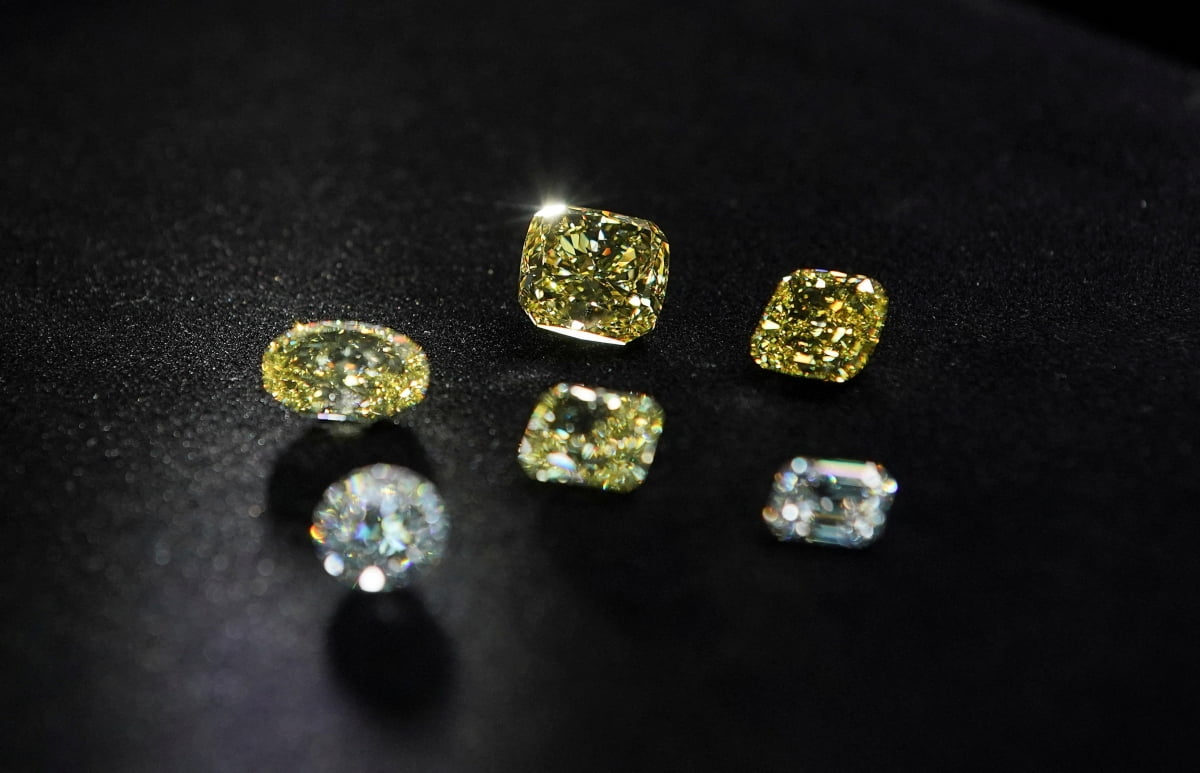
Reports indicate that global diamond producers have begun voluntarily reducing sales to prevent a plunge in diamond prices.
According to Bloomberg News on the 17th, De Beers, one of the world’s largest diamond producers, recently declined to sign contracts with buyers who visited its headquarters in Botswana. Botswana is the largest diamond-producing country on the African continent.
Not only in Botswana, but Russia’s Alrosa PJSC has also canceled all sales for the past two months. India, which processes 90% of the world’s rough diamonds, has seen companies voluntarily and temporarily halt rough diamond imports.
Bloomberg News assessed, “The speed of the diamond price decline will surprise many,” and “companies are using all means to stop the diamond price downtrend.”
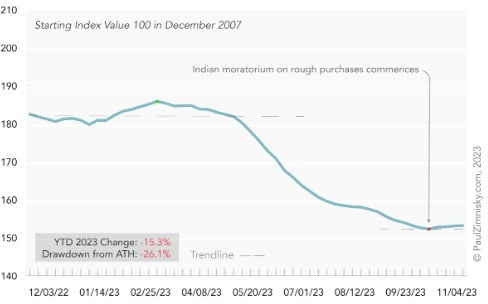
Diamonds circulate in various forms. According to Bloomberg, the price of polished diamonds, most commonly used in wholesale, has fallen by about 20% this year. The price of uncut rough diamonds has plummeted by 35%.
According to diamond analyst Paul Zimnisky, the global rough diamond price index has fallen by over 15% from the beginning of the year to early this month.
Diamond prices have been hit hard as consumers reduced spending on luxury goods after the end of the COVID-19 pandemic.
He forecasted, “In the short term, if wholesale prices fall, some jewelers will try to take advantage of this opportunity to secure more margin.”

Prices have also fallen as lab-grown diamonds, known as ‘lab-grown diamonds,’ have become more common. The sales share of lab-grown diamonds compared to natural diamonds surged from 2.4% in 2020 to 9.3% early this year. Investment bank Liberum Capital analyzed that, by volume, the sales share of lab-grown diamonds has already reached 25-35%.
Industry experts anticipate a revival in diamond consumption by year-end. CNN reported, “Winter is the peak season for engagements, and Christmas and Valentine’s Day are generally considered boom times for jewelry companies,” and “retail sales are expected to surge through the winter holiday season and into early 2024.”
The market is also watching the potential impact of the European Union’s (EU) ban on Russian diamond imports. The EU is known to be taking additional measures to ban imports of Russian diamonds to cut off funding for Russia, which invaded Ukraine.

Russia exported $4 billion (approximately 5.32 trillion won) worth of diamonds in 2021. Following Russia’s invasion of Ukraine last year, diamond prices rose due to supply disruptions after the US and European countries included Russian diamond mining companies in their economic sanctions targets.