Editor’s Note
This article highlights a significant shift in the US engagement ring market, where demand for a key category of natural diamonds has sharply declined. The trend is driven by the rising preference for lab-grown alternatives and changing consumer spending priorities post-pandemic.
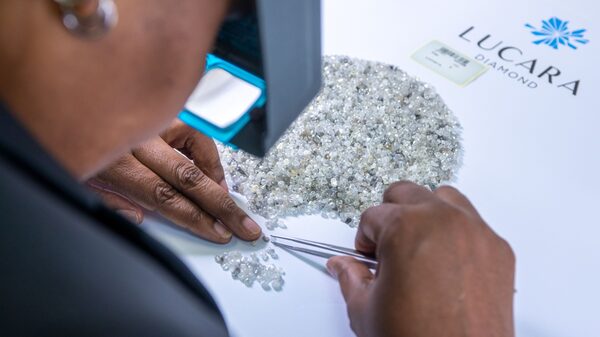
Bloomberg — Demand for one type of rough diamond, the most prized on the planet, has plummeted as more US citizens are choosing engagement rings made with lab-developed stones.
After the pandemic, overall diamond demand has decreased as buyers prefer to spend on travel and other activities, while economic circumstances affect luxury spending. However, the category of stones used in one- or two-carat solitaire rings, which are more affordable and very popular in the US, has seen price declines far exceeding the rest of the market.
According to industry insiders, the reason is the increased demand for lab-grown diamonds. This sector has specifically targeted this category, where buyers are much more price-sensitive, and these efforts are now paying off in the world’s primary diamond market.
This shift does not mean engagement rings will see massive discounts: the effect is limited to the rough diamond market, an opaque realm of extractors, traders, and artisans situated some distance from the price tags in a jewelry store.

However, the scale and speed of the price collapse for one of the diamond industry’s most important products have left the market reeling. Now, the question is whether the drop in demand for natural diamonds in this category represents a permanent shift and, more importantly, whether the advances made by lab-cultured gems will eventually extend to the more expensive diamonds typically dominated by Asian purchases.
The industry leader, De Beers, insists the current weakness is a natural demand downturn, after home-confined buyers drove up prices during the pandemic, with cheaper engagement rings being particularly vulnerable. The company admits there has been some penetration of synthetic stones in this category but does not see it as a structural change.
Lab-grown diamonds (physically identical stones that can be made in weeks in a microwave chamber) have long been seen as an existential threat to the natural mining industry, with proponents saying they can offer a cheaper alternative without many of the environmental or social risks and drawbacks sometimes attributed to mined diamonds.
For much of the past decade, the risk remained unrealized, with synthetic products devouring cheaper gift segments but making limited inroads elsewhere. That is changing now, as lab-grown products are beginning to occupy a much larger share of the crucial US bridal market.

De Beers has responded to weakening demand by aggressively cutting prices in the category known as “select makeables”: rough diamonds between 2 and 4 carats that can be cut into stones about half that size when polished, producing center stones for large, high-quality but not flawless bridal rings.
De Beers has cut prices in the category by more than 40% last year, including a cut of over 15% in July, according to people familiar with the matter.
The former monopoly still wields considerable power in the rough diamond market, selling its gems through 10 sales each year where buyers, known as sightholders, generally have to accept the price and quantities offered.
De Beers typically reserves aggressive cuts as a last resort, and the magnitude of recent price drops for a benchmark product is unprecedented outside the collapse of a speculative bubble, traders said.
In June 2022, De Beers charged around $1,400 per carat for the select makeable diamonds. By July of this year, that figure had fallen to about $850 per carat. And there may be more room to fall: diamonds are still about 10% more expensive than in the “secondary” market, where traders and manufacturers sell to each other.

De Beers declined to comment on diamond prices.