Editor’s Note
This article explores the immense pressures facing Antwerp’s historic diamond district, where billions in gems flow daily through its unassuming streets.
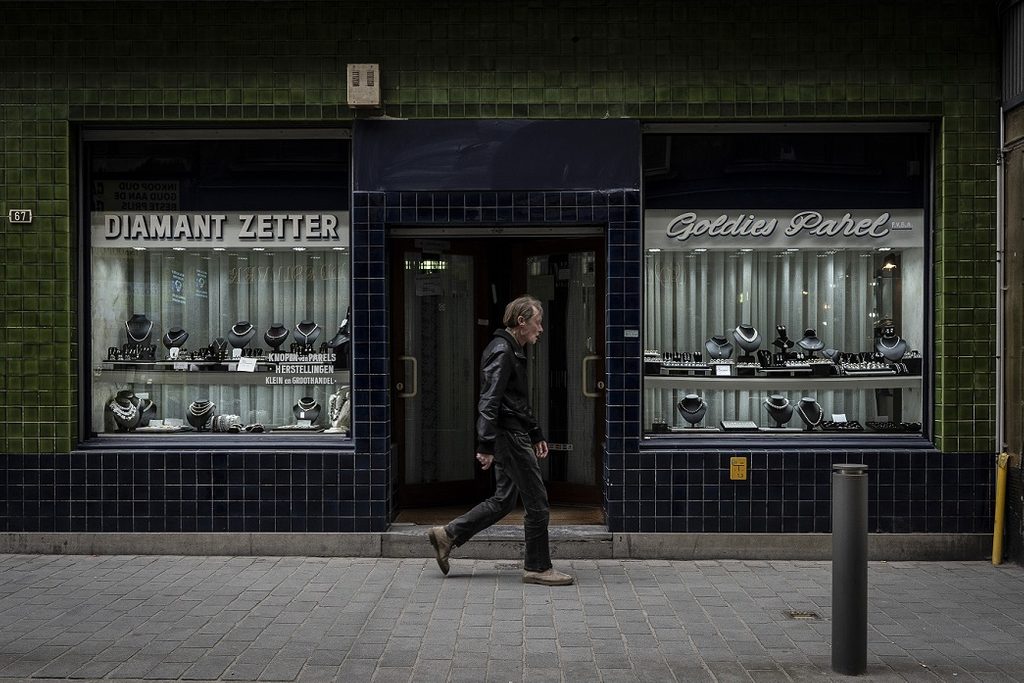
On a grey Belgian spring day, people in dark suits hurry up and down Antwerp’s Hoveniersstraat carrying black leather briefcases. Some pause to talk with one another for a moment, but in the city’s diamond district, everyone seems to have somewhere to be. It might have something to do with the estimated €200 million worth of diamonds passing every day in and out of this small neighbourhood, just a few drab, architecturally unremarkable streets right next to Central Station. Dazzling stones wrested from far-flung corners of the earth’s crust land here for trading, cutting and polishing. It’s a business ecosystem with five centuries of history deeply intertwined with the local Jewish community, particularly its strict Orthodox members. Antwerp has lost ground in recent years to Dubai and Mumbai, but an estimated 86 percent of the world’s rough diamonds still pass through this square mile at least once. An idiosyncratic mix of Belgians – Jewish or not – Indians and many other nationalities work side by side in the diamantkwartier, home to dozens of jewellers and no fewer than four diamond bourses. Belgium’s second city is proud of this compact global hub, which faced an existential threat during Nazi German occupation. Some 25,000 Belgian Jews perished in the Holocaust; thousands more fled. After the Second World War, the neighbourhood and the diamond district pulled itself back up. Today, according to the Antwerp World Diamond Centre, diamonds account for around five percent of Belgium’s exports and generate about 10,000 jobs in Antwerp, a city with a population of half a million. The trade organisation representing 1,600 registered companies and a direct workforce of 6,600, celebrates this unique history with the slogan ‘Diamonds & Antwerp, it’s in our DnA’. No mention, of course, of the industry’s darker moments. Historic links to European colonial exploitation, notably in Belgium’s case of what is now the Democratic Republic of the Congo. Or more recently, at the turn of the millennium, damning revelations of the trade in so-called ‘blood diamonds’ fuelling conflict in multiple African states – an issue was eventually addressed by the UN-backed Kimberley Process, a trading scheme that certifies shipments of rough diamonds as ‘conflict-free’. Over the last 20 years, Antwerp has gone to great pains to show it has cleaned up its act, reinventing itself as the hub with the world’s highest regulatory standards – the natural choice for those looking to do ethical trade.
However, since the outbreak of war in Ukraine, Antwerp traders face a new dilemma: whether to deal in rough diamonds from Russia, a leading global producer that happens to be waging a brutal military campaign on its neighbour. Doing so is legal in the European Union for now, but courts controversy. When luxury Russian goods like premium caviar and vodka were blacklisted for import after the invasion in February 2022, rough diamonds were quietly omitted from the EU sanctions list, round after round. While the United States banned many imports over a year ago, Belgian National Bank figures show the country shipped in €1.4 billion worth of Russian diamonds last year, down from €1.8 billion in 2021. Antwerp has faced fierce criticism for indirectly funding Russia’s war – most diamonds are mined there by state-controlled giant Alrosa – but perhaps the most embarrassing jab came from Ukraine’s president Volodymyr Zelensky.
Given the bad press and strong public sentiment, diamantaires are highly reluctant to speak publicly.
His company used to get about 30-40 percent of its diamonds from Russia. That is now down to “pretty much zero,” he says.
In 2021, the year before the war in Ukraine, Belgium was the number one destination for Russia’s $4 billion diamond export market. A lot has changed since then: Russian diamonds, which made up 25 percent of Antwerp’s trade in a normal year are now less than five percent – and all without sanctions, the AWDC says. AWDC spokesperson Tom Neys argues that a total EU import ban would be catastrophic for many Antwerp diamantaires.
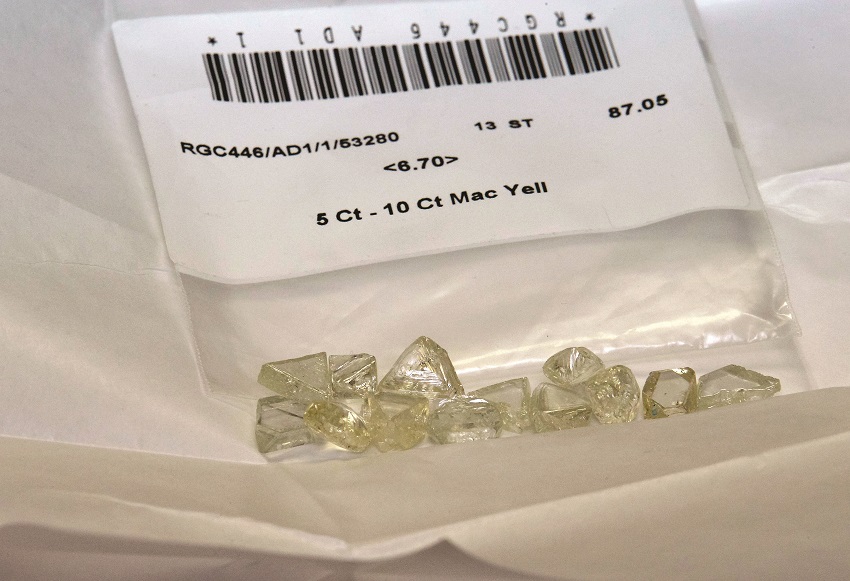
In the AWDC’s Hoveniersstraat office, Neys has laid out stones in different cuts: rectangular, teardrop and square. These days 95 percent of cutting is done in India, though the biggest diamonds are still handled by Antwerp’s specialists. Given the risk of shattering a stone and the amount of money at stake, some cutters take six months to study a gem before they get to work. But the main problem with EU sanctions, AWDC says, is that they would not hurt Russia.
Hans Merket, a researcher from the International Peace Information Service, partly agrees with the AWDC.