Editor’s Note
This article examines the profound impact of the G7’s ban on Russian diamonds on Antwerp’s historic diamond district, a centuries-old epicenter of the global gem trade.
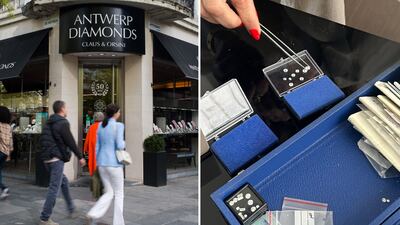
From the corner where the International Gemological Institute stands on one side and the Diamond Bourse on another, as far as the eye can see, the outlets at the heart of Antwerp’s historic district have long inspired awe for the sheer concentration of a global trade in the most valuable cut stones. Within a few minutes’ walk are dozens of gems dealers braced for upheaval as the wind of change blows. The latest ban on Russian diamonds by the group of seven (G7) countries has caused what many have described as nothing less than a “revolution” in the centuries-old diamond hub.
Highly rated for the quality of her work and collaborative style, and one of a few jewellers in the world who use a rare yellow diamond from Sierra Leone, Ilana Brandwain seems unfazed, preferring to move with a shift in how customers make their choices.
Its main room was designed over a century ago with high windows so that light from the north could help traders examine diamonds under their magnifying glasses.
The ban is a consequence of the 2022 invasion of Ukraine by Russia, which produces roughly a third of the world’s diamonds. It has triggered a new push for transparency in the diamond sector, which has often suffered from a perception issue due to its association with conflict in popular culture.
But it has also put pressure on the G7 to come up quickly with innovative solutions, triggering a chain of events that have impacted not only Russia and the western world, but also African producer countries and the other two main diamond hubs outside of Antwerp – Dubai and Mumbai. Whether the G7 can sustain the level of control it hopes for is now an open question in the face of mounting complaints, particularly from African countries.
More transparency is good for Antwerp’s reputation and for its customers, said Ms Brandwain, the 47-year-old chief executive of Noble Fine Jewellery and also an enthusiastic promoter of her native city – she regularly gives tours of the diamond bourse to tourists.
She believes that the trend “will expand in the coming years [from the West] to consumers in China and the Middle East”.
Two months into the first phase of the implementation of the G7 ban on Russian diamonds, the sector is learning to adapt to tough new rules that have left many with more questions than answers. The G7 comprises Canada, France, Germany, Italy, Japan, the UK, the US and the EU.
Its pressure led the industry to agree to the adoption of a new code of conduct last October, something that is coming in amid wider pressures from rival parts of the industry of Antwerp to cede a gatekeeper role that has held sway for decades.
Since March 1, importers and traders of diamonds above one carat must submit three times more paperwork than before the introduction of the ban. The extra work triggered delays and protest letters last month but many say the new procedures have now smoothed out.
Launched in 2003 to avoid conflict diamonds entering the market, it responded to consumer demand for more transparency as awareness grew of the use of diamonds to fund anti-government insurgencies – hence the expression “blood diamond”, also the name of a 2006 Hollywood blockbuster film starring Leonardo DiCaprio. The Kimberley Process can certify the origin of diamonds.