Editor’s Note
Swarovski, the iconic crystal house, is embracing cutting-edge manufacturing by partnering with additive specialist Xolo. This collaboration aims to leverage volumetric 3D printing to create intricate glass crystal components directly, signaling a significant fusion of traditional craftsmanship and digital fabrication.
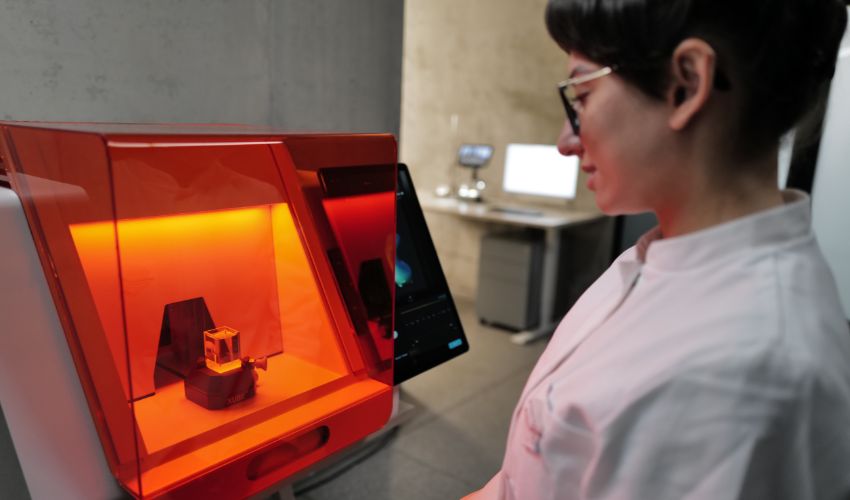
You are likely familiar with the famous jewelry manufacturer Swarovski, renowned for its work with glass crystal. The company has just signed a collaboration with an additive manufacturing player, xolo. This is a manufacturer that has developed a volumetric 3D printing technology capable of achieving high resolutions and extremely precise, fine details. The goal of this new partnership is to directly print parts in glass crystal to offer unique, customized, and detailed pieces. It is also a way for Swarovski to highlight its commitment to innovation and leverage new technologies to stay at the forefront of its industry.
Glass crystal is a type of glass distinguished by its lead content – ordinary glass being primarily composed of silica. It notably features sharper characteristics in terms of brilliance, transparency, and clarity. The Austrian company Swarovski has been working with it for years, mainly to design jewelry, accessories, and watches. One of its goals is to combine tradition and cutting-edge technology, which is precisely what it intends to do with xolo.
The startup xolo has developed a particular photopolymerization process: it uses xolography, meaning it employs different initiators and two types of wavelengths to cure the resin. One advantage of this method is its speed and the resulting surface finish. It is also compatible with many materials. Xolo will therefore work with glass crystal to design clear and detailed parts.
Dirik Radzinski, CEO of xolo, stated. In the long term, the goal of this collaboration is to establish new industrial standards for glass manufacturing. In the official press release, it is stated that the vision is to offer “a redefinition of the material’s role in modern design and functionality.”
Even though little information has been released to date, this partnership could disrupt the jewelry sector and, of course, the production process of a material prized by various industries.