Editor’s Note
This article revisits the site of the Battle of Caseros, a pivotal 1852 conflict that shaped Argentina’s national history. The location, now home to military institutions, still bears physical witness to the past through two preserved structures.
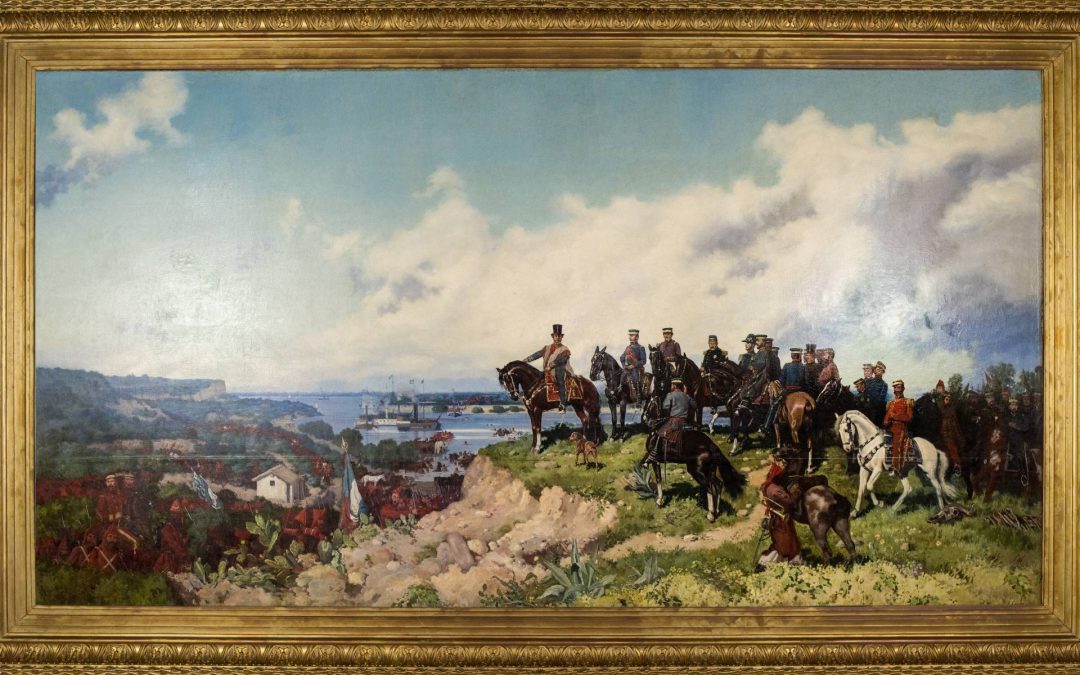
The battlefield where the Army of Buenos Aires and the Grand Army, commanded by the Buenos Aires governor Juan Manuel de Rosas and the man from Entre Ríos, Urquiza, clashed is located northwest of present-day Buenos Aires city and is currently occupied by the El Palomar Air Brigade and the National Military College. Within this military institute are two material witnesses to the battle that occurred 172 years ago: the Diego Caseros house and the farm’s dovecote, both declared national historical monuments. In its time, it was known as the Battle of Monte Caseros, after the owner of the lands where it was fought. A town was even founded in Corrientes in homage to the combat, but historical narrative simplified it to the Battle of Caseros.
It is considered the largest battle in national history due to the number of troops involved: 28,000 under Urquiza’s command and 23,000 under Rosas’s. To understand the scale of the confrontation, 3% of the Argentine population was at Caseros. It is as if one and a half million men were to go into battle today. Military leaders from the War of Independence fought there, along with dozens of federal officers from different provinces; but one must also add the presence of troops made up of three thousand Brazilians and fifteen hundred Uruguayans who joined the Grand Army.
In the months prior to the confrontation, a newspaper called La Regeneración circulated in the province of Entre Ríos; it was published in Concepción del Uruguay and distributed throughout the region. And there, it spoke of “the enlightened spirits, the upright hearts, inside and outside the Republic who felt the innate need to increase the sum of knowledge, of our well-being, recognizing with the heroic magistrate who presides over us, that this object is only realizable under the influence of social conditions and modifications that respect the greatness of our nature, flourish in the development of our great future destinies.” What the newspaper La Regeneración says is undoubtedly Urquiza’s thinking.
Domingo Faustino Sarmiento, who at that time was the bulletin writer for the Grand Army, before and after Caseros, speaks not only of the extraordinary crossing of the Paraná (from Punta Gorda, Diamante) to Santa Fe, of the battle itself, but of what was to come. Sarmiento foresees the great change that is going to occur, first saying “that the military operation that would daunt the greatest captains is now executed, and the passage of the Paraná carried out by a great army and by such diverse means will be considered by the warrior, the politician, the painter, or the poet, as one of the most surprising and extraordinary events of modern times.” He was not only speaking of what had happened with the men and the courage that crossed the Paraná, he was speaking of what was to come.
One of the great contemporary figures of our Entre Ríos culture, and a scholar on the events of Caseros, Roberto Romani, explains that “Urquiza was not a crazed caudillo who had strength, who had economic and military power, there was undoubtedly an inner light that allowed him to warn his brothers in the United Provinces that it was time for a change.”
Romani adds other voices and recalls Urquiza’s words:
The reasons were none other than “to see the heroic Argentine Confederation, organized, happy, and powerful, living under the protection of the laws that in civilized peoples protect the life and property of citizens.”