Editor’s Note
This article explores the transformative impact of additive manufacturing, or 3D printing, across industries. It details how this technology builds objects layer by layer, contrasting it with traditional methods and highlighting its applications, benefits, and considerations for adoption.
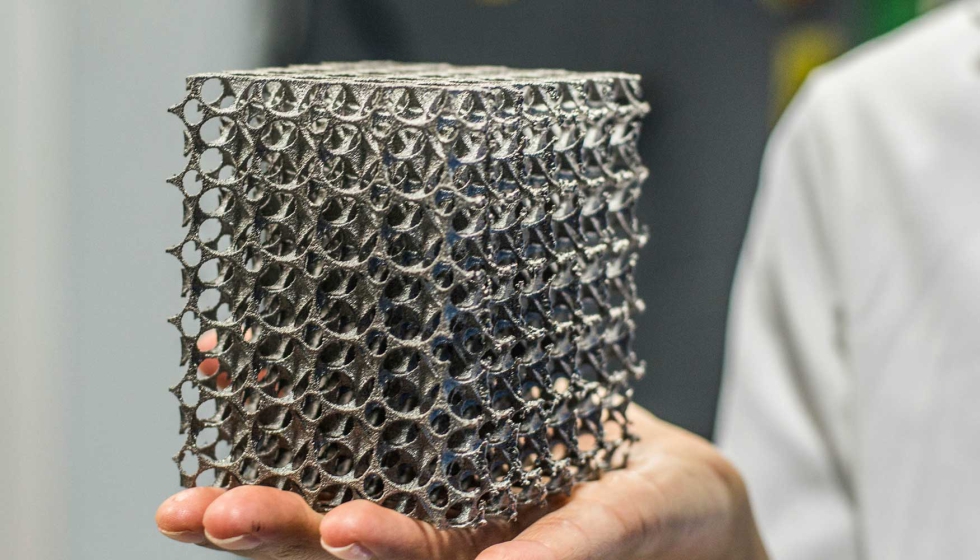
Additive manufacturing, also known as 3D printing, is revolutionizing the way products are manufactured across various industrial sectors. This innovative technology enables the creation of three-dimensional objects from digital models, building them layer by layer with precision and detail.
Unlike traditional manufacturing methods, which remove material to create the desired shape, additive manufacturing gradually adds material, layer by layer, until the complete object is built. This allows for the creation of complex and customized structures that would be difficult or impossible to manufacture using traditional methods.
- Greater Design Flexibility: Additive manufacturing allows for the creation of complex and customized designs that are not possible with traditional methods.
- Cost Reduction: In some cases, additive manufacturing can be more economical than traditional methods, especially for the production of small or complex parts.
- Less Material Waste: Additive manufacturing only uses the material necessary to build the object, significantly reducing material waste.
- Faster Production Speed: Additive manufacturing can enable faster production, especially for prototypes and customized parts.
- Local Production: Additive manufacturing allows for parts to be produced locally, which can reduce transportation and logistics costs.
Additive manufacturing is being used in a wide range of sectors, including:
- Automotive: Used to manufacture lightweight and resistant car parts.
- Aerospace: Used to manufacture aircraft and spacecraft components.
- Medical: Used to manufacture prosthetics, implants, and anatomical models.
- Construction: Used to manufacture building models and architectural components.
- Fashion: Used to manufacture footwear, jewelry, and customized clothing.
- Jewelry: Used to manufacture rings, necklaces, and other customized jewelry pieces.
- New Materials: New materials for 3D printing are being developed, such as biomaterials, metallic materials, and composites, which will expand the possibilities of this technology. Some examples of new materials are:
- Biomaterials: Used to create customized medical implants, prosthetics, and artificial organs.
- Metallic Materials: Used to create lightweight and resistant parts for aircraft, spacecraft, and the automotive industry.
- Composites: Used to create materials with specific properties for different applications.
- Faster and More Precise Printers: 3D printers are becoming increasingly faster and more precise, making them more efficient and cost-effective. This allows for the production of objects with greater complexity and detail in less time.
- More Intuitive Design Software: Design software for 3D printing is becoming more intuitive and easier to use, making it accessible to a wider audience. This allows more people to create their own 3D designs and objects.
- Medicine: 3D printing is being used to create:
- Customized medical implants, such as hip and knee prosthetics.
- Prosthetics, such as robotic hands and arms.
- Artificial organs, such as hearts and livers.
- Models for surgical planning, which allow doctors to practice an operation before performing it on the patient.
- Aerospace Industry: 3D printing is being used to create:
- Lightweight and resistant parts for aircraft and spacecraft, such as fuselages, wings, and turbines.
- Prototypes of new aircraft and spacecraft designs.
- Production tools for the manufacturing of aircraft and spacecraft.
- Automotive: 3D printing is being used to create:
- Vehicle prototypes, which allow manufacturers to test new designs before mass production.
- Customized parts for vehicles, such as spoilers, rearview mirrors, and headlight casings.
- Production tools for vehicle manufacturing.
- Construction: 3D printing is being used to create:
- Houses and buildings, enabling faster and more efficient construction.
- Structures, such as bridges and beams, which can be more resistant and lightweight than traditional structures.
- Scale models of buildings and construction projects.
There are various types of 3D filaments, each with its own characteristics and specific applications. The most common include:
- ABS (Acrylonitrile Butadiene Styrene): A versatile and resistant filament, ideal for parts requiring durability and dimensional stability.
- PLA (Polylactic Acid): A biodegradable and biocompatible filament, widely used for prototypes, models, and decorative parts.
- PETG (Polyethylene Terephthalate Glycol): A resistant and transparent filament, ideal for parts requiring high chemical and impact resistance.
- Nylon: A flexible and resistant filament, ideal for parts requiring flexibility and abrasion resistance.
- TPU (Thermoplastic Polyurethane): A flexible and elastic filament, ideal for parts requiring softness and elasticity.
The properties of 3D filaments largely depend on the type of material used. Some of the most important aspects to consider include:
- Printing Temperature: The temperature at which the filament melts and is extruded during the printing process.
- Bed Adhesion: The filament’s ability to adhere to the printing bed surface.