Editor’s Note
This article outlines key regulations for bicycle transit in Seville, reflecting the city’s push towards sustainable mobility. As bike lanes expand, understanding these rules is essential for safety and compliance.
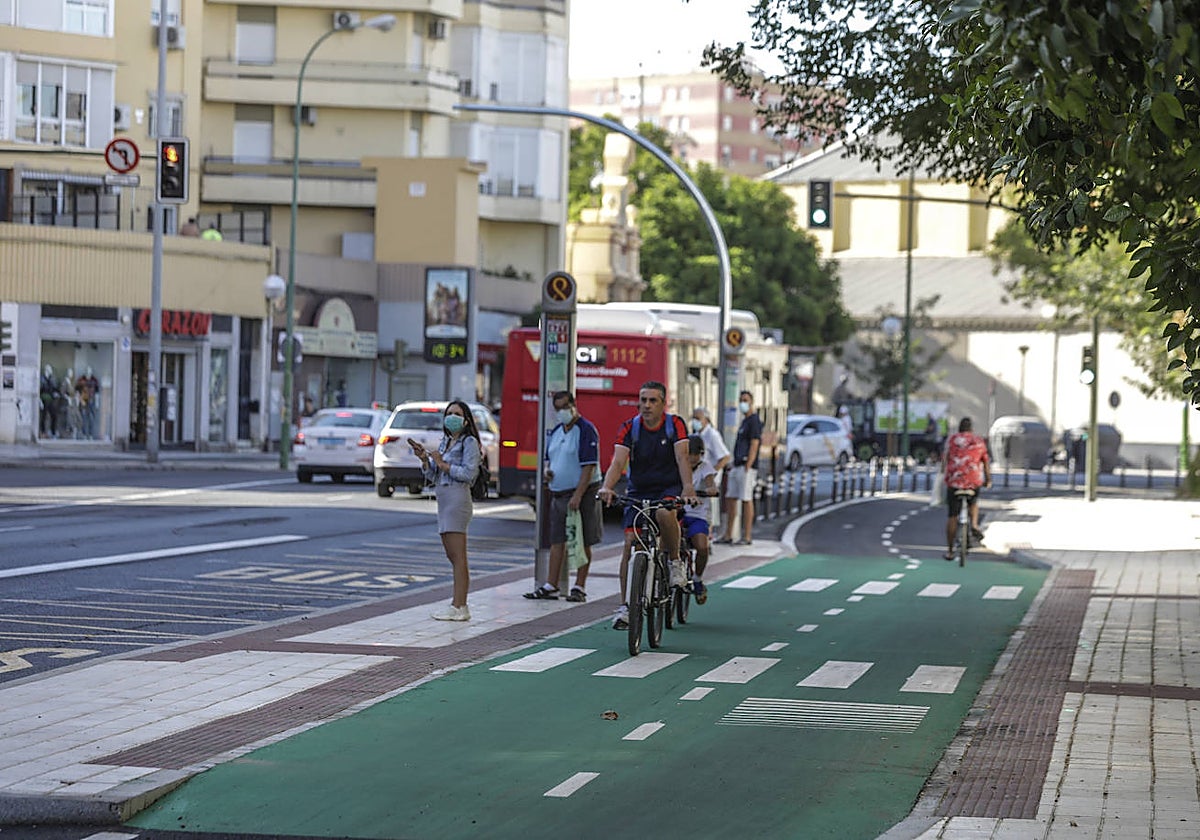
The city’s traffic ordinance establishes regulations for bicycle transit, both in designated lanes and elsewhere.
Seville has been characterized in recent years by increasing the presence of bike lanes on its streets to achieve a more sustainable city, marked by mobility that does not generate pollution and contributes to a more ecological urban environment. This increase in urban mobility forms has required traffic regulation that all users must know to avoid breaking the rules and being subject to possible sanctions for inappropriate behavior on public roads.
In the Hispalense capital, street traffic is regulated by the Seville City Traffic Ordinance, which establishes the rules to be followed and prohibited behaviors for those traveling on their bicycles to move from one point to another in the city.
The first thing to highlight is that bicycles must have a bell and lights or reflectors as provided by current regulations to allow for correct visibility by pedestrians and drivers. It is equally important to see and be seen, especially when the sun has set and visibility decreases considerably.
Bicycles can transport a child under seven years old in approved seats or trailers.
Bicycles in Seville must ride in the relevant bike lane, unless it does not exist, in which case they may ride on the roadway, always on the right side (except for road circumstances or left turns) and respecting the traffic rules of the road.
Speed of travel: Bicycle users must travel at a maximum of 15 km/h and in any case respecting the right of way of pedestrians in areas designated as pedestrian crossings. In areas of coexistence between pedestrians and cyclists, and even if there are bike lanes, the speed must be below 10 km/h (the same in public parks and promenades). On roads or areas specifically marked with a maximum speed limit of 30 km/h, or lower, and to facilitate the coexistence of bicycles and motor vehicles, the latter must adapt their speed to that of the bicycle.
Care should be taken when riding on sidewalks more than five meters wide where there is no bike lane, as the cyclist must be no less than 180 cm from the facade of buildings, to avoid hindering the entry and exit of pedestrians to the premises.
Cycling on public roads also has a series of established prohibitions, non-compliance with which can lead to a fine by the authorities. Thus, you cannot ride a bicycle balanced on only one wheel, hold onto other vehicles to be towed, nor ride in a zigzag pattern between vehicles or pedestrians.
That said, cycle lanes may only be used for travel by bicycles, skates, adult tricycles, electric bicycles and tricycles, and for the movement of people with reduced mobility who do so in a wheelchair with mechanical, self-propelled electric, or person-assisted traction.
Regarding bicycle parking, the ordinance establishes that it must be done in places enabled for this purpose and that, in the absence of enabled parking, they may be tied to urban furniture elements as long as they do not obstruct pedestrian traffic or vehicle circulation.
Thus, all bicycle users in Seville must adhere to these recommendations to avoid incurring infractions that result in fines from the authorities.